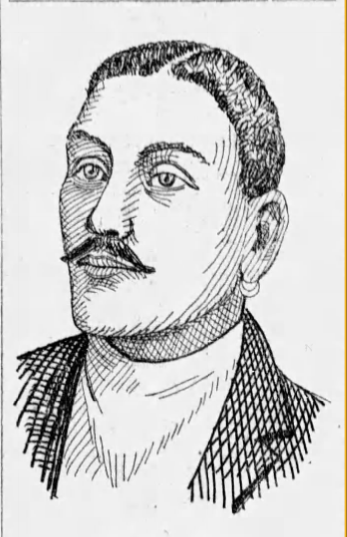
Robert Nixon: The Chicago and Los Angeles Brick Murders
Early Life and Escalation into Violence
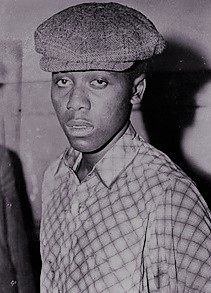
Robert Nixon was a young American serial killer whose crimes spread fear through Chicago and Los Angeles during the late 1930s. Born in Tallulah, Louisiana, in 1919, Nixon became involved in theft, burglary and other street crimes while still a teenager. He used several names, including Thomas Crosby, as he moved between cities and attempted to conceal his identity. His criminal activity eventually escalated from petty theft and burglary to violent attacks against women.
Nixon became associated with a series of nighttime break-ins in which women were beaten with bricks or other heavy objects. Newspapers gave him the nickname “The Brick Moron,” an insulting label tied to his preferred weapon and to the openly racist manner in which much of the press portrayed him. Reports frequently described him through dehumanizing stereotypes rather than presenting a careful account of the evidence. Although Nixon confessed to several murders, historians have since emphasized that he was held incommunicado, reportedly beaten by police and subjected to coercive interrogation. Some crimes were supported by physical evidence, while his responsibility for others rested primarily on disputed confessions.
The Murder of Florence Thompson Castle
One of the earliest killings attributed to Nixon occurred at the Devonshire Hotel in Chicago. During the early morning hours of June 29, 1936, 24-year-old Florence Thompson Castle was attacked in the hotel room she shared with her young son. Castle worked as a nightclub hostess and had reportedly returned to the hotel after finishing work. Her child was present in the room but survived the attack.
The intruder apparently reached Castle’s fifth-floor room by climbing a fire escape and entering through a window. Castle was beaten to death with a brick, and the room was searched for valuables. The words “Black Legion Game” were written in lipstick on a mirror, apparently as an attempt to suggest that the killing had been committed by the Black Legion, a violent white supremacist organization active during that period.
Investigators recovered fingerprints connected to the crime. After Nixon’s later arrest, authorities said those prints helped implicate him in Castle’s murder. Nixon reportedly admitted entering the room, killing Castle and writing the message on the mirror. Police later returned him to the hotel, where he reenacted the route taken up the fire escape while officers restrained a hostile crowd gathered outside.
The Los Angeles Brick Attacks
After leaving Chicago, Nixon traveled to Los Angeles with Earl Hicks, also known as Howard Jones Green. A succession of brutal attacks soon occurred in Los Angeles apartments, hotels and hospital rooms. The victims were usually women who were alone or sleeping. The attacker entered through windows or unsecured openings, committed robbery or sexual assault and used a brick to inflict severe head injuries.
Several women survived similar assaults during the opening months of 1937. A woman identified as Mrs. H. W. Koll was attacked at Monte Sano Hospital on January 25. Elizabeth Reis suffered a fractured skull during an attack in her hotel room on February 3. Zoe Damrell was assaulted in her home on March 28 and barely survived. Damrell’s description of her attacker was reportedly consistent with a man seen near the scene of one of the murders.
These surviving victims helped police recognize that the attacks were part of a pattern. The offender appeared to study buildings, enter quietly and use objects found nearby rather than carrying an obvious weapon. Bricks became the most recognizable feature of the crimes, leading investigators and newspapers to refer to the Los Angeles cases as the “brick bat murders.”
The Murder of Rose Valdez
On March 2, 1937, 20-year-old Rose Valdez was killed in her apartment at 651 Stanford Avenue in Los Angeles. Valdez was a young mother whose infant daughter was inside the room. Neighbors became concerned after hearing the baby crying for an extended period. When the apartment was entered, Valdez was found dead while her child remained alive nearby.
Valdez had been sexually assaulted and struck in the head with a brick. Investigators determined that the killer had entered through a kitchen window. They discovered impressions left by stocking-covered feet and found a milk bottle that appeared to have been moved near the point of entry. Detectives recovered fingerprints from the bottle, evidence that later became important when Los Angeles authorities compared prints following Nixon’s arrest in Chicago.
Nixon was widely linked to the Valdez murder because of the fingerprint evidence, the method of entry and the similarity between her killing and the other Los Angeles attacks. However, surviving records are not entirely consistent about the number of California killings to which he formally confessed. His connection to the Los Angeles series was considerably stronger than many of the allegations based only on statements obtained during his Chicago interrogation.
The Murders of Edna and Marguerite Worden
On April 4, 1937, 48-year-old Edna A. Worden and her young daughter, Marguerite Estelle Worden, were attacked in their apartment at the Astoria building in Los Angeles’s Bunker Hill neighborhood. Edna worked through a federal relief program and lived modestly with her daughter near the Angels Flight railway. Marguerite attended junior high school and was preparing to transfer to another school.
Concern arose when Marguerite failed to follow her usual routine of coming downstairs for the Sunday newspaper. An employee listened at the apartment door and heard a faint sound from inside. The building manager looked through the transom and discovered the horrific scene. Edna and Marguerite had been sexually assaulted and beaten with a brick that still had mortar attached to it. Both died from their injuries.
A milk bottle found near the apartment window contained fingerprints that Los Angeles investigators preserved. After Nixon was arrested the following year, those prints were sent to Chicago and compared with his. Police announced that the identification was positive. Faced with the fingerprint evidence, Nixon reportedly admitted participating in the Worden murders.
Earl Hicks was also implicated. Hicks later admitted being inside the apartment and striking Marguerite with the butt of a pistol, although he denied using the brick or participating in the sexual assaults. He claimed that he and Nixon stole approximately eight dollars from the apartment. Hicks was also convicted for his role in the attack on survivor Zoe Damrell.
The Disputed Murder of Anna Kuchta
Anna Kuchta, a student nurse, was raped and murdered in Chicago in 1937. She was attacked after an intruder entered through a window at the hospital where she worked. Nixon allegedly confessed to Kuchta’s murder while being questioned after his 1938 arrest, and he was indicted in connection with her death.
The Kuchta allegation remains less certain than the Worden murders because Nixon later withdrew his confessions and said they had been obtained through severe beatings and abuse. The case did not produce the same publicly documented fingerprint evidence that connected him to the Los Angeles apartment. He was never tried to a final verdict for Kuchta’s murder because prosecutors secured a death sentence in the Florence Johnson case.
The Murder of Florence Johnson
During the night of May 27, 1938, Nixon and Earl Hicks entered the Chicago home of Florence Johnson, the wife of a city firefighter. Johnson lived in the North Kenwood area and was at home with her sister. When Johnson awoke and confronted the intruders, she was beaten repeatedly in the head with a brick. Her sister, sleeping in another room, saw two men fleeing from the residence.
Nixon was arrested within hours on May 28. Officers said he had blood on his clothing, fresh scratches on his hands and injuries that appeared consistent with a struggle. Hicks was also taken into custody. Each man attempted to blame the other for delivering the fatal blows. Nixon maintained that Hicks had wielded the brick, while Hicks told investigators that Nixon attacked Johnson after she awoke and screamed.
Under Illinois’s felony-murder law, prosecutors did not have to prove which burglar personally struck Johnson. Both participants could be held responsible for a death caused during the commission of the burglary. Nixon was tried and convicted of Johnson’s murder. Hicks later pleaded guilty and received a prison sentence of 14 years.
Known and Alleged Victims
- Florence Thompson Castle — June 29, 1936, Devonshire Hotel, Chicago, Illinois: The 24-year-old nightclub hostess was beaten to death with a brick after an intruder climbed a fire escape and entered her hotel room. Her young son survived.
- Rose Valdez — March 2, 1937, 651 Stanford Avenue, Los Angeles, California: The 20-year-old mother was sexually assaulted and beaten to death with a brick while her infant daughter remained alive inside the apartment.
- Edna A. Worden — April 4, 1937, Astoria Apartments, Bunker Hill, Los Angeles, California: The 48-year-old mother was sexually assaulted and fatally beaten inside the apartment she shared with her daughter.
- Marguerite Estelle Worden — April 4, 1937, Astoria Apartments, Bunker Hill, Los Angeles, California: Edna Worden’s young daughter was assaulted and beaten to death during the same attack. Historical accounts disagree about whether she was 10, 11 or 12 years old.
- Anna Kuchta — 1937, Chicago, Illinois: The student nurse was raped and murdered after an intruder entered through a hospital window. Nixon allegedly confessed and was indicted, but his responsibility was never established through a completed trial.
- Florence Johnson — May 27, 1938, North Kenwood, Chicago, Illinois: Johnson was killed with a brick after awakening during a burglary committed by Nixon and Earl Hicks. Nixon was convicted and sentenced to death for her murder.
Surviving Victims and Additional Assaults
Nixon and Hicks were also accused of several nonfatal attacks. Mrs. H. W. Koll survived a brick assault at Monte Sano Hospital in Los Angeles on January 25, 1937. Elizabeth Reis survived after an attacker fractured her skull in a hotel room on February 3. Zoe Damrell was nearly killed in her home on March 28, but survived and provided information about her assailant. Hicks later admitted attacking Damrell and received a sentence of five years to life.
Chicago authorities questioned Nixon about other attacks and sexual assaults after his arrest. He allegedly admitted assaulting several additional women, but the reliability of those statements has remained controversial. Reports that he had confessed to a much larger number of attacks were circulated by newspapers eager to portray him as responsible for nearly every similar unsolved crime in the area.
Interrogation and Questions About the Confessions
Nixon was held away from lawyers and outside contact for approximately two weeks while police questioned him. He later said officers beat him, threatened him and forced him to sign statements. The Chicago Defender, an African American newspaper, treated the confessions with skepticism and reported allegations that investigators alternated violence with offers of candy and soda in an effort to obtain admissions.
Physical evidence strongly connected Nixon to the Worden apartment, and his arrest immediately after the Johnson burglary placed him directly within that crime. Other accusations, particularly the Kuchta murder and some of the alleged assaults, depended more heavily on confessions that Nixon later repudiated. The case therefore contains both significant forensic evidence and unresolved questions about police misconduct.
Trial, Conviction and Execution
Nixon was prosecuted in Illinois for the murder of Florence Johnson. His defense argued that Earl Hicks had struck the fatal blows, but the court ruled that Nixon remained legally responsible because the killing occurred during a burglary in which both men participated. He was convicted and sentenced to death.
Nixon appealed, repeating his allegations that the confessions had been extracted through physical abuse. The Illinois Supreme Court upheld the conviction. At the time, racial prejudice shaped both the criminal justice system and public discussion of the case. Newspaper reports used openly racist descriptions, compared Nixon to an animal and inflamed fears in Chicago’s white neighborhoods.
Robert Nixon was executed in the electric chair at the Cook County Jail on June 16, 1939. He was only 19 years old. Although he had confessed to as many as five murders, the exact number of his victims remains disputed because some admissions were later withdrawn and were not tested in separate trials.
Legacy of the Case
Nixon’s crimes became part of the history of both Chicago and Los Angeles, particularly because of the brutality of the attacks and the unusual use of bricks as weapons. The murders also demonstrated the early importance of fingerprint evidence. Prints recovered from the Los Angeles crime scene helped investigators connect a suspect arrested more than a year later and thousands of miles away.
The case is equally remembered for the racism surrounding Nixon’s prosecution. Much of the press coverage abandoned factual reporting in favor of degrading stereotypes. The sensational treatment of Nixon contributed to public fear and heightened racial tension at a time when Chicago neighborhoods were already divided by discrimination and segregation.
Author Richard Wright later acknowledged that reports about Nixon influenced portions of his novel “Native Son,” published in 1940. Wright did not simply reproduce Nixon’s biography, but used elements of the case to explore racism, poverty, fear, violence and the treatment of Black defendants in American society. The lasting significance of the Nixon case therefore extends beyond its individual crimes, raising difficult questions about murder, evidence, coerced confessions, racial prejudice and the power of sensational journalism.