Michael Dale St. Clair: Murders, Escape, and a Multistate Crime Spree
Background
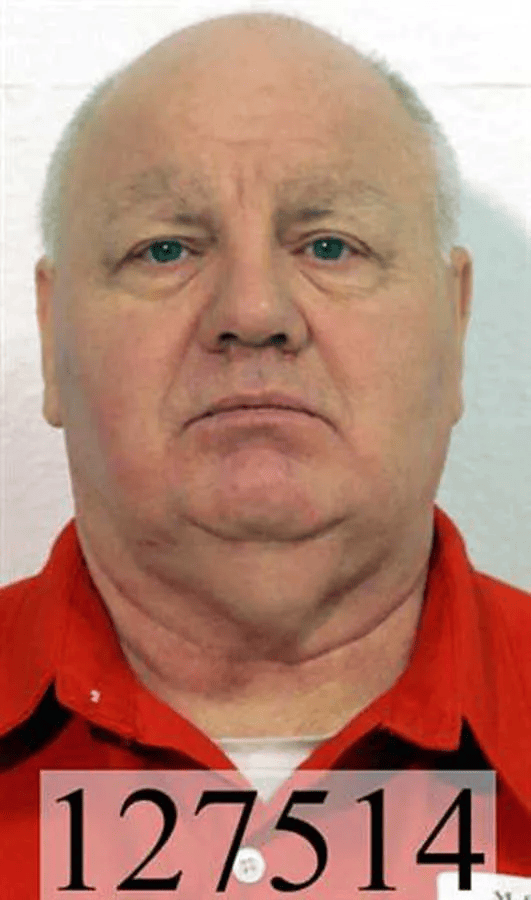
Michael Dale St. Clair was an American murderer whose crimes crossed several states and included murder-for-hire, robbery, kidnapping, prison escape, vehicle theft, arson, and attacks on law-enforcement officers. Born on January 15, 1957, St. Clair became associated with at least six killings committed between 1990 and 1991. His victims included a relative, a man he allegedly hired to carry out a murder, two people killed in Oklahoma, and two motorists abducted during his flight from custody.
St. Clair’s criminal history is unusually complicated because his murder convictions were obtained in separate Oklahoma and Kentucky proceedings. Some of his Kentucky convictions and death sentences were reversed or returned for new trials and sentencing hearings because of legal errors. These reversals did not amount to findings that he was innocent. His conviction for the murder of Kentucky victim Francis “Frank” Brady ultimately remained intact, while St. Clair also received multiple life-without-parole sentences for murders committed in Oklahoma.
The Murder of Ronnie Lee St. Clair
The first known chapter of the case centered on St. Clair’s uncle, Ronnie Lee St. Clair. Prosecutors maintained that Michael St. Clair arranged for William Henry Kelsey Jr. to kill Ronnie in Murray County, Oklahoma. The killing was described as a murder-for-hire plot connected to tensions within the family and St. Clair’s criminal activities.
Ronnie Lee St. Clair was killed in 1990. Michael St. Clair was prosecuted even though he was accused of arranging the murder rather than personally carrying out the shooting. Under Oklahoma law, a person who plans or solicits a murder can be held responsible for the resulting death. A Murray County jury found St. Clair guilty of Ronnie’s first-degree murder in September 1991.
The Murder of William Henry Kelsey Jr.
William Henry Kelsey Jr. was the man prosecutors said St. Clair recruited to murder Ronnie. After Ronnie was killed, Kelsey himself became a victim. Authorities alleged that St. Clair killed Kelsey to silence him and prevent him from revealing the murder-for-hire arrangement.
Kelsey was killed in Murray County, Oklahoma, during 1990. The prosecution treated his death as a second intentional murder arising from the same underlying criminal scheme. In September 1991, the same Murray County jury that convicted St. Clair of Ronnie’s murder also found him guilty of murdering Kelsey. St. Clair later received life imprisonment without the possibility of parole for each killing, along with an additional sentence for soliciting Ronnie’s murder.
The Murders of Mary Louise Smith and Edward Jefferson Large
St. Clair was later tried in Choctaw County, Oklahoma, for the murders of Mary Louise Smith and Edward Jefferson Large. The two victims were killed during a separate Oklahoma incident before St. Clair’s September 1991 escape. Although the convictions were not entered until 1994, the murders formed part of the violent history later introduced during St. Clair’s Kentucky proceedings.
A Choctaw County jury found St. Clair guilty of both first-degree murders in January 1994. He received two additional sentences of life imprisonment without the possibility of parole. These convictions increased the number of killings for which he had been found legally responsible in Oklahoma to four.
Escape from the Bryan County Jail
In September 1991, St. Clair was being held at the Bryan County Jail in Durant, Oklahoma, while awaiting final sentencing for the Murray County murders. On September 19, 1991, he escaped with fellow prisoner Dennis Gene Reese. Reese was himself being held in connection with a homicide case.
The fugitives stole a pickup truck belonging to a jail employee. When that vehicle ran out of fuel, they entered the nearby home of Vernon Stephens and stole another pickup truck, a handgun, and ammunition. They traveled toward Texas, where St. Clair’s wife met them and supplied them with money, clothing, and other items. St. Clair and Reese then began a lengthy journey that carried them through numerous states.
The Kidnapping and Murder of Timothy Keeling
While traveling through Colorado in late September 1991, St. Clair and Reese encountered Timothy Keeling. According to testimony later presented in Kentucky, Keeling was kidnapped and his pickup truck was taken. The fugitives forced him to accompany them as they drove south from Colorado toward New Mexico and Texas.
As the group traveled through New Mexico, St. Clair allegedly decided that Keeling had become a dangerous witness. Keeling was taken into an isolated desert area near the New Mexico–Texas border and shot to death. St. Clair and Reese abandoned his body and continued traveling in his stolen pickup truck. The exact day of Keeling’s death has not been consistently identified in publicly available court accounts, but the killing occurred after the September 19 escape and before the fugitives reached Kentucky in early October 1991.
After killing Keeling, the fugitives drove his truck through Texas and continued to New Orleans, Louisiana. They then traveled north through Arkansas and Tennessee. The stolen vehicle provided transportation while also tying them to the missing Colorado motorist whose life had ended in the New Mexico desert.
The Abduction of Francis “Frank” Brady
By October 1991, St. Clair and Reese had reached Kentucky. On October 6, they stopped at a rest area along Interstate 65 in Hardin County. There they encountered Francis C. “Frank” Brady, a Bardstown resident who was traveling in his pickup truck.
Brady was abducted at gunpoint and forced into the control of the two fugitives. St. Clair and Reese stole Brady’s vehicle and transported him away from the rest area. The kidnapping continued into neighboring Bullitt County, where Brady was taken to a secluded wooded location near Old Boston Road.
The Murder of Frank Brady
Evidence presented by Kentucky prosecutors showed that Brady was shot and left in the isolated area. His abandoned truck was discovered along Interstate 65 on October 6, 1991, prompting law-enforcement officers to investigate what initially appeared to be a suspicious vehicle. Brady’s body was found off Old Boston Road on October 8.
Brady’s death was determined to have resulted from the shooting committed during the kidnapping. Because the precise time between the abduction and the fatal shooting could not be independently established, court records generally identify October 6, 1991, as the date of the murder. Brady’s body was recovered two days later in Bullitt County.
St. Clair was prosecuted for Brady’s murder in Bullitt County and for the kidnapping and related crimes in Hardin County. Kentucky juries repeatedly found him guilty, although several convictions or death sentences were overturned because of evidentiary problems, improper jury instructions, or other procedural errors. His murder conviction ultimately remained in effect.
The Attack on Kentucky State Trooper Herbert Bennett
After Brady was killed, St. Clair and Reese continued traveling in stolen vehicles. They also burned one of the trucks in an apparent attempt to destroy evidence. Their movements attracted the attention of Kentucky State Police Trooper Herbert Bennett, who attempted to conduct a traffic stop in Hardin County.
Instead of surrendering, St. Clair fired several shots into Bennett’s police cruiser. Bennett survived the attack. The fugitives fled, but St. Clair was soon captured. Reese temporarily escaped and was later apprehended. The shooting led to an attempted-murder charge against St. Clair in addition to charges involving kidnapping, robbery, receiving stolen property, and arson.
Confirmed and Attributed Victims
- Ronnie Lee St. Clair — 1990 — Murray County, Oklahoma: Michael St. Clair’s uncle. Prosecutors said St. Clair hired William Henry Kelsey Jr. to murder Ronnie. St. Clair was convicted of first-degree murder and solicitation to commit murder.
- William Henry Kelsey Jr. — 1990 — Murray County, Oklahoma: The alleged hired killer in Ronnie St. Clair’s murder. Prosecutors maintained that St. Clair killed Kelsey to silence him. St. Clair was convicted of first-degree murder in September 1991.
- Mary Louise Smith — before September 1991 — Choctaw County, Oklahoma: One of two victims in a separate Oklahoma double murder. St. Clair was convicted of her first-degree murder in January 1994.
- Edward Jefferson Large — before September 1991 — Choctaw County, Oklahoma: Killed in the same Choctaw County case as Mary Louise Smith. St. Clair was convicted of his first-degree murder in January 1994.
- Timothy Keeling — late September 1991 — New Mexico desert near the Texas border: Kidnapped in Colorado, robbed of his pickup truck, transported into New Mexico, and shot. Court accounts attribute the execution-style killing to St. Clair.
- Francis C. “Frank” Brady — October 6, 1991 — Bullitt County, Kentucky: Abducted from an Interstate 65 rest area in Hardin County, taken to a secluded location, and shot. His body was discovered near Old Boston Road on October 8, 1991.
Trials and Sentences
St. Clair’s first two murder convictions were returned by a Murray County, Oklahoma, jury in September 1991. The formal judgment was entered after his recapture, and he received two life sentences without parole. His later Choctaw County convictions for murdering Mary Louise Smith and Edward Jefferson Large resulted in two more life-without-parole sentences.
In Kentucky, St. Clair was convicted of murdering Frank Brady and was sentenced to death in 1998. The Kentucky Supreme Court affirmed the murder conviction but reversed the death sentence because jurors had not been properly instructed about all available sentencing options. A second death sentence imposed in 2005 was also reversed because of an improper instruction concerning the use of St. Clair’s earlier murder convictions as an aggravating circumstance.
Following further proceedings, St. Clair was again sentenced to death in 2011. The Kentucky Supreme Court eventually upheld the conviction and sentence. In April 2017, St. Clair pleaded guilty to Brady’s kidnapping and received a 30-year prison sentence, resolving the remaining Kentucky prosecution connected to the abduction.
A Complicated Multistate Case
Michael Dale St. Clair’s case involved crimes committed or investigated across Oklahoma, Texas, Colorado, New Mexico, Louisiana, Arkansas, Tennessee, and Kentucky. The movement of the fugitives complicated the work of investigators, who had to reconstruct their route through stolen vehicles, witness statements, physical evidence, and the testimony of Dennis Reese.
The killings also occurred under different circumstances. Ronnie St. Clair’s death was prosecuted as a planned murder-for-hire. William Kelsey’s killing was portrayed as the elimination of an accomplice. Smith and Large were victims of another Oklahoma double homicide. Keeling and Brady were motorists abducted during St. Clair’s escape and killed after their vehicles were taken.
Although procedural errors caused years of retrials and appeals, St. Clair accumulated convictions carrying multiple life-without-parole terms in Oklahoma and a capital sentence in Kentucky. His record established his responsibility for four Oklahoma murders and Frank Brady’s Kentucky murder, while court testimony also attributed Timothy Keeling’s New Mexico killing to him. The six deaths, combined with the jail escape, kidnappings, robberies, arson, and attempted murder of a police officer, made his brief 1991 flight from custody one of the most violent multistate fugitive episodes of its period.