Oliver Crook Haugh: The Ohio Doctor Convicted of Murdering His Family
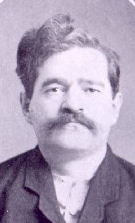
Oliver Crook Haugh was an American physician, drug addict and convicted murderer whose name became associated with a disturbing series of suspicious deaths during the late nineteenth and early twentieth centuries. Although later accounts frequently describe him as a serial killer, Haugh was convicted only of the murders of his father, mother and brother. Numerous additional deaths were investigated or publicly attributed to him, but the surviving evidence does not establish his responsibility for every suspected victim.
Haugh was born on April 12, 1871, in Dayton, Ohio. He received medical training and practiced as a physician in several communities, but his professional life was repeatedly disrupted by severe substance abuse, erratic conduct, financial problems and periods of confinement in psychiatric institutions. His access to medicines and his knowledge of drugs later caused investigators to examine unexplained deaths involving relatives, patients and women with whom he had formed relationships.
Early Life in Dayton
Oliver was the younger son of Samuel Jacob Haugh and Mary Frances Metz Haugh. His older brother, Jesse Lincoln Haugh, was born in 1868. The family lived in Dayton, where Samuel worked as a carpenter and property owner.
As a boy, Oliver became connected to another notable Dayton resident, Wilbur Wright. In 1886, during a winter game played on ice, Oliver reportedly struck Wilbur in the face with a wooden stick. Wilbur lost several teeth and suffered a prolonged period of physical and emotional illness. The incident later became an unusual footnote in the history of the Wright brothers.
During his youth, Oliver reportedly experienced serious dental problems. He began using preparations containing cocaine to relieve the pain and later consumed medicines containing opium. These substances were legally available in many commercial remedies at the time. His dependence on drugs became increasingly severe and remained a central feature of his adult life.
Medical Training and Marriage
Haugh worked in a Dayton drugstore and demonstrated enough knowledge of medicines to attract the attention of a local physician. He eventually entered medical school in Cincinnati in 1888. His education was interrupted by financial hardship and substance abuse, but he ultimately obtained medical credentials and began treating patients.
Haugh became involved with Anna Margaret Eckley, the daughter of William Eckley. William died in 1888 from what was officially described as pulmonary apoplexy. Later investigators questioned whether Haugh might have poisoned him, particularly because Anna received money following her father’s death and Haugh benefited from his relationship with the family. However, Haugh was never convicted of killing William Eckley, and the exact circumstances of the death remain uncertain.
Oliver and Anna married in 1891. Their relationship was troubled by his drug use, instability, disappearances and alleged relationships with other women. Reports produced during and after his murder trial claimed that Haugh entered several additional marriages or marriage-like relationships, sometimes without legally ending earlier unions.
A Physician Surrounded by Suspicious Deaths
Haugh opened and abandoned medical practices in Ohio and possibly Wisconsin. His offices frequently failed because of his unpredictable behavior. Witnesses described him as intoxicated, unconscious or incoherent while patients were waiting for treatment. At other times, he reportedly became violent, paranoid or grandiose.
Because Haugh was a physician, he had access to morphine, cocaine, opium, sedatives and other potentially lethal substances. After his arrest in 1905, authorities received reports concerning patients and acquaintances who had died unexpectedly while under his care. Newspapers portrayed him as a doctor who may have used poison to eliminate inconvenient people or to experiment with the effects of drugs.
Many of these accusations were based on circumstantial evidence, rumors or statements made years after the deaths. The absence of modern toxicology, incomplete records and the common medical use of dangerous drugs made it difficult to determine which deaths were natural, accidental or deliberately caused.
Relationship with Jennie Twohey
After one of his releases from a psychiatric institution, Haugh became involved with a woman commonly identified as Jennie Twohey. Some records spell her surname as Twohe or Towey. The couple operated a saloon or disorderly establishment in Lorain, Ohio, where Haugh also attempted to practice medicine.
Both were arrested in connection with activities at the property. While Haugh was in custody, Jennie died under circumstances that were later regarded as suspicious. Accounts differ regarding the precise date and cause of her death. Because a reliable death date cannot be established from the available records, no exact date should be presented as confirmed.
Haugh was suspected of poisoning Jennie, but the accusation did not result in a murder conviction. Her death nevertheless contributed to the growing belief that women and patients close to Haugh frequently died unexpectedly.
Return to the Haugh Family Home
By 1905, Haugh’s medical career and marriage had largely collapsed. Anna reportedly refused to continue living with him, and he returned to his parents’ home on Troy Pike in Dayton. The household consisted of Samuel, Mary, Jesse and Oliver.
The situation was tense. Haugh needed money to establish another medical practice, but his family had become unwilling to finance him. Evidence presented at trial indicated that his parents had either removed him from their wills or intended to prevent him from inheriting their property. Prosecutors later argued that revenge and financial gain provided motives for murder.
The Murders of November 1905
During the night of November 4 and the early morning of November 5, 1905, a fire broke out in the Haugh family home. Samuel, Mary and Jesse were trapped inside. Oliver escaped from the building.
At first, the deaths could have appeared to be the tragic result of an accidental house fire. Investigators, however, found evidence suggesting that the three victims had been attacked before the building was set ablaze. Reports indicated that the bodies showed injuries inconsistent with death from fire alone. Authorities believed the victims had been drugged, beaten, cut or otherwise incapacitated before the house was deliberately burned.
The fire badly damaged the bodies and complicated the investigation. Contemporary accounts differed regarding the exact sequence of the attacks. Some stated that the family members were poisoned before being assaulted, while others emphasized sharp-force injuries and the deliberate setting of the fire. Prosecutors did not need to establish every detail of the attack to argue that Haugh had intentionally killed his relatives and attempted to destroy the evidence.
Haugh’s behavior immediately before and after the fire increased suspicion. Investigators learned of his demands for money, his anger toward his family and his interest in their property. He was arrested and charged with the murders.
Confirmed Victims
- Samuel Jacob Haugh — Oliver’s father. He died on November 5, 1905, at the Haugh family residence on Troy Pike in Dayton, Montgomery County, Ohio. Samuel was approximately 65 years old. Prosecutors concluded that he was murdered before or during the fire deliberately set inside the home.
- Mary Frances Metz Haugh — Oliver’s mother. She died on November 5, 1905, at the family residence on Troy Pike in Dayton, Montgomery County, Ohio. She was approximately 63 or 64 years old. Her remains were found in the burned house with those of her husband and older son.
- Jesse Lincoln Haugh — Oliver’s older brother. He died on November 5, 1905, at the family residence on Troy Pike in Dayton, Montgomery County, Ohio. Jesse was approximately 37 years old. He was killed during the same attack that claimed the lives of his parents.
Suspected Victims and Unproven Allegations
The following people have been identified in historical accounts as possible victims. Haugh was not convicted of these deaths, and the evidence connecting him to them was incomplete or circumstantial.
- William Eckley — The father of Haugh’s first wife, Anna Margaret Eckley. He died in 1888, reportedly in the Dayton or Cincinnati region of Ohio. His death was officially attributed to pulmonary apoplexy, but later suspicions focused on Haugh because he benefited indirectly from money inherited by Anna. No reliable evidence produced a murder conviction.
- Jennie Twohey — A woman associated with Haugh in Lorain, Ohio, around 1901. She died while Haugh was in custody following their arrests. Her exact death date and officially recorded cause of death remain unclear in surviving accounts. Haugh was suspected but never convicted of causing her death.
- Unnamed patients in Ohio — Several patients reportedly died after receiving treatment or drugs from Haugh during the 1890s and early 1900s. Their names and exact death dates were not consistently preserved in public reports. Authorities investigated claims that he administered excessive or poisonous doses of medication.
- Unnamed patients in Wisconsin — Some accounts alleged that two patients died suspiciously while Haugh was practicing or traveling in Wisconsin around 1900. The victims’ identities, locations and dates of death have not been reliably confirmed.
- Women described as wives or companions — Newspapers claimed that several women connected romantically to Haugh died unexpectedly. The number of alleged wives and deaths varied considerably between reports. Many names and dates cannot be verified, and these allegations should not be treated as confirmed murders.
Arrest and Investigation
Following the fire, detectives examined Haugh’s movements, financial condition and relationship with his family. They collected testimony about threats he had made and his efforts to obtain money. Investigators also examined the remains recovered from the house and concluded that the victims had not simply died from smoke or flames.
The prosecution’s case was largely circumstantial. There was no surviving eyewitness who could describe the complete attack. Instead, the state relied on Haugh’s motive, his opportunity to commit the murders, physical evidence from the burned home and his conduct surrounding the crime.
Haugh’s history of mental illness and drug addiction became a major issue. He had previously been confined in psychiatric institutions and displayed behavior that witnesses regarded as irrational. His attorneys argued that he was insane and therefore could not be held legally responsible.
The Trial
Haugh was tried in Dayton in 1906. The courtroom proceedings attracted widespread attention because he was a physician accused of using his medical knowledge against his own family. Newspapers published dramatic descriptions of his addiction, his unstable behavior and the suspicious deaths associated with his career.
The defense attempted to establish that long-term drug abuse had destroyed Haugh’s ability to understand his actions. Medical witnesses disagreed over whether he was genuinely insane, temporarily affected by drugs or deliberately exaggerating his symptoms.
The prosecution portrayed him as calculating rather than helpless. It argued that he killed his relatives because they refused to provide him with money and had threatened his inheritance. Setting fire to the house, prosecutors maintained, demonstrated planning and an effort to conceal evidence.
On March 9, 1906, the jury found Oliver Crook Haugh guilty of first-degree murder. Although some reports stated that the jurors recommended mercy, the conviction ultimately resulted in a death sentence. Attempts to obtain a new trial or overturn the verdict were unsuccessful.
Claims of a Double Personality
Haugh was fascinated by the idea of a divided personality, particularly the concept made famous by Robert Louis Stevenson’s novel about Dr. Jekyll and Mr. Hyde. Contemporary writers claimed that Haugh believed drugs could release a second personality capable of actions that his ordinary self would not commit.
These stories helped create the image of Haugh as a respectable doctor transformed into a violent killer by cocaine, opium and alcohol. However, the language used by newspapers was often sensational. Modern readers should distinguish between documented psychiatric symptoms and dramatic claims intended to portray him as a real-life version of a fictional character.
Drug dependence almost certainly worsened Haugh’s behavior, but it did not establish that he lacked awareness of his crimes. The jury accepted the prosecution’s position that he was legally responsible for the murders.
Execution
Oliver Crook Haugh was executed in the electric chair at the Ohio Penitentiary in Columbus shortly after midnight on April 19, 1907. He was 36 years old.
Contemporary reports described him as calm or outwardly indifferent as the execution approached. He did not provide a complete confession that resolved the many accusations associated with his name. As a result, the true number of people he may have killed remains unknown.
Haugh was buried at Mount Calvary Cemetery in Columbus, Ohio. His grave was left without a prominent marker.
Was Oliver Crook Haugh a Serial Killer?
Haugh is frequently listed as a serial killer with victim estimates ranging from three to more than a dozen. That description requires qualification. His three confirmed victims were killed during a single incident, which is more consistent with a multiple or family murder than a conventional series of killings separated by cooling-off periods.
The serial-killer classification depends on allegations that he murdered patients, wives, companions or relatives at different times and locations. Some of those suspicions may have been justified, particularly given his access to drugs and the recurring reports of unexplained deaths. However, the evidence was never tested in separate murder trials, and many suspected victims remain unidentified.
It is therefore most accurate to describe Oliver Crook Haugh as a convicted triple murderer and suspected serial killer. He was conclusively held responsible for the deaths of Samuel, Mary and Jesse Haugh, while the broader claims surrounding his medical career remain unresolved.
Legacy
The Haugh case reflects the dangers of poorly regulated medical practice and unrestricted access to powerful drugs during the late nineteenth century. Physicians could prescribe or administer cocaine, opium, morphine and other substances with limited oversight. Toxicological testing was primitive, making deliberate poisoning difficult to prove.
Haugh’s crimes also reveal how sensational journalism shaped public understanding of murder cases. Newspapers transformed him into a monstrous physician with multiple personalities, numerous wives and a trail of poisoned patients. Some of those reports were based on genuine investigative concerns, while others repeated allegations that could not be independently verified.
The confirmed facts remain deeply disturbing. On November 5, 1905, Samuel Jacob Haugh, Mary Frances Haugh and Jesse Lincoln Haugh died in their Dayton home after a deliberate attack and fire. Oliver Crook Haugh was convicted of committing the murders for revenge and financial gain. He was executed less than two years later, leaving behind unanswered questions about the other deaths that occurred throughout his unstable career.