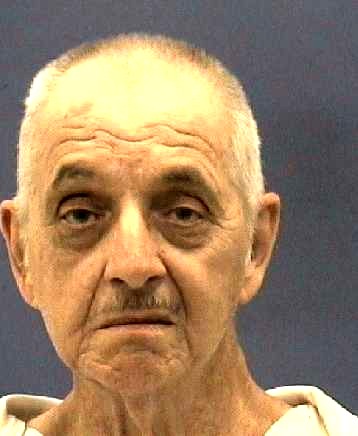
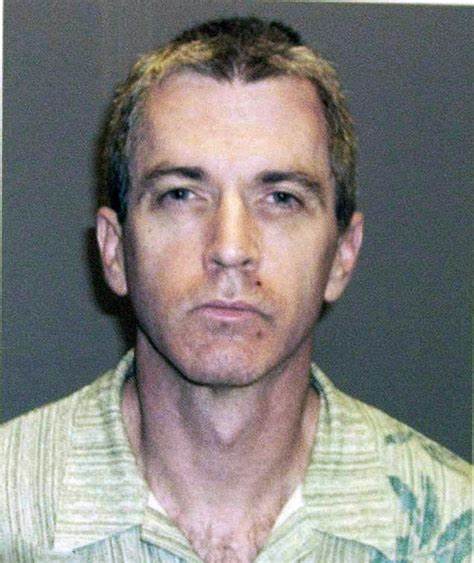
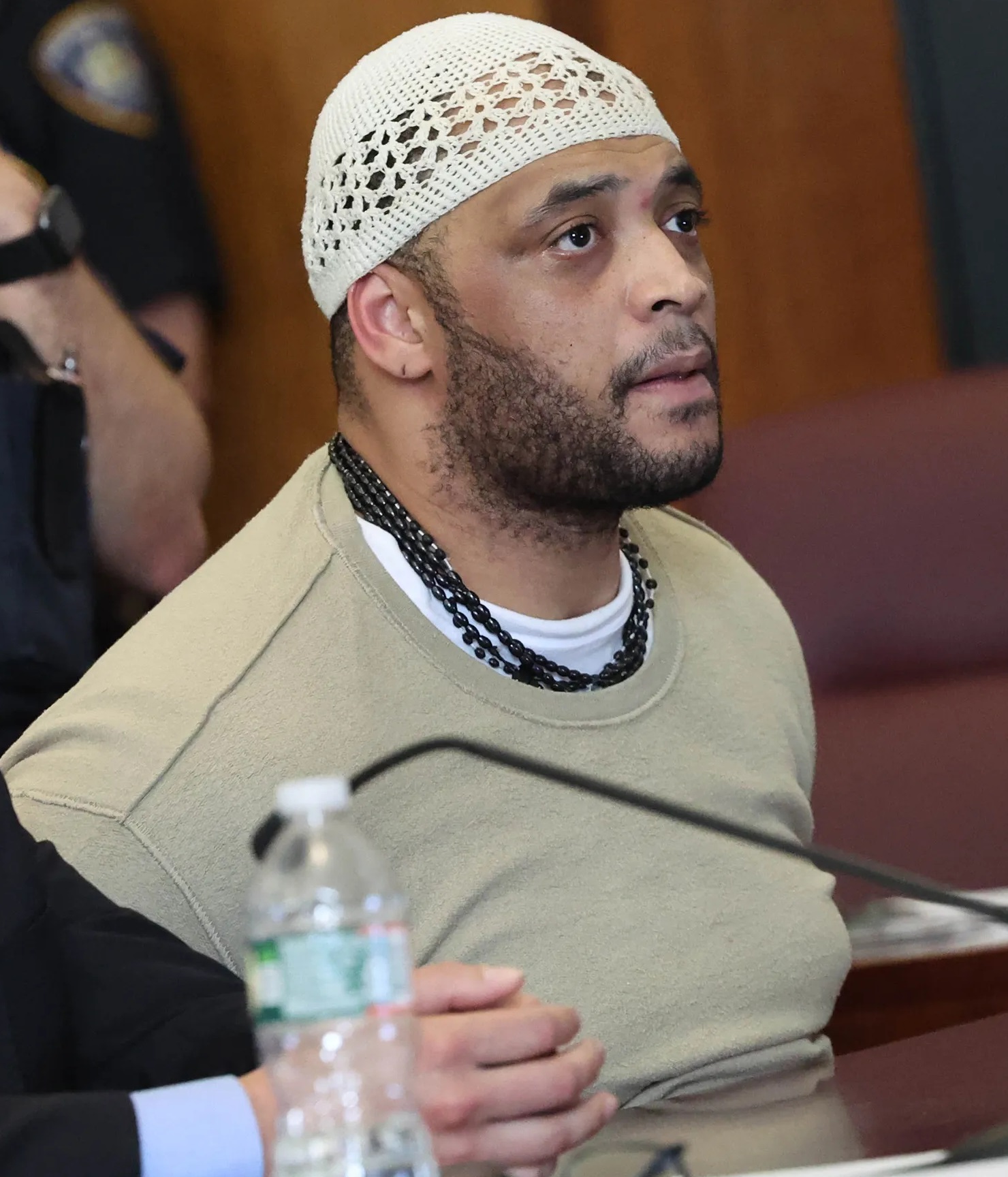
Doeur Seoung: The Shadow in the Refugee Community
Overview
Doeur Seoung is a Cambodian-American serial killer whose violent crimes spanned more than a decade, leaving a trail of terror in refugee communities in Texas and California. Born in Cambodia in 1970, Seoung arrived in the United States as a young refugee, but his new life was soon marked by crime. As a teenager in Austin, Texas, he committed two brutal murders in 1985, preying on the vulnerable within his own community. A shocking failure of the justice system saw him tried as a juvenile and released after a short sentence. He resurfaced in 1998 in Fresno, California, where he committed a double murder. It was this final, brutal act that ultimately led to his downfall. A mandatory DNA sample connected him to one of his earliest crimes, a cold case that had haunted Austin for over 15 years. Convicted of four murders in total, Seoung is now serving multiple life sentences, his case a chilling example of a predator who exploited the trust and insularity of his community.
Early Life and Background
Doeur Seoung was born in a rural part of Cambodia in 1970, a country that would soon be ravaged by the brutal Khmer Rouge regime. In 1983, at around the age of 13, Seoung and his father, Sok Seoung, fled their homeland and resettled in Austin, Texas, as refugees. They joined a growing community of Cambodians who had escaped the genocide and were trying to build new lives in America.
Seoung was enrolled at Lamar Junior High School and later attended McCallum High School. However, his integration into American society was fraught with difficulty. He was reportedly an unruly and troubled teenager who frequently clashed with authority. He began a pattern of criminal behavior, accumulating a record of arrests for burglary and theft. By the time he was 15, his attendance at school was sporadic as he descended deeper into delinquency. This escalating pattern of crime was a dark prelude to the violence that would soon follow.
The Austin Murders: 1985
In the spring of 1985, the Cambodian refugee community in North Austin was shattered by a horrific crime. On March 13, the body of six-year-old Volith Long was discovered in a dumpster behind her family's apartment complex. She had been sexually assaulted and strangled to death. The little girl, whose family had survived the killing fields of Cambodia, had found death in the country where they had sought safety. The investigation was hampered by language and cultural barriers, and the case quickly went cold, leaving a cloud of fear over the community.
Less than six months later, on September 5, tragedy struck again just a half-mile away. Sath Yem, a 67-year-old grandmother, was found murdered in her apartment. She too had been sexually assaulted and strangled. In a chilling detail, her two young grandchildren were present in the apartment during the attack but were left physically unharmed. The community was terrified, believing a predator was in their midst. This time, however, there was a witness. One of Yem's grandchildren identified the intruder as Doeur Seoung, a teenager who was known in the neighborhood for his history of burglaries.
A Flawed Justice
Following the identification by Sath Yem's grandchild, Doeur Seoung, then 15, was arrested. He had been bragging to one of Yem's sons about previous burglaries at their apartment. Police found that he had brandished a handgun and worn a ski mask during the crime, and they later recovered jewelry he had stolen from Yem's purse.
Despite the brutality of the murder and his escalating criminal history, a controversial decision was made in the legal proceedings. Prosecutors argued for Seoung to be tried as an adult, which would have carried the possibility of a life sentence. However, the judge ruled that he should be tried as a juvenile. This decision, which shocked and angered the victim's family and the community, meant that the maximum sentence he could receive was just two years in a juvenile correctional facility. Seoung was convicted and served his minimal sentence before being released back into society.
The California Murders and Capture
After his release, Doeur Seoung's life for the next decade is largely a mystery. He eventually relocated to Fresno, California, where another large community of Southeast Asian refugees had settled. In January 1998, his violent trajectory culminated in another horrific crime. Seoung was arrested and subsequently convicted for a brutal double murder. The victims were Sok Sary, 49, and Manijanh Phetsomphou, 41. They were found shot to death in their Fresno home during what appeared to be a robbery. For these murders, Seoung was sentenced to life in prison without the possibility of parole.
As a convicted felon in California, Seoung was required to provide a DNA sample for a state database. This routine procedure would prove to be the key to unlocking the past and finally bringing him to justice for his first murder.
Cold Case Breakthrough
Back in Austin, the murder of six-year-old Volith Long had remained an agonizingly open wound for her family and the police department. The case was cold, with no new leads for over 15 years. In 2001, a retired schoolteacher who had taught Seoung saw a local television segment about the unsolved case. Recognizing her former student's name and remembering his troubled past, she contacted the police with her suspicions.
This tip prompted investigators to revisit the evidence from the 1985 crime scene. With advancements in forensic science, they were able to develop a DNA profile from biological evidence that had been preserved. They ran this profile through the national DNA database, and it came back with a direct match: Doeur Seoung.
In June 2001, Seoung was extradited from California to Texas to face charges for the murder of Volith Long. In February 2002, to avoid a trial and a potential death sentence, he pleaded guilty. For the murder he committed as a 15-year-old boy, the now 32-year-old Seoung was sentenced to another life term in prison, with the possibility of parole after 20 years.
The Victims
- Volith Long, 6 — March 13, 1985, Austin, TX. A young girl whose family had fled the Khmer Rouge, she was tragically murdered in the place they had sought refuge.
- Sath Yem, 67 — September 5, 1985, Austin, TX. A grandmother who was killed in her own home, her murder was witnessed by her young grandchildren.
- Sok Sary, 49 — January 16, 1998, Fresno, CA. A victim of a violent home invasion, he was murdered alongside Manijanh Phetsomphou.
- Manijanh Phetsomphou, 41 — January 16, 1998, Fresno, CA. She was tragically killed during a robbery at her Fresno home.
Trial and Sentence
Doeur Seoung faced two major legal battles for his murders. For the 1985 murder of Sath Yem in Austin, he was tried as a juvenile and sentenced to only two years in a correctional institution. This sentence was widely criticized as being far too lenient for the crime.
For the 1998 double murder of Sok Sary and Manijanh Phetsomphou in Fresno, California, he was convicted and sentenced to life imprisonment without the possibility of parole.
Following the DNA match in the Volith Long case, he was extradited to Texas. In February 2002, he pleaded guilty to her murder and was sentenced to life in prison. He is currently incarcerated in California, serving his multiple life sentences.
Aftermath and Legacy
The case of Doeur Seoung is a tragic story that highlights the vulnerabilities of refugee communities and the devastating consequences of a flawed justice system. His initial light sentence for the murder of Sath Yem allowed a brutal predator to remain free, eventually leading to more deaths. The resolution of the Volith Long case, more than 15 years after her death, was a testament to the persistence of law enforcement and the power of forensic science. For the families of his victims, the pain of their loss is immeasurable, a stark reminder of the evil that can hide in plain sight, even within a community bound by shared trauma and the hope for a new beginning.