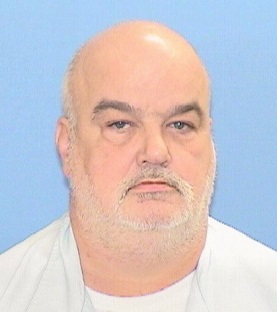
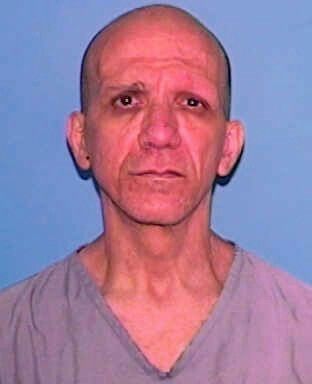
Patrick Wayne Kearney: The “Trash Bag Killer”
Early Life and Background
Patrick Wayne Kearney was born on September 24, 1939, in Los Angeles, California. He became one of the most prolific serial killers in American history and was associated with a wave of murders committed across Southern California during the 1960s and 1970s. Kearney confessed to killing 32 people, although authorities prosecuted him for 21 murders. Because several of his claimed victims were never identified or located, the complete number of people he killed remains uncertain.
Kearney was an intelligent and technically skilled man who worked as an electronics engineer. People who encountered him in ordinary circumstances often described him as quiet, polite and unremarkable. This outwardly harmless appearance allowed him to travel throughout Southern California without attracting much suspicion. He frequently drove long distances through Los Angeles, Orange, Riverside, San Diego and Imperial counties, areas that later became central to the investigation of his crimes.
Selection of Victims
Kearney generally targeted boys and young men, including teenagers, hitchhikers, runaways, military personnel and men he encountered in bars or along Southern California roads. Some victims accepted rides from him, while others were invited into his home. Several were vulnerable because they were traveling alone or had limited contact with relatives who could immediately report them missing.
Kearney usually killed his victims quickly, often by shooting them in the head without warning. He later admitted that the suddenness of the attacks gave him a sense of control. He transported bodies away from the original crime scenes and frequently dismembered them so that the remains would be easier to conceal. He placed body parts in plastic garbage bags or other containers and abandoned them beside highways, in canyons, near desert roads and in isolated areas.
The repeated discovery of remains wrapped in trash bags led newspapers and investigators to call him the “Trash Bag Killer.” He has also been grouped with several unrelated Southern California murderers under the broader label “Freeway Killer,” although Kearney acted independently.
Known and Reported Victims
- “Mike,” 18: Kearney described an early victim by the name Mike but provided too little identifying information for investigators to confirm his identity. The killing reportedly occurred during the 1960s, possibly in Southern California.
- “George”: Kearney claimed that he killed a man known as George in approximately December 1968. The victim’s full identity, exact date of death and disposal location have not been conclusively established.
- John E. Demchik, 13: Demchik was killed on June 26, 1971, after disappearing in the Inglewood area of Los Angeles County. Kearney later confessed to his murder.
- James Fletcher Barwick, 17: Barwick was killed on September 22, 1973. He was associated with the Escondido area of San Diego County. His case was among the earlier murders eventually connected to Kearney’s confessions.
- Ronald Dean Smith Jr., 5: Ronald disappeared from the Lennox area of Los Angeles County on August 24, 1974. His remains were discovered in Riverside County on October 12, 1974. Kearney admitted killing the child after encountering him alone.
- Albert Pena Rivera, 21: Rivera’s body was found on April 13, 1975, near Highway 74 east of San Juan Capistrano in Orange County. The isolated roadside location became part of the pattern investigators later associated with Kearney.
- Larry Gene Walters, 20: Walters was killed during the autumn of 1975, with sources commonly placing his death on or around October 31, 1975. He was connected to the Redondo Beach area of Los Angeles County.
- Kenneth Eugene Buchanan, 17: Buchanan was killed on March 1, 1976, after encountering Kearney in the Redondo Beach area. His disappearance was later linked to Kearney’s expanding series of murders.
- Oliver Peter Molitor, 13: Molitor was killed on March 21, 1976. He was last associated with the Redondo Beach area before his death.
- Larry Armendariz, 15: Armendariz was killed in April 1976, commonly reported as April 18 or April 19. He was another teenage victim connected to Redondo Beach and Kearney’s practice of approaching young people who were alone.
- Michael Craig McGhee, 13: McGhee disappeared from the Redondo Beach area on June 11, 1976. Kearney confessed to killing him, but Michael’s body was never recovered. The disappearance date is generally treated as the approximate date of his death.
- John “Woody” Woods, 23: Woods was killed on or around June 20, 1976. He was associated with Hollywood in Los Angeles and was included among the victims identified through Kearney’s statements.
- Larry Espy, 17: Espy was killed during 1976. His exact date of death remains uncertain. Investigators have associated him with unidentified remains discovered near Highway 74 in Orange County in August 1976.
- Wilfrid Lawrence Faherty, 20: Faherty was killed in approximately August 1976. The precise date and circumstances of his death are not firmly documented, but Kearney identified him as one of his victims.
- Randall Lawrence Moore, 16: Moore was killed in approximately August 1976. He was associated with the San Diego area, and remains connected to his case were reportedly found later that year in San Diego County.
- Timothy Brian Ingham, 19: Ingham was killed in September 1976. His body was found on September 24, 1976, beside Highway 79 near Borrego Springs in San Diego County. He had reportedly been hitchhiking from Merced toward Louisiana when he encountered Kearney.
- Robert “Billy” Benniefiel, 17: Benniefiel was killed during the latter part of 1976. He was connected to Redondo Beach, but the exact date of his death has not been conclusively established.
- David Rogers, 27: Rogers was a United States Marine last seen at Camp Pendleton on February 19, 1976. His body was found two days later, on February 21, near Fallbrook in San Diego County. Some accounts identify him as David Allen or contain conflicting surname information, but contemporary reports naming Kearney’s confessed victims identified him as David Rogers.
- Mark Andrew Orach, 20: Orach was killed in early October 1976. His remains were found on October 6 along Highway 74 east of San Juan Capistrano in Orange County. He was initially recorded as an unidentified victim before investigators established his identity.
- Nicolas Hernandez-Jimenez, 28: Hernandez-Jimenez was killed in January 1977. His body was discovered on January 24 beneath a freeway near Lennox Boulevard in Los Angeles County.
- Arturo Ramos Marquez, 24: Marquez was killed in late February 1977. His remains were found on March 3 beside Interstate 10 near Banning in Riverside County.
- John Otis LaMay, 17: LaMay was killed on March 13, 1977, after visiting Kearney’s Redondo Beach residence while looking for Kearney’s companion, David Hill. Kearney invited LaMay inside and later shot him. His remains were found on March 18 near Highway 71 south of Corona in Riverside County.
- Merle “Hondo” Chance, 8: Chance disappeared near his Venice home on April 6, 1977. His decomposed remains were found on May 26 in the Angeles National Forest, approximately 11 miles north of Altadena. Kearney later admitted responsibility for his death.
The Murder of John LaMay and the Investigation
The disappearance of John Otis LaMay provided investigators with the clearest path to Kearney. Before vanishing, LaMay had told others that he intended to visit David Douglas Hill, Kearney’s longtime companion, at the residence Hill shared with Kearney in Redondo Beach. When LaMay’s remains were discovered, detectives traced his final movements to the house.
Investigators questioned Kearney and Hill and began examining whether they were connected to other bodies recovered along Southern California highways. Detectives found that fibers and other physical evidence associated with the residence appeared consistent with evidence recovered from several victims. Authorities also found cutting tools, including a hacksaw bearing blood evidence, that supported the theory that bodies had been dismembered inside or near the home.
As police attention intensified, Kearney and Hill left California and traveled to Texas. Their names and photographs were publicized, and they eventually surrendered at the Riverside County Sheriff’s Department on July 1, 1977. Although Hill was initially suspected of participating in the murders, Kearney claimed complete responsibility. Charges against Hill were subsequently dismissed after investigators concluded that they lacked sufficient evidence to prove his involvement.
Confessions and Search for Victims
After his surrender, Kearney began giving investigators extensive statements about the murders. He described victims, methods and disposal sites across several counties. On July 5, 1977, authorities publicly announced that he had confessed in connection with the series. Kearney accompanied detectives to remote locations and pointed out places where he said he had abandoned human remains.
By the middle of July 1977, Kearney had signed confessions involving 28 murders. He later raised the number to 32. Some of these admissions corresponded to known missing persons or previously unidentified remains, while others could not be verified. His descriptions helped authorities connect cases that had been investigated separately in Los Angeles, Orange, Riverside, San Diego and Imperial counties.
Kearney’s confessions revealed that the murders had apparently begun years earlier than investigators initially believed. Although the most visible portion of the series occurred between 1975 and 1977, he claimed that he had killed people as early as the 1960s. The lack of complete names, surviving evidence and recoverable remains made confirmation of the earliest murders extremely difficult.
Methods and Disposal of Remains
Kearney’s crimes were marked by planning and mobility. He commonly approached a victim while driving, offered transportation or companionship and then attacked when the victim was unable to escape. In several cases, he shot the victim from behind or while the person was distracted. This reduced the possibility of resistance and allowed him to maintain control of the crime scene.
Afterward, Kearney transported the bodies to his residence or another private location. He dismembered many of the victims with saws and other tools. The remains were washed, wrapped and divided among garbage bags. He sometimes removed identifying features or separated body parts between different disposal locations, making it more difficult for investigators to identify the victim or determine where the killing had occurred.
The bags were discarded beside freeways, down embankments, in desert regions or in wooded areas. California’s vast highway system allowed Kearney to move between counties quickly. This geographical separation initially prevented law-enforcement agencies from recognizing that numerous discoveries were connected to a single offender.
Motives and Statements
Kearney told investigators that killing gave him feelings of excitement, dominance and control. Accounts of his confessions indicate that he carried intense anger and resentment, which he redirected toward victims who were physically vulnerable. He also admitted to disturbing treatment of some victims after death.
He claimed that some early victims reminded him of people who had bullied or humiliated him when he was younger. His later murders appeared increasingly opportunistic, however, and included victims whose ages ranged from small children to adult men. The wide variation in the victims’ backgrounds demonstrated that vulnerability and availability were often more important to him than any single personal characteristic.
Guilty Pleas and Sentencing
Kearney avoided a trial by entering guilty pleas. On December 21, 1977, he pleaded guilty to three counts of first-degree murder in Riverside County and received concurrent life sentences. The pleas ensured that he would remain imprisoned while prosecutors in other counties prepared additional cases.
In February 1978, Los Angeles County prosecutors charged him with 18 more murders. On February 21, he pleaded guilty to all 18 counts and received additional life sentences. The combined judgments amounted to 21 life terms. California did not impose the death penalty in his case, and his cooperation in identifying victims and resolving cases was an important part of the legal process.
Unidentified and Unconfirmed Victims
Despite the large number of convictions, investigators were unable to verify every murder Kearney described. Some victims were known only by first names or nicknames, while others remained unidentified when their bodies were recovered. In a number of cases, Kearney provided possible dates and locations but no information that allowed detectives to locate remains.
His claimed total of 32 victims is therefore higher than the 21 murders to which he pleaded guilty. The uncertainty has led some researchers to believe that additional missing boys and young men from California during the 1960s and 1970s may have been his victims. Without physical evidence or reliable identifying information, those possible connections remain unresolved.
Legacy of the Case
Patrick Wayne Kearney’s case demonstrated the difficulties created when a mobile killer abandons victims across numerous jurisdictions. Before investigators began sharing information, individual bodies found in different counties appeared to be unrelated crimes. Similar packaging, disposal methods and forensic evidence eventually revealed a common pattern.
The investigation also showed how unidentified remains and missing-person reports can remain disconnected for years. Several victims were initially known only as John Does. Kearney’s confessions, combined with dental records, personal descriptions and other evidence, helped authorities restore names to some of them.
Kearney remains notorious not only because of the number of murders he confessed to, but also because of the calculated way he concealed his crimes. His quiet public personality stood in sharp contrast to the violence he committed in private. The complete scope of his crimes may never be known, leaving unidentified victims and unresolved disappearances as a lasting part of the case.