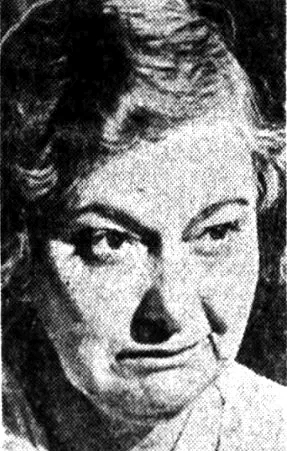
Albert Henry DeSalvo: The Confessed Boston Strangler
Albert DeSalvo and the Boston Strangler Case
Albert Henry DeSalvo became one of the most notorious figures in American criminal history after confessing that he was the "Boston Strangler," the name given to the person or persons believed responsible for a series of killings in eastern Massachusetts between 1962 and 1964. Thirteen women became traditionally associated with the case. Most were attacked inside their own homes, and many were sexually assaulted and strangled with stockings, scarves, cords, or other articles of clothing. The crimes created widespread fear throughout Boston and surrounding communities because the killer often appeared to enter apartments without forcing his way inside.
Despite DeSalvo's confession, an important distinction remains: he was never tried or convicted for the Boston Strangler murders. For decades there was no physical evidence proving that he had committed any of them. That changed substantially in 2013, when DNA testing connected DeSalvo to the final traditionally recognized victim, Mary Sullivan. The DNA evidence established a direct forensic connection between DeSalvo and Sullivan's crime scene, but it did not establish that he murdered all of the other women whose deaths had been attributed to the Boston Strangler.
Early Life and Criminal Behavior
Albert Henry DeSalvo was born on September 3, 1931, in Chelsea, Massachusetts. His childhood was troubled, and he repeatedly came into contact with the juvenile justice system. As an adult, his criminal behavior increasingly focused on entering homes and approaching women under false pretenses. Years before he became associated with the Boston Strangler murders, police already knew of him because of a series of sexually motivated offenses.
One of DeSalvo's early patterns earned him the nickname "The Measuring Man." He approached young women while pretending to be connected with a modeling or talent organization. After persuading women that they might have modeling potential, he would claim that he needed to take their physical measurements. The supposed professional examination then became an excuse for inappropriate sexual touching. DeSalvo was eventually arrested in connection with this behavior and served time in custody.
The "Green Man" Attacks
After his release, DeSalvo became associated with a far more serious series of home invasions and sexual assaults. The attacker was sometimes called the "Green Man" because he was reported to wear green work clothing that made him resemble a maintenance worker or repairman. Such a disguise provided a plausible reason for approaching homes and apartment buildings without immediately attracting suspicion.
Women were attacked in Massachusetts and elsewhere in New England. In many cases, the assailant entered a residence, restrained the victim and sexually assaulted her. These crimes later became significant because DeSalvo was eventually identified as the Green Man and prosecuted for sexual assaults and robberies connected to that series. Those offenses, rather than the Boston Strangler murders, ultimately sent him to prison for life.
The Beginning of the Boston Strangler Murders
The series traditionally attributed to the Boston Strangler began in June 1962. Investigators were confronted with women being killed inside residences where there was frequently little or no evidence of forced entry. Several early victims were older women living alone. Many had been sexually assaulted, and a recurring characteristic was the use of the victim's own clothing as a ligature. Stockings, robe cords and other garments were sometimes left knotted around the neck.
The similarities were disturbing, but the crimes were not identical. The victims varied dramatically in age, from 19 to 85. Some deaths occurred in Boston, while others occurred in communities such as Lynn, Cambridge, Lawrence and Salem. Several victims were strangled, while at least one was killed primarily by stabbing and another died from a heart attack under circumstances DeSalvo later claimed responsibility for. These variations would eventually become a major reason for questioning whether a single person had actually committed every crime attributed to the Boston Strangler.
Victims Traditionally Associated With the Boston Strangler
The following women make up the traditional thirteen-victim Boston Strangler chronology. Historical publications sometimes confuse the date a victim died with the date her body was discovered. Where the two were different, the information below emphasizes the best-supported date of death and notes later discovery when important. These thirteen cases should not be interpreted as thirteen murders legally proven to have been committed by Albert DeSalvo.
- Anna Slesers — June 14, 1962 — 77 Gainsborough Street, Boston, Massachusetts. Slesers was found inside her apartment after her son arrived to take her to a memorial service. She had been sexually assaulted and strangled. A cord from her clothing had been used around her neck, beginning the pattern of clothing being used as ligatures that became closely associated with the Boston Strangler investigation.
- Mary Mullen — June 28, 1962 — 1435 Commonwealth Avenue, Boston, Massachusetts. Mullen's death was originally attributed to a heart attack rather than homicide. DeSalvo later claimed that he had entered her apartment intending to attack her but that the elderly woman collapsed and died. He said he placed her on a couch and left. Because her certified cause of death was a heart attack, her inclusion among the thirteen cases is unusual and rests heavily on DeSalvo's later confession.
- Nina Nichols — June 30, 1962 — 1940 Commonwealth Avenue, Boston, Massachusetts. Nichols was discovered in her apartment after relatives became concerned when they could not contact her. She had been sexually assaulted and strangled with nylon stockings. Investigators found no obvious indication that an intruder had forcibly broken into the residence.
- Helen Blake — June 30, 1962 — 73 Newhall Street, Lynn, Massachusetts. Blake was killed in Lynn on approximately the same date as Nichols. She was sexually assaulted and strangled with a stocking. The similarity between the deaths occurring so close together intensified concern that authorities were facing a repeat offender rather than a series of unrelated homicides.
- Edes "Ida" Irga — August 19, 1962 — 7 Grove Street, Boston, Massachusetts. Irga was killed in her Beacon Hill apartment and was strangled. Her crime scene showed signs of deliberate staging, another disturbing characteristic noted in several of the Boston Strangler cases. Her body was discovered after relatives became worried when she could not be reached.
- Jane Sullivan — approximately August 20, 1962 — 435 Columbia Road, Dorchester, Boston, Massachusetts. Sullivan, a nurse, was strangled with nylon stockings inside her residence. Her body was not discovered until August 30, meaning some victim chronologies list the discovery date rather than the probable date of death. The significant delay between her death and discovery complicated the investigation.
- Sophie Clark — December 5, 1962 — 315 Huntington Avenue, Boston, Massachusetts. Clark was a young hospital technician and student who was found dead by a roommate. She had been sexually assaulted and strangled with clothing. Her youth represented a dramatic change from the older women attacked during the first months of the series and raised questions about whether the same offender was responsible.
- Patricia Bissette — approximately December 30, 1962 — 515 Park Drive, Boston, Massachusetts. Bissette was discovered on December 31 after she failed to report to work. She had been strangled with several articles of clothing. She was also in the early stage of pregnancy. The crime occurred in the Back Bay area, where other women connected to the Strangler investigation had lived.
- Mary Brown — March 1963 — 319 Park Avenue, Lawrence, Massachusetts. Brown was killed inside her Lawrence apartment. Unlike the more recognizable stocking-strangulation cases, she had been beaten, strangled and stabbed. Accounts of the case differ between March 6 and March 9 regarding the precise date associated with her death. DeSalvo nevertheless included Brown when describing the killings he claimed to have committed.
- Beverly Samans — approximately May 6, 1963 — 4 University Road, Cambridge, Massachusetts. Samans was a music teacher and graduate student. She was discovered on May 8 after apparently having been dead for roughly two days. Although ligatures had been placed around her neck, investigators determined that multiple stab wounds were the primary cause of death. The substantial difference in method made the Samans homicide one of the cases that later fueled doubts about a single Boston Strangler being responsible for the entire series.
- Evelyn Corbin — September 8, 1963 — 224 Lafayette Street, Salem, Massachusetts. Corbin was found inside her Salem apartment after a neighbor became concerned. She had been sexually assaulted and strangled with stockings. The crime revived public fears after several months had passed since the previous killing traditionally linked with the Strangler.
- Joann Graff — November 23, 1963 — 54 Essex Street, Lawrence, Massachusetts. Graff was a young woman living in Lawrence who was sexually assaulted and strangled. Nylon stockings and another piece of clothing were used around her neck. Her disappearance from normal activities caused friends and acquaintances to become concerned, and she was subsequently found inside her apartment.
- Mary Sullivan — January 4, 1964 — 44-A Charles Street, Boston, Massachusetts. Sullivan was 19 years old and had only recently moved into the Beacon Hill apartment where she was killed. She was sexually assaulted and strangled with a stocking and scarves. Her death became the final murder traditionally attributed to the Boston Strangler. Decades later, biological evidence preserved from her crime scene provided the critical DNA connection to Albert DeSalvo.
A City Living in Fear
The murders fundamentally changed daily life for many women in the Boston area. Residents installed additional locks, became suspicious of strangers and were warned not to admit repairmen or delivery workers without confirming their identities. The fact that many apartments showed no obvious forced entry produced the disturbing possibility that victims had voluntarily opened their doors to the killer.
Police investigated large numbers of suspects and attempted to find common links among the victims. Their ages, occupations and backgrounds varied greatly. Some had medical connections, either as workers or patients, but no single relationship explained the entire series. The geographic spread of the crimes further complicated the investigation. Detectives also had to determine whether every suspicious strangulation was genuinely part of the same series or merely resembled it.
DeSalvo's 1964 Arrest
DeSalvo was not originally captured because police solved one of the Strangler murders. His identification came from an unrelated sexual assault. In October 1964, a woman who survived an attack was able to provide investigators with a description of her assailant. The description eventually led police to DeSalvo, whose earlier criminal history made him recognizable to investigators.
Once DeSalvo was in custody, numerous women connected him with the series of assaults attributed to the Green Man. He admitted involvement in an enormous number of burglaries and sexual attacks, although some of his claims were so extensive that investigators questioned their accuracy. At first, however, DeSalvo was not publicly known as the Boston Strangler.
The Confession
While confined at Bridgewater State Hospital, DeSalvo became acquainted with convicted murderer George Nassar. DeSalvo allegedly told Nassar that he was responsible for the Boston Strangler murders. Nassar contacted his attorney, F. Lee Bailey, who subsequently became DeSalvo's lawyer and arranged extensive interviews concerning the stranglings.
DeSalvo gave lengthy, detailed statements describing the victims, their apartments and the circumstances surrounding the crimes. Investigators were impressed by some details that appeared to correspond closely to information that had not been widely released to the public. In other instances, however, DeSalvo made mistakes or gave descriptions that did not match known evidence. Those inconsistencies became central to the continuing debate over whether his confession represented firsthand knowledge of every crime.
Why DeSalvo Was Never Convicted as the Boston Strangler
Despite the confession, Massachusetts authorities did not prosecute DeSalvo for the stranglings. At the time, prosecutors lacked fingerprints, blood evidence, eyewitness identification or other physical evidence directly connecting him with the murder scenes. Questions also surrounded the circumstances under which the confession had been obtained and whether portions of it would be admissible in court.
Instead, DeSalvo was prosecuted for a series of unrelated sexual assaults, burglaries and robberies. In January 1967, he was convicted and received a life sentence. The result guaranteed that he would remain incarcerated even though the Commonwealth had never established in court that he was the Boston Strangler.
Escape and Imprisonment
In February 1967, DeSalvo escaped from Bridgewater State Hospital with two other inmates, setting off an intensive manhunt. He was located and recaptured shortly afterward in Lynn, Massachusetts. Following the escape, he was transferred to the maximum-security state prison at Walpole.
DeSalvo remained imprisoned for the crimes for which he had actually been convicted. In November 1973, he was stabbed to death inside Walpole State Prison. His killing never produced a definitive resolution of the Boston Strangler controversy. DeSalvo died without ever facing a jury for a single one of the thirteen deaths he had claimed responsibility for.
Doubts About the Confession
Investigators, journalists, authors and victims' relatives continued to question whether one killer could reasonably have committed every crime. The differences were substantial. Victims ranged from teenagers to elderly women. Some were strangled, others were beaten or stabbed, and Mary Mullen died of a heart attack. Crimes occurred across several Massachusetts communities, and some aspects of DeSalvo's descriptions did not correspond with evidence from the scenes.
Another concern was the possibility that DeSalvo learned information about the murders from other people while incarcerated. His relationship with George Nassar in particular generated speculation, although no alternative suspect was ever conclusively proven to have committed the entire series. The possibility remains that some murders traditionally grouped under the Boston Strangler name were committed by different offenders.
The 2013 DNA Breakthrough
Modern forensic science eventually provided evidence investigators in the 1960s could not obtain. Biological material preserved from Mary Sullivan's January 4, 1964 crime scene was subjected to advanced DNA testing. Investigators first compared genetic markers with DNA obtained from a male relative of DeSalvo and found a strong paternal-line connection.
Authorities then exhumed DeSalvo's remains so that a direct comparison could be performed. Testing connected DeSalvo's genetic profile with biological evidence from Sullivan's crime scene. The result provided the first powerful physical evidence that DeSalvo had been present during the attack on Mary Sullivan and supported the conclusion that he was responsible for her murder.
The DNA discovery dramatically strengthened the case against DeSalvo, but it did not scientifically prove his responsibility for the other twelve traditionally associated deaths. For most of those crimes, no comparable biological evidence remains available that can conclusively identify the killer. As a result, it is most accurate to describe DeSalvo as the confessed Boston Strangler who was forensically linked to Mary Sullivan, rather than to state as established fact that all thirteen murders were proven to be his work.
The Continuing Mystery
Albert DeSalvo occupies an unusual place in the history of serial murder investigations. His confession was detailed enough to convince many detectives and prosecutors, yet he died without ever being prosecuted for the killings that made his name infamous. Decades later, DNA evidence vindicated part of his confession by placing him at the crime scene of Mary Sullivan, but the evidence could not retroactively establish his responsibility for the entire series.
The Boston Strangler case therefore remains partly solved and partly uncertain. Mary Sullivan's murder now has a direct forensic connection to DeSalvo. The other deaths remain historically associated with the same series, and DeSalvo claimed responsibility for them, but their attribution to him rests largely on confession evidence and similarities among the crimes. The possibility that more than one murderer operated under the shadow of the "Boston Strangler" remains one of the central unresolved questions surrounding the case.