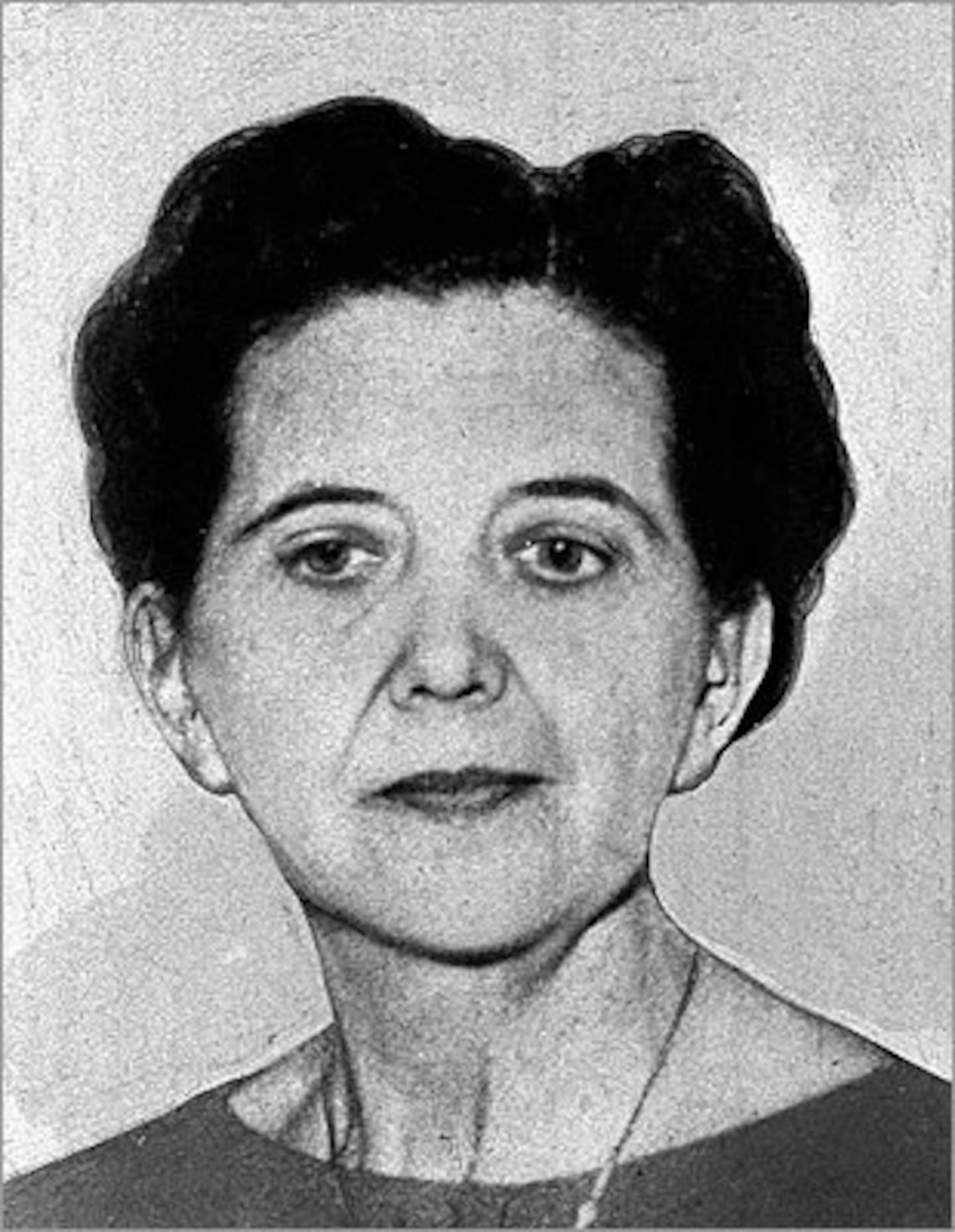
Anna Slesers, a 55-year-old Latvian-American seamstress, lived a quiet life in her third-floor apartment on Gainsborough Street in Boston. Having fled Latvia with her children years earlier, she was known for her dedication to her family and her church. On the evening of June 14, 1962, Anna was preparing to attend a memorial service at her church. She had finished dinner and was getting ready to take a bath before her son, Juris, was scheduled to pick her up.
When Juris arrived at his
mother's apartment shortly before seven o'clock, he found the door locked and received no answer to his knocks. Growing increasingly concerned, he forced the door open. Inside, he made a horrifying discovery. His mother, Anna, was lying on the floor of her bathroom. She had been strangled with the belt of her blue housecoat, which was tied tightly around her neck in a bow. The scene suggested a violent struggle; the apartment was in disarray, appearing to have been ransacked, though nothing of value was reported missing. It was later determined that she had also been sexually assaulted.
The brutal murder of Anna Slesers marked the beginning of a period of intense fear and panic in Boston, as she is considered the first victim of the infamous serial killer who would become known as the Boston Strangler. Her death was the first in a series of thirteen murders of women that occurred between 1962 and 1964. The victims were of various ages and were all strangled in their homes, often with articles of their own clothing.
The investigation into the string of murders was extensive and fraught with challenges. For years, the identity of the killer remained a mystery, leading to widespread fear among the female population of Boston. A man named Albert DeSalvo, who was already in custody for a series of unrelated sexual assaults, eventually confessed to being the Boston Strangler. However, his confession was met with skepticism by some investigators, as there was no physical evidence to connect him to the crime scenes at the time. DeSalvo was never charged with the murders of Anna Slesers or the other women attributed to the Strangler. He was sentenced to life in prison for the other offenses and was stabbed to death by fellow inmates in 1973. Decades later, in 2013, DNA evidence would link DeSalvo to the murder of Mary Sullivan, the last victim of the Boston Strangler, providing some evidence of his involvement, though questions about whether he acted alone or was responsible for all thirteen murders persist. No one was ever arrested for or convicted of the murder of Anna Slesers.