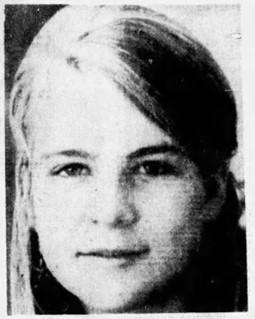
In the winter of 1964, a 19-year-old Caucasian female named Mary Sullivan had recently moved from the familiar surroundings of Cape Cod to a new life in Boston, Massachusetts. She settled into an apartment on Charles Street in the bustling Beacon Hill neighborhood, but her hopeful beginning was tragically cut short. On January 4, 1964, just a few days after her move, Sullivan was found raped and murdered in her home.
The discovery was made by her roommates, who initially thought she was sleeping. When they couldn't rouse her, they realized the horrifying truth. An officer responding to the scene found Sullivan with a nylon stocking and two scarves tied around her neck. She would come to be known as the last victim of the notorious serial killer dubbed the Boston Strangler.
The investigation into the series of 11 to 13 murders that terrorized the Boston area between 1962 and 1964 was fraught with public fear and immense pressure on law enforcement. A man named Albert DeSalvo, a married Army veteran, was eventually identified as a suspect, though not initially for the stranglings. While in custody for other crimes, DeSalvo confessed in detail to being the Boston Strangler, admitting to the murders of Sullivan and the other women. Despite the confession, which contained details that had not been made public, there was no physical evidence to link him to the crimes, and some inconsistencies in his accounts raised doubts. His confession was ultimately ruled inadmissible in court, so he was never charged with or convicted of the Strangler murders. Instead, DeSalvo was sentenced to life in prison for a series of unrelated armed robberies and sexual assaults. He later recanted his confession before being stabbed to death in prison in 1973, leaving the question of his guilt in the murders officially unresolved for decades.
For nearly half a century, the case remained a subject of controversy and speculation, with some investigators and family members, including Sullivan's nephew, believing more than one killer was responsible. The break in Mary Sullivan's case came with advancements in DNA technology. Seminal fluid had been collected from the crime scene in 1964 and preserved. In 2013, investigators used this decades-old evidence to seek a definitive answer. They obtained a DNA sample from a water bottle discarded by one of DeSalvo's nephews. The test produced a "familial match" with the Y chromosome in the 1964 semen sample, a link that authorities said could eliminate 99.9% of the male population.
This powerful new evidence prompted law enforcement to seek a court order to exhume Albert DeSalvo's remains for direct testing. On July 19, 2013, officials announced the results. The DNA extracted from DeSalvo's body was a near-certain match to the biological evidence left at the scene of Mary Sullivan's murder. Forensic specialists calculated the odds that another white male could have been the source of the DNA at one in 220 billion. After 49 years of uncertainty, Albert DeSalvo was conclusively identified as the individual who raped and murdered Mary Sullivan. While this brought a measure of closure to her case, it is important to note that the DNA evidence only linked DeSalvo to this specific crime, and questions surrounding his involvement in the other Boston Strangler murders persist.