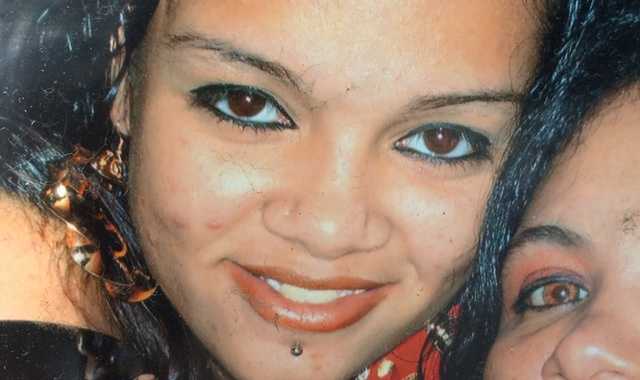
On a summer night that should have been filled with quiet remembrance, tragedy revisited a Boston family with a devastating echo of the past. It was July 22, 2006, when 20-year-old Analicia “Ana-Banana” Perry, a Black/African American female, was killed. The young mother found herself on Annunciation Road in the Roxbury neighborhood, a place that held deep and painful significance for her and her family.
Four years earlier, to the day, it was the very spot where her brother, Robert, had lost his life to violence. Analicia was there to honor his memory, lighting candles at a makeshift shrine that had become a somber memorial. As she knelt to light a candle, the sacred act of remembrance was shattered by a gunshot.
In the late hours of that Saturday, at approximately 11:30 p.m., Analicia was struck by a bullet to the head. She was rushed to a nearby hospital, but her injuries were too severe, and she was pronounced dead in the early morning hours. The brutal irony of her death, at the same location and on the same date as her brother's murder, sent shockwaves through the community. Analicia, a graduate of North Cambridge Catholic High School, had dreams of becoming a nurse and was planning to attend Quincy College. She was remembered by friends as a talented hairstylist and a loving mother to her young daughter.
The investigation into Analicia’s death soon focused on two individuals. A month after the shooting, authorities announced an arrest in the case. Steven Sayles, 19, of Dorchester, who was identified as Analicia's ex-boyfriend, was charged with being an accessory after the fact to her murder. He surrendered to the police accompanied by his attorney. The primary suspect in the shooting, 18-year-old Laron Lewis Richardson of Jamaica Plain, was charged with murder. He had fled after the incident but was later captured in Portland, Maine.
Prosecutors revealed that on the night of her death, Analicia had been in a phone argument with Sayles. Later, as she tended to her brother's memorial, a car matching the description of Sayles' vehicle pulled up. Witnesses reported that Analicia threw a candle at the car before she was shot. According to prosecutors, Sayles later admitted to being in the car and implicated Richardson as the shooter. Richardson also made statements that implicated himself. At his arraignment, Richardson pleaded not guilty, and his lawyer claimed that his client feared Sayles was trying to have him killed. Following the arrests, the legal process began to unfold, leaving a grieving family and community to grapple with the senseless loss of a young woman whose life was cut short in a place already marked by immense sorrow.