The Mad City Murderer and the Capital City Killings
The name "Mad City Murderer" is sometimes used for the unidentified killer believed to have been responsible for a series of murders and disappearances involving young women in and around Madison, Wisconsin. The cases are more commonly grouped under the names "Mad City Murders" or "Capital City Killings." The crimes stretched from the late 1960s into the early 1980s and created lasting fear around Madison and the University of Wisconsin community.
Despite the serial-killer label, investigators have never established that one person committed all of the murders. The victims were killed in different ways, the crimes occurred years apart, and later researchers have suggested that several offenders may have been responsible. Some victims may have been attacked by the same killer, while others appear increasingly likely to have been separate crimes. No person has ever been convicted as the Mad City Murderer.
Victims Associated with the Mad City Murders
- Christine Rothschild — May 26, 1968 — University of Wisconsin-Madison campus, Madison, Wisconsin. The 18-year-old freshman was murdered beside Sterling Hall. She suffered numerous stab wounds and other injuries. Her murder remains unsolved.
- Debra Jayne Bennett — believed to have died on or shortly after July 8, 1976 — Madison/Cross Plains area, Dane County, Wisconsin. The 20-year-old was last seen in Madison on July 8. Her badly burned and decomposed body was discovered along Old Sauk Pass Road near Cross Plains on July 21, 1976. The exact medical date and cause of death could not be determined.
- Julie Ann Hall — June 17, 1978 — Waunakee area, Dane County, Wisconsin. The 18-year-old was last seen during the night of June 16. Her body was found in a shallow grave along Woodland Road on June 21. Medical findings indicated she had been dead approximately three to five days.
- Julie Speerschneider — exact date of death undetermined; disappeared March 27, 1979 — Madison and the town of Dunn, Wisconsin. The 20-year-old disappeared after leaving the 602 Club on University Avenue. Her skeletal remains were discovered near the Yahara River in April 1981. Decomposition prevented investigators from determining precisely when or how she died.
- Susan LeMahieu — exact date of death undetermined; disappeared December 15, 1979 — Madison, Wisconsin. The 24-year-old disappeared from Allen Hall. Her body was discovered near the University of Wisconsin Arboretum in April 1980. An autopsy determined that she had suffered multiple stab wounds to the chest.
- Shirley Stewart — exact date of death undetermined; disappeared January 2, 1980 — Madison/Westport area, Wisconsin. Stewart disappeared after leaving her job at the Dean Clinic. Her badly decomposed remains were discovered in a wooded area north of Madison in July 1981. Investigators could not establish an exact cause or date of death.
- Donna Mraz — July 2, 1982 — behind Camp Randall Stadium, Madison, Wisconsin. The 23-year-old University of Wisconsin student was repeatedly stabbed while walking home after working at a State Street restaurant. She died from her injuries and her murder remains an active unsolved homicide.
The Murder of Christine Rothschild
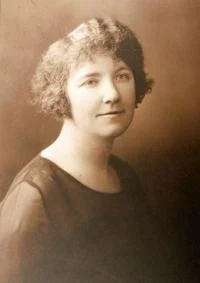
The case generally regarded as the beginning of the Mad City series occurred on May 26, 1968. Christine "Chris" Rothschild was an 18-year-old University of Wisconsin freshman from Chicago. She was an honors graduate who had arrived in Madison in 1967 and was preparing to complete her first year of college.
Rothschild's body was discovered concealed near bushes outside Sterling Hall on the UW-Madison campus. She had been stabbed repeatedly in the chest and upper body. Investigators also found evidence that she had been struck and strangled. The intensity of the attack caused investigators to consider whether the killer knew her or had developed a particular fixation on her.
Over the years, a former University of Wisconsin medical resident named Niels Bjorn Jorgensen became the focus of considerable suspicion among Rothschild's friends and later researchers. Rothschild's friend Linda Schulko maintained that Jorgensen had shown an unwanted interest in Christine before her murder. Author and former police officer Michael Arntfield later argued that Jorgensen was a strong suspect. Jorgensen denied killing Rothschild, however, and he was never charged. The official case remains unsolved, and UW-Madison police have continued seeking information about the murder decades later.
The Death of Debra Bennett
Eight years passed before another case became associated with the series. Twenty-year-old Debra Jayne Bennett was living in Madison during the summer of 1976. She was last reliably seen at approximately 7:15 p.m. on July 8, walking away from the 1400 block of Loftsgordon Avenue. She was reportedly barefoot, wearing jeans and carrying a denim jacket and purse.
On July 21, land surveyors discovered Bennett's badly burned and decomposed remains in a rural gully along Old Sauk Pass Road east of Cross Plains, roughly fourteen miles from Madison. Investigators determined that she had probably been dead for at least ten days. Because of the extensive burning and decomposition, her precise cause of death could not be established.
A particularly mysterious development occurred several weeks afterward. Bennett had rented a room at Madison's Cardinal Hotel shortly before disappearing. The key to that room was later returned to the hotel anonymously through the mail. Investigators could not establish who mailed it or why. The strange disposal of Bennett's body and the unexplained return of the key became two of the most memorable details of the Capital City cases.
The Murder of Julie Ann Hall
Julie Ann Hall, 18, had recently moved to Madison and obtained work as a library assistant with the Wisconsin Historical Society. On Friday, June 16, 1978, she went out in downtown Madison and was reportedly seen at the Main King Tap near Capitol Square. She did not return home.
On June 21, a man clearing property in the Waunakee area discovered Hall's body in a shallow grave near Woodland Road and Highway 12. Investigators estimated that she had been dead for approximately three to five days, placing her death around June 17. Her body showed evidence of violence, although contemporary accounts differed regarding the precise fatal injury. Investigators considered blunt-force trauma and other possibilities while attempting to reconstruct her final hours.
Years later, notorious serial killer Henry Lee Lucas confessed to Hall's murder. Dane County investigators initially took his claims seriously because he appeared to know information about the crime. Lucas subsequently became infamous for falsely claiming responsibility for hundreds of murders around the United States. He eventually recanted his confession to Hall's killing, and no reliable evidence has resulted in a conviction.
The Disappearance of Julie Speerschneider
Twenty-year-old Julie Speerschneider disappeared on March 27, 1979. She had spent part of the evening at the 602 Club on University Avenue in Madison and was believed to have attempted to hitchhike to a friend's home afterward.
A witness later reported picking up a young woman resembling Speerschneider who was accompanied by an unidentified man. The pair were reportedly dropped near Johnson and Brearly streets. Police developed a description of the man but were never able to conclusively identify him.
Speerschneider remained missing for more than two years. In April 1981, a teenager walking near the Yahara River in the town of Dunn discovered skeletal human remains. Dental records established that the remains belonged to Speerschneider. The condition of her body made it impossible for investigators to determine an exact cause or date of death. Her disappearance and concealed remains strengthened public fears that someone was systematically preying upon young Madison women.
The Murder of Susan LeMahieu
Susan LeMahieu, 24, disappeared on December 15, 1979. She had been living at Allen Hall in Madison. Initially, authorities did not know whether she had voluntarily wandered away or encountered danger.
That uncertainty ended in April 1980 when LeMahieu's body was discovered among vegetation near the Madison Arboretum. An autopsy revealed multiple stab wounds to her chest. Her death was clearly homicidal, although the amount of time that had passed prevented investigators from establishing a precise date of death.
LeMahieu's case became particularly important when investigators began publicly considering similarities among the accumulating unsolved deaths. Her body had been left outdoors in a secluded area, a feature that appeared in several of the other cases.
The Death of Shirley Stewart
Shirley Stewart disappeared on January 2, 1980 after leaving her job at Madison's Dean Clinic. For approximately eighteen months, her whereabouts remained unknown.
In July 1981, her remains were discovered hidden in a heavily wooded area in Westport, north of Madison. The body had been exposed to the elements for so long that investigators were unable to establish exactly when Stewart died or what caused her death.
Stewart's disappearance occurred only weeks after Susan LeMahieu vanished, and both cases remained unresolved as the remains of Julie Speerschneider were also being recovered. By 1981, Madison investigators were confronting several young women who had disappeared under mysterious circumstances and later been found in isolated outdoor locations.
The Murder of Donna Mraz
The July 2, 1982 murder of Donna Mraz was one of the most direct and frightening attacks associated with the series. Mraz was a 23-year-old University of Wisconsin student who worked at The Bittersweet restaurant on State Street. During the early morning hours, she finished her shift and began walking home.
As Mraz walked along a sidewalk behind Camp Randall Stadium, an unknown attacker repeatedly stabbed her. People nearby heard the disturbance and emergency personnel responded within minutes, but she could not be saved. Her money, paycheck and other belongings were not taken, leaving robbery as an unlikely explanation for the attack.
The killer escaped without being identified. UW-Madison police have repeatedly renewed appeals for information about Mraz's murder, including renewed public appeals more than four decades after the crime. No suspect has been charged, and the motive remains unknown.
Was There Really One Mad City Murderer?
The idea of a single Mad City Murderer developed because so many young women disappeared or were killed in the Madison area during roughly the same era. Several victims had connections to the University of Wisconsin, and multiple bodies were left in isolated outdoor locations around Dane County. Some of the women had similar physical appearances, and several vanished while walking, hitchhiking or traveling alone.
There were also major differences. Christine Rothschild was attacked directly on campus in 1968. Debra Bennett's body was burned and transported to a rural location. Julie Ann Hall was buried in a shallow grave. Susan LeMahieu and Donna Mraz were stabbed. The causes of death for Julie Speerschneider and Shirley Stewart could not be determined. The crimes were separated by long periods, including an eight-year gap between Rothschild and Bennett.
Modern examinations of the cases have therefore challenged the original idea that all of the women were killed by one man. Michael Arntfield's research into the Mad City cases argued that Madison may instead have attracted several different violent offenders during the period. Under that interpretation, some clusters of victims could be linked while other murders were independent.
Henry Lee Lucas and Other Suspects
During the 1980s, investigators hoped that Henry Lee Lucas might provide the solution. Lucas was already a convicted murderer when he began confessing to enormous numbers of unsolved killings across the country. Wisconsin detectives interviewed him about several Madison-area victims, and at one stage authorities publicly expressed confidence that he had provided details suggesting involvement in some of the crimes.
Those claims eventually collapsed. Lucas recanted hundreds of confessions, and investigations elsewhere demonstrated that he could not have committed many murders he claimed. His statements are consequently considered unreliable, and the Madison cases were never successfully prosecuted against him.
Niels Bjorn Jorgensen has separately been proposed as the killer of Christine Rothschild, particularly through the work of Rothschild's longtime friend and later researchers. That theory has never resulted in criminal charges and should not be confused with an official solution of the case.
Janet Raasch and a Major Correction to the Historical Victim List
For many years, 20-year-old University of Wisconsin-Stevens Point student Janet Marie Raasch was included as the final victim in lists of the Mad City or Capital City Murders. She disappeared on October 11, 1984, and her body was found by hunters near Highway 54 in Portage County on November 17. Authorities initially treated her death as a suspected homicide, and early investigators considered strangulation.
That conclusion is now obsolete. After a modern reinvestigation, Portage County authorities determined that Raasch had suffered fatal burns after her sleeping bag caught fire while she was camping in the woods. Investigators reconstructed evidence showing her attempting to escape the burning material and move toward the highway before collapsing. Her death was formally reclassified as accidental and is no longer a murder investigation. Raasch therefore should not be counted as a confirmed victim of the Mad City Murderer.
An Unresolved Series
The Mad City Murders remain disturbing not because investigators have proven the existence of one extraordinary killer, but because so many violent deaths involving young women occurred in the same region without resolution. Christine Rothschild, Debra Bennett, Julie Ann Hall, Julie Speerschneider, Susan LeMahieu, Shirley Stewart and Donna Mraz became connected in the public imagination through geography, age, circumstance and the repeated failure to identify whoever was responsible.
More than half a century after the first murder, the central question remains unanswered: whether Madison experienced the work of one serial murderer, several separate serial offenders, or a collection of unrelated killers whose crimes happened to overlap in place and time. What is certain is that the individual homicide investigations remain important in their own right. The "Mad City Murderer" has never been conclusively identified, and no single offender has been proven responsible for the entire series.