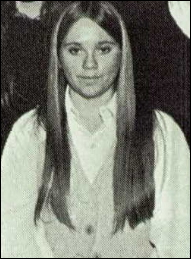
Christine “Chris” Rothschild was an 18-year-old White/Caucasian woman and University of Wisconsin–Madison freshman from Chicago who was studying at the university after graduating with honors from Senn High School. Friends and later university accounts remembered her as an ambitious student who hoped to become a journalist. She had also done some modeling work for department-store catalogs. Official UW–Madison records place her murder on Sunday, May 26, 1968, rather than May 25.
Rothschild was living at Ann Emery Hall, an off-campus residence used by university students. She was known for getting up early and taking walks around campus. Accounts of her final morning indicate that she was awake before dawn and left the residence for one of those walks, with plans to attend church afterward. Investigators later believed she was attacked during the early morning hours somewhere near Sterling Hall, a university building on North Charter Street.
Her body remained hidden for much of the day. At approximately 7:30 that evening, a university employee who had gone to Sterling Hall discovered her in shrubbery alongside the building. The scene immediately made clear that she had been the victim of an extremely violent attack. Contemporary and later accounts differ somewhat on the exact number of wounds, but authorities determined that she had suffered numerous stab wounds to the chest and neck and had also been strangled. One university account states that the coroner attributed her death to at least 12 stab wounds to the chest, while other reports described 14 or more stab wounds.
Later accounts of the crime scene described additional evidence of violence and apparent staging. Rothschild's clothing was disturbed, although accounts indicate she had not been sexually assaulted, and money and jewelry reportedly remained with her, making robbery an unlikely motive. A bloody man's handkerchief was reportedly found beneath her head, and investigators also recovered or documented other unusual items at the scene. The amount of blood indicated that she had most likely been killed where she was found rather than murdered elsewhere and transported to Sterling Hall. No murder weapon was recovered.
The killing triggered a large investigation involving university police and assistance from other area law-enforcement agencies. Investigators interviewed numerous people and pursued multiple leads throughout the summer of 1968. A $5,000 reward was eventually offered for information leading to the killer, but neither the reward nor the investigative effort produced sufficient evidence for an arrest. With no weapon and no suspect against whom investigators could build a prosecutable case, the homicide eventually became one of Madison's longest-running cold cases.
One of the most significant people scrutinized during the original investigation was Niels Bjorn Jorgensen, a medical resident or surgeon associated with University Hospital, which was near Sterling Hall. Rothschild's friend Linda Schulko later said Rothschild knew Jorgensen and occasionally encountered him during her morning walks. According to Schulko and later investigative reporting, Rothschild had become uncomfortable with his attention and had complained about behavior she regarded as harassment. Those allegations came primarily from Rothschild's friend and subsequent researchers and were never proven in court.
By September 1968, investigators were actively trying to locate the former hospital physician for questioning. Contemporary reporting described him as one of the investigation's strongest leads at that stage and said officers followed information that he had traveled from the Madison area to Detroit and then New York. Madison investigators ultimately questioned him in New York. Contemporary newspaper reporting subsequently indicated that he had been “checked out” by investigators, and he was not arrested or charged. Decades later, Schulko continued to believe he was responsible for Rothschild's death, and researchers again examined his background. Jorgensen denied involvement, and no criminal case was ever brought against him.
Other potential suspects were considered over the years. In 1975, authorities investigated whether Richard O. Macek, then being held in connection with other violent crimes, might have been involved in Rothschild's murder. Detectives attempted to determine Macek's whereabouts on the day Rothschild was killed, but the inquiry did not result in charges against him in her case. Other theories have proposed connections to offenders responsible for murders elsewhere in the Midwest or to the series of later unsolved killings of young women around Madison sometimes called the Capital City Killings, but no such connection has been conclusively established.
The passage of time created additional problems for investigators. Later reporting found that key physical evidence associated with Rothschild's homicide had been lost while in law-enforcement custody, potentially eliminating opportunities to apply some modern forensic and DNA techniques to items collected in 1968. Nevertheless, the investigation was never officially closed.
Nearly six decades after the killing, the University of Wisconsin–Madison Police Department publicly renewed its appeal for information in May 2026. UWPD said it has continued investigating Rothschild's murder, has worked with state and federal law-enforcement agencies, and has reviewed and followed tips submitted over the years. Police specifically asked former students, residents of Ann Emery Hall, visitors to the university, and anyone who knew Rothschild or remembered people around her in 1968 to come forward, emphasizing that information once considered insignificant could still prove important.
No one has been arrested, charged, tried, or convicted for Christine Rothschild's murder. Despite the numerous suspects and theories examined since 1968, authorities have never publicly identified her killer, and the homicide remains an active unsolved case.