Iouri Mikhel: The San Fernando Valley Ransom Killer
Overview
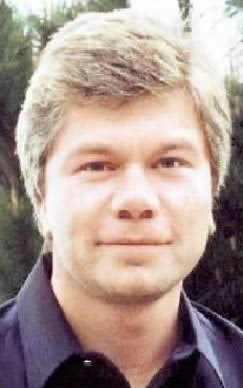
Iouri Gherman Mikhel, a Russian immigrant, was one of the masterminds behind a brutal kidnapping-for-ransom ring that terrorized the affluent Russian-American community in Los Angeles between late 2001 and early 2002. Along with his Lithuanian partner, Jurijus Kadamovas, Mikhel orchestrated the abduction and murder of five individuals. The duo and their accomplices lured their victims with promises of business deals, held them hostage, and extorted large sums of money from their families. Regardless of whether the ransoms were paid, every victim was methodically killed and their bodies discarded in a remote reservoir. The scheme, which netted over $1.2 million, ended with their arrest in February 2002. Mikhel and Kadamovas were convicted in federal court, sentenced to death, and later had their sentences commuted to life in prison without the possibility of parole.
Early Life and Background
Iouri Gherman Mikhel was born on April 9, 1965, in Leningrad, now St. Petersburg, in the former Soviet Union. He later immigrated to the United States, settling in the San Fernando Valley area of Los Angeles. By the time of the murders, Mikhel, then in his late 30s, presented himself as a successful businessman, living in a Tudor-style home in the hills of Encino. He and Jurijus Kadamovas operated an aquarium store on Ventura Boulevard, which served as a front for their criminal enterprise. Prosecutors stated that the men lived lavish lifestyles, using ransom money to purchase luxury vehicles and mink coats for their girlfriends. During legal proceedings, prosecutors alleged Mikhel had ties to Russian organized crime and was suspected in other killings in Turkey and Cyprus, though these were not part of the charges for which he was tried.
The Murders
The killing spree began in the fall of 2001. Mikhel and Kadamovas developed a methodical plan: target wealthy businesspeople, many within the Russian immigrant community, lure them into meetings, kidnap them, and demand exorbitant ransoms. The victims were killed regardless of their families' cooperation. Their bodies were weighted down and thrown from a bridge into the New Melones Reservoir, a deep lake near Yosemite National Park, in a bid to conceal the evidence.
The first victim was Meyer Muscatel, a 58-year-old real estate developer. In October 2001, Mikhel posed as a potential investor to lure Muscatel to a supposed business meeting at Mikhel's Encino home. Once there, Muscatel was ambushed, beaten, and bound. The kidnappers attempted to extort money from his bank accounts, but were unsuccessful. Concluding he had little accessible money, they suffocated him by placing a plastic bag over his head. They then drove his body five hours north and dumped it into the reservoir.
The group's next intended target was George Safiev, a wealthy Russian businessman. In December 2001, in an attempt to get to him, they kidnapped his 39-year-old financial advisor, Rita Pekler. Kadamovas feigned interest in a real estate deal to lure her to a home where Mikhel and other accomplices were waiting. They restrained her and forced her to contact Safiev, but he was unavailable. Pekler was then killed by strangulation and her body was also disposed of in the New Melones Reservoir.
Around December 13, 2001, the group abducted their third victim, 35-year-old Alexander Umansky. Umansky, who owned a car electronics store, was lured to a meeting with Kadamovas under the pretense of a business deal. His family paid a ransom of over $230,000, but Umansky was killed anyway. Prosecutors revealed that the kidnappers continued to demand money from his family even after he was dead.
In January 2002, the conspirators made another attempt to capture George Safiev. They first kidnapped his business partner, 29-year-old Nick Kharabadze, an aspiring film producer. Kadamovas's girlfriend, Natalya Solovyeva, lured Kharabadze to a bar, where he was abducted. The kidnappers then used Kharabadze to force a meeting with Safiev, successfully capturing their long-sought target. After a ransom of nearly $1 million was paid, both Safiev, 37, and Kharabadze were strangled. Their bodies joined the others in the New Melones Reservoir.
The Victims
- Meyer Muscatel, 58 — A real estate developer from Sherman Oaks, he was killed in October 2001 after being lured to a fake business meeting. He was described by his daughter as a man with deep spiritual values who wanted to leave real estate to do community outreach work.
- Rita Pekler, 39 — A financial consultant and accountant from West Hollywood, she was kidnapped and murdered in December 2001. A friend described her as a loving mother who was senselessly killed.
- Alexander Umansky, 35 — The owner of a car accessory business in Sherman Oaks, he was kidnapped on December 13, 2001, and murdered despite his family paying a hefty ransom. He was well-known in the local Russian community.
- George Safiev, 37 — A wealthy businessman and aspiring film producer from Beverly Hills, he was the primary target of the kidnappers for months. He was finally abducted and murdered in January 2002.
- Nick Kharabadze, 29 — An aspiring film producer from Woodland Hills and business partner of George Safiev, he was used as bait to capture Safiev in January 2002 before being murdered himself.
Investigation and Capture
The investigation began in October 2001 when fishermen discovered Meyer Muscatel's body floating in the New Melones Reservoir. His hands were bound and his head was covered with a plastic bag. The case broadened significantly after the disappearances of Pekler, Umansky, Kharabadze, and Safiev. The FBI and Los Angeles Police Department formed a joint task force.
A major breakthrough came when one of the accomplices, Ainar Altmanis, learned the FBI was investigating him and decided to cooperate. Altmanis confessed his role in several of the kidnappings and murders and led investigators to the location in the reservoir where the other four bodies had been dumped.
The FBI wiretapped the phones of Mikhel and Kadamovas, recording incriminating conversations about ransom money. Cellphone data provided crucial evidence, showing that both men had traveled north toward the New Melones Reservoir on the days each of the victims disappeared. An electronic ransom payment was also traced directly to the pair. Based on this overwhelming evidence, Iouri Mikhel and Jurijus Kadamovas were arrested in February 2002.
Trial and Sentence
Iouri Mikhel and Jurijus Kadamovas were indicted on multiple federal charges, including conspiracy to take hostages resulting in death and hostage-taking resulting in death. The U.S. government sought the death penalty. The guilt phase of their trial began in July 2006 and lasted five months.
Prosecutors laid out the details of the cold-blooded scheme, supported by the testimony of accomplice Ainar Altmanis, who testified against the pair in exchange for a lighter sentence. The defense argued that it was the underlings, like Altmanis, who were the true killers and that they had implicated Mikhel and Kadamovas to secure deals with prosecutors.
On January 17, 2007, a federal jury found both Mikhel and Kadamovas guilty on all counts. On February 13, 2007, the same jury recommended the death penalty. U.S. District Judge Dickran Tevrizian formally sentenced both men to death on March 12, 2007, calling the murders "brutal" and noting that the killers "showed no mercy."
Several accomplices were also sentenced for their roles. Petro Krylov was convicted and sentenced to life in prison without parole. Ainar Altmanis received a sentence of 23 years and 4 months. Natalya Solovyeva was sentenced to 15 years, and Aleksejus Markovskis received a reduced sentence of 12.5 years for his cooperation.
While incarcerated, Mikhel devised elaborate escape plans. One plot involved tunneling out of his cell at the Metropolitan Detention Center in Los Angeles. Another, at a San Bernardino facility, was detailed in a letter found by a guard and involved breaking through a fence to waiting motorcycles. Both plans were foiled.
Aftermath and Legacy
Mikhel and Kadamovas remained on federal death row for over a decade, pursuing numerous appeals. Their final appeal was denied by the U.S. 9th Circuit Court of Appeals in 2018 and the Supreme Court declined to hear the case in 2019. However, their fate changed on December 23, 2024, when President Joe Biden commuted the death sentences of 37 federal inmates, including Mikhel and Kadamovas. Their sentences were reduced to life in prison without the possibility of parole.
The case stands as a chilling example of a meticulously planned, financially motivated series of murders. The killers preyed on members of their own immigrant community, exploiting trust and business connections to lure their victims to their deaths. The investigation highlighted the effectiveness of multi-agency cooperation and the crucial role of digital evidence and accomplice testimony in solving complex criminal conspiracies. For the families of the five victims, the trial brought a measure of justice, though the commutation of the death sentences years later reopened painful wounds. Ruven Umansky, the father of victim Alexander Umansky, expressed his satisfaction with the initial guilty verdict, stating, "Today is my birthday, and it is the happiest birthday of my life."