Charles Anthony Boyd: The Bathroom Slayer
Overview
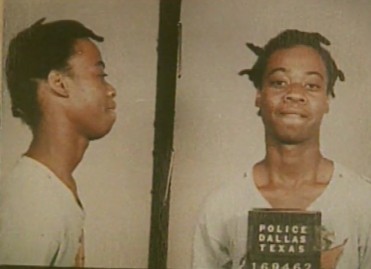
Between the summer of 1986 and the spring of 1987, a series of brutal murders instilled fear in the residents of a North Dallas apartment community. Three women were sexually assaulted and killed in their own homes, their bodies discovered submerged in water-filled bathtubs. The perpetrator, quickly dubbed "The Bathroom Slayer" by the media, was revealed to be Charles Anthony Boyd, a paroled felon who lived among his victims. Boyd's nine-month reign of terror ended swiftly with his arrest the day after his final, and most brazen, attack. He confessed to all three slayings but was tried and convicted for only one. After more than a decade on death row, Boyd was executed by the state of Texas in 1999, leaving behind a legacy of violence and a contentious legal debate over his claims of intellectual disability.
Early Life and Criminal History
Charles Anthony Boyd was born in Dallas, Texas, on August 17, 1959. Information about his early years emerged primarily during his later appeals, as his lawyers argued that a childhood marked by disability and abuse should have been considered during his trial. According to testimony from family members, Boyd displayed learning difficulties from a young age. His mother was advised to enroll him in special education classes but was reportedly too "embarrassed" to do so. He earned the nickname "Head" because he would frequently beat his head against walls and the ground for attention. It was not discovered until he was seven years old that he was deaf in one ear. He also suffered from seizures and was allegedly subjected to regular beatings by his stepfather and brother, who grew frustrated with how "slow" he was to respond.
As an adult, Boyd's life was defined by crime. He was convicted of burglary and sexual assault and received a five-year prison sentence. Despite the serious nature of his offenses, he was granted early release in November 1985 after serving less than half of his term. Upon his release, Boyd found employment as a janitor at a bank. In the summer of 1986, he moved into the Woodstock Apartments in northeast Dallas with his brother and his brother's girlfriend, placing him in terrifying proximity to his future victims.
The Murders
The first murder occurred on July 22, 1986. Tippawan Naksuwan, a 37-year-old immigrant from Thailand, lived in an apartment just upstairs from where Boyd was staying. She was working as a waitress, building a new life in America. That day, she was found stabbed and suffocated, her body left in her bathtub. The crime was deeply disturbing, but with no immediate suspect, the investigation stalled. Tragically, it was later reported that authorities were never able to locate and inform her family in Thailand of her murder.
Less than two months later, on September 15, 1986, the killer struck again within the same apartment complex. A cleaning lady entered an apartment to perform her duties and made a horrifying discovery. Lashun Chappell Thomas, a 22-year-old nursing home aide, was found dead in her bathroom. She had been fatally stabbed, and like the first victim, her body was left in the bathtub. With two women murdered in an identical, ritualistic manner in the same location, panic began to grip the community. Residents who had once felt safe grew fearful, yet the killer remained a ghost. One report noted the chilling detail that Boyd had complained to his brother for nearly two weeks about a "putrid smell" coming from one of the apartments, which was later found to be the decomposing body of one of the victims.
The final and most pivotal murder took place seven months later, on April 13, 1987. By this time, Boyd was living in a different North Dallas apartment complex. His new neighbor across the hall was Mary Milligan, a 21-year-old recent graduate of Texas Tech University who had just begun a promising career as a bank management trainee. Milligan had sprained her ankle over the weekend and had stayed home from work to recover. Her roommate, Linda Williams, returned from work that afternoon to find an unimaginable scene: Milligan had been raped, strangled, and drowned in their bathtub. The killer had also stolen her jewelry and her 1982 Cadillac.
The Victims
- Tippawan Naksuwan, 37 — killed on July 22, 1986, in Dallas, Texas. An immigrant from Thailand working hard as a waitress to build a life in a new country, her murder was a solitary tragedy, with reports indicating her family was never found.
- Lashun Chappell Thomas, 22 — killed on September 15, 1986, in Dallas, Texas. A compassionate young woman who worked as a nursing home aide, she dedicated her life to caring for others before it was cruelly taken from her.
- Mary Milligan, 21 — killed on April 13, 1987, in Dallas, Texas. A bright and ambitious recent college graduate just starting her career in banking. Her boyfriend at the time, Russell Leachman, remembered her as a "wonderful person" with "such a tender heart."
Investigation and Capture
The murder of Mary Milligan, while a tragedy, provided investigators with the crucial break they needed. The day after her body was found, on April 14, 1987, Charles Anthony Boyd walked into a pawn shop and tried to sell jewelry and other personal items stolen from Milligan's apartment. His brazen attempt to profit from his crime led to his immediate arrest.
Living directly across the hall from the victim, coupled with his prior record for sexual assault, made Boyd the prime suspect. Dallas police detectives brought him in for questioning, and under interrogation, Boyd confessed not only to the murder of Mary Milligan but also to the slayings of Tippawan Naksuwan and Lashun Chappell Thomas. His confession connected the three "bathroom slayings" that had terrorized the city. In addition to his detailed confession, investigators had powerful physical evidence from the Milligan crime scene, including blood and hair samples that matched Boyd. With a full confession and forensic evidence, the Dallas County District Attorney's office charged Boyd with three counts of capital murder in late April 1987.
Trial and Sentence
Prosecutors made the strategic decision to proceed to trial only with the case of Mary Milligan. It was the strongest of the three cases, bolstered by forensic evidence that was absent in the earlier murders. The trial commenced on October 27, 1987.
Boyd's defense attorneys did not contest that he had killed Milligan. Instead, their strategy focused on saving him from the death penalty. They argued that Boyd was "emotionally disturbed" and portrayed the murder as a crime of passion, claiming he had killed Milligan in a fit of rage after she allegedly insulted him. This narrative was strongly disputed by Milligan's boyfriend, who stated she "would never call someone a name."
The central pillar of the defense's mitigation argument was Boyd's intellectual capacity. They contended that he was mentally disabled and therefore should be ineligible for a death sentence. The evidence presented on this point was conflicting. His lawyers pointed to a 1983 prison report that measured Boyd's IQ at 67, below the general threshold of 70 used to signify intellectual disability. However, prosecutors countered with another prison file showing an IQ of 80.
The jury was unmoved by the defense's arguments. After deliberating for a remarkably brief ten minutes, they returned a guilty verdict for the capital murder of Mary Milligan in November 1987. In December, he was formally sentenced to death. Following this conviction and sentence, the indictments for the murders of Tippawan Naksuwan and Lashun Chappell Thomas were dismissed.
Appeals and Execution
Charles Boyd spent over 11 years on death row at the Huntsville Unit in Texas, a period dominated by a series of legal appeals. The primary argument in these appeals was the claim of ineffective assistance of counsel during his original trial. His appellate attorneys argued that his trial lawyers had failed to adequately investigate and present compelling evidence of his intellectual disability as a mitigating factor during the sentencing phase.
In 1995, a federal court ordered an evidentiary hearing to explore this claim. During the hearing, new expert testimony was presented. A psychologist and a neuropsychologist who had evaluated Boyd in 1992 testified that his IQ was as low as 64 and that he was functionally illiterate. They concluded he was not faking his impairment and that it would have been apparent to anyone who met him. His family testified about his difficult childhood. Despite this, the magistrate judge ruled that the trial lawyers' performance had not been deficient, and subsequent appeals to higher courts, including the U.S. Supreme Court, were denied.
On August 5, 1999, just twelve days before his 40th birthday, Charles Anthony Boyd was led into the execution chamber. When asked if he had a final statement, he initially declined. However, as the lethal drugs began to flow into his arms, he spoke out, making a final, unexpected claim: "I want you all to know I did not do this crime. I wanted to wait for a thirty day stay for a DNA test so you know who did the crime." He gasped shortly after and was pronounced dead at 6:16 p.m.
Aftermath and Legacy
The "Bathroom Slayings" left an indelible mark on the North Dallas community, shattering the sense of security in apartment complexes where residents had previously felt safe. The case served as a grim reminder of the predators who can live undetected in plain sight. For the families of the victims, the crimes brought immeasurable pain. Mary Milligan's family remained involved throughout the legal process; a close family friend, a retired Dallas police officer, personally called investigators to implore them to handle the case with the utmost care.
Charles Boyd's execution brought a legal end to the case, but it did not resolve all the questions. His final protestation of innocence, combined with the persistent and troubling evidence of his intellectual disability, added a complex and controversial postscript to his story. At the time of his execution, it was not unconstitutional in the United States to execute individuals with intellectual disabilities, a legal standard that would change with the Supreme Court's ruling in *Atkins v. Virginia* three years later. Boyd's case remains a subject of study for those examining the intersection of capital punishment, mental capacity, and the effectiveness of legal representation in the American justice system.