Clifford Olson: The Beast of British Columbia
Overview
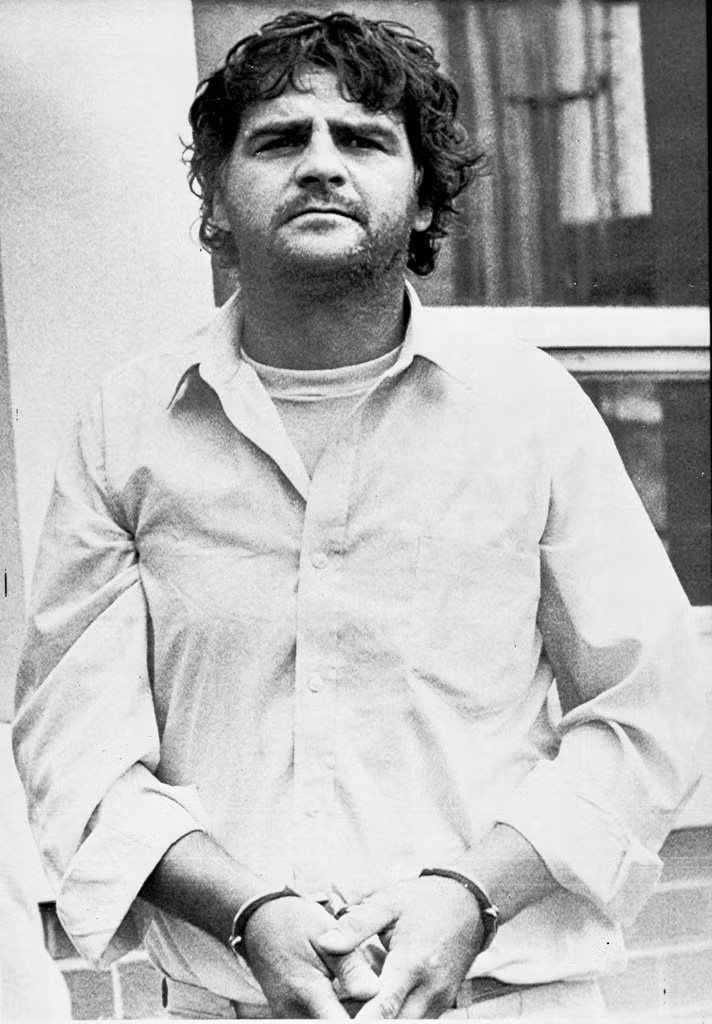
Clifford Robert Olson Jr. was a Canadian serial killer who murdered eleven children and young adults in British Columbia between November 1980 and July 1981. His reign of terror sparked widespread panic across the Lower Mainland. Known for his manipulative nature, Olson had an extensive criminal record prior to the killings. After his arrest, he orchestrated a controversial "cash-for-bodies" deal with the Royal Canadian Mounted Police (RCMP), in which his family was paid $100,000 in exchange for information leading to the recovery of his victims' remains. Olson pleaded guilty to eleven counts of first-degree murder and was sentenced to life in prison, where he remained a source of public outrage and torment for his victims' families until his death from cancer in 2011.
Early Life and Criminal History
Clifford Robert Olson Jr. was born on January 1, 1940, in Vancouver, British Columbia. Raised in what appeared to be a middle-class family in Richmond, his childhood was reportedly dysfunctional. His mother worked in a fish cannery, and his father was a milkman after serving in the military. At school, Olson was known as a bully and a thief. He dropped out after the eighth grade and began a life of crime.
Olson's criminal career started at a young age. He received his first jail sentence at seventeen for burglary and subsequently spent most of his adult life in and out of prison. Over the years, he accumulated more than 90 convictions for a variety of offenses, including fraud, armed robbery, and sexual assault. He was also a prolific escape artist, breaking out of prison at least seven times. In prison, he gained a reputation as a police informant, which sometimes resulted in violent retaliation from other inmates. Despite his long and varied criminal history, he was never deemed a significant risk to the public. Olson was released from prison for the last time on September 7, 1980, just months before his killing spree began.
The Murders
Between November 1980 and July 1981, Clifford Olson abducted, sexually assaulted, and murdered eleven young people. His victims ranged in age from nine to eighteen. Olson typically lured his victims with offers of work or by posing as someone who could help them, then drove them to remote, wooded areas.
His first known victim was 12-year-old Christine Weller, who disappeared on November 17, 1980. Her body was discovered on Christmas Day, revealing she had been strangled and repeatedly stabbed.
The killings escalated in the spring and summer of 1981. On April 16, 13-year-old Colleen Daignault vanished; her body was found five months later. Just six days later, on April 22, 16-year-old Daryn Todd Johnsrude was abducted and killed. His body was found less than two weeks later.
In May 1981, shortly after marrying Joan Hale, with whom he had a son, Olson murdered 16-year-old Sandra Wolfsteiner on May 19. Thirteen-year-old Ada Court was killed in June.
July 1981 was Olson's most prolific month, with six victims in rapid succession. Nine-year-old Simon Partington was abducted and strangled on July 2. A week later, 14-year-old Judy Kozma was raped and strangled; her body was found on July 25. Raymond King II, 15, was bludgeoned to death on July 23. Two days later, 18-year-old German tourist Sigrun Arnd was raped and bludgeoned. On July 27, 15-year-old Terri Lyn Carson was raped and strangled. Olson's final known victim, 17-year-old Louise Chartrand, was killed on July 30.
The Victims
Clifford Olson's reign of terror left a trail of devastation, cutting short the lives of eleven young people.
- Christine Anne Weller, 12 — Abducted on November 17, 1980, in Surrey. Her body was found on Christmas Day; she had been strangled and stabbed.
- Colleen Marian Daignault, 13 — Vanished on April 16, 1981, in North Delta. Her remains were discovered five months later.
- Daryn Todd Johnsrude, 16 — Disappeared on April 22, 1981, in Coquitlam, only two days after arriving in the area. His beaten body was found less than two weeks later.
- Sandra Lynn Wolfsteiner, 16 — Murdered on May 19, 1981, in Langley, just four days after Olson's wedding. She was last seen getting into a car with a man.
- Ada Anita Court, 13 — Killed on June 21, 1981, in Burnaby. She lived in the same apartment complex where Olson and his family resided.
- Simon Patrick James Partington, 9 — Abducted on July 2, 1981, in Surrey. His disappearance was a turning point in the police investigation, as his young age made it clear he was not a runaway.
- Judy Elizabeth Kozma, 14 — Murdered on July 9, 1981, in New Westminster. After killing her, Olson took her address book and taunted her friends with phone calls.
- Raymond Lawrence King Jr., 15 — Lured from a youth employment center with a promise of work on July 23, 1981. He was brutally beaten and his body left at a remote campsite.
- Sigrun Charlotte Elisabeth Arnd, 18 — A tourist from Germany, she was killed on July 25, 1981. She was raped and bludgeoned to death.
- Terri Lyn Carson, 15 — Murdered on July 27, 1981. Olson offered her a ride and a drugged drink before strangling her.
- Louise Simonne Marie Evelyn Chartrand, 17 — Olson's last known victim, killed on July 30, 1981, near Whistler and buried in a shallow grave.
Investigation and Capture
The disappearances of numerous children and teenagers in the Lower Mainland of British Columbia caused widespread public fear. Police initially treated some of the early cases as runaways, but the abduction of nine-year-old Simon Partington shifted the focus to foul play.
Clifford Olson, with his extensive criminal background, became a suspect early in the investigation. However, police resources were stretched, and they were unable to maintain constant surveillance on him. This allowed him to continue his killing spree even after he was on their radar.
The breakthrough came on August 12, 1981, when police arrested Olson for attempting to pick up two female hitchhikers on Vancouver Island. He was initially held on suspicion of attempted abduction. On August 18, he was charged with the murder of Judy Kozma.
Facing a potentially weak case for the other murders, the RCMP entered into a highly controversial deal with Olson. He agreed to confess to all eleven murders and lead investigators to the locations of the undiscovered bodies. In exchange, the government paid $100,000 into a trust fund for his wife and infant son—$10,000 for each of the first ten bodies, with the eleventh being a "freebie." This "cash-for-bodies" deal sparked national outrage and had lasting repercussions for the Canadian justice system.
Trial and Sentence
Clifford Olson's trial began on January 11, 1982. He initially pleaded not guilty to the murder charges. However, in a sudden turn of events, he changed his plea to guilty on all eleven counts of first-degree murder just three days into the trial.
On January 14, 1982, Justice Harry McKay of the British Columbia Supreme Court sentenced Olson to eleven concurrent life sentences, with no possibility of parole for 25 years. During the sentencing, Justice McKay expressed his opinion that Olson should never be released, stating, "My considered opinion is that you should never be granted parole for the remainder of your days. It would be foolhardy to let you at large."
The revelation of the "cash-for-bodies" deal, which became public shortly after the sentencing, overshadowed the trial's conclusion and led to widespread condemnation of the authorities who approved it.
Aftermath and Legacy
Clifford Olson was incarcerated in Canada's super-maximum security Special Handling Unit in Quebec. Throughout his imprisonment, he continued to taunt his victims' families and seek public attention through media stunts and repeated parole applications. He applied for early parole in 1997 under Canada's "faint hope clause," but his application was dismissed in minutes after a hearing where he made bizarre claims. His subsequent parole hearing in 2006 was also denied.
In 2010, another controversy erupted when it was revealed that Olson was collecting over $1,100 a month in Old Age Security and Guaranteed Income Supplement payments from the Canadian government. Public outrage prompted the federal government to pass legislation to suspend such benefits for prisoners.
The families of Olson's victims became outspoken advocates for victims' rights. Sharon Rosenfeldt, the mother of Daryn Johnsrude, co-founded the organization Victims of Violence. The families unsuccessfully sued to recover the $100,000 paid to Olson's wife.
Clifford Olson died of cancer on September 30, 2011, at the age of 71, in a prison hospital. His death brought a sense of closure to the families of his victims and a nation he had terrorized. He remains one of Canada's most infamous and reviled criminals, a symbol of profound evil whose actions led to significant changes in the Canadian justice system and a greater focus on the rights of victims.