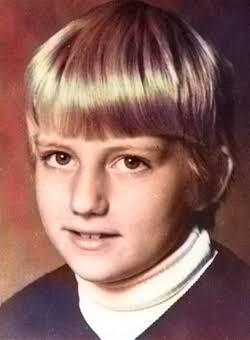
In the spring of 1981, a shadow fell over the Lower Mainland of British Columbia as a series of children and teenagers began to disappear, their families thrown into a state of unknowing anguish. One of these was Daryn Todd Johnsrude, a 16-year-old male who had only just arrived in the area. Daryn, who was visiting from Saskatoon, Saskatchewan, had been on the West Coast for a mere two days when his life was tragically cut short.
On April 22, 1981, he vanished after heading toward a shopping mall in Coquitlam. For his family, a period of desperate uncertainty began, one that would end with the worst possible news.
Less than two weeks later, on May 2, 1981, Daryn’s body was discovered. He had been brutally beaten and left in a ditch. The discovery confirmed the family's fears and marked the beginning of a long and painful journey for justice. Daryn was one of the earliest victims in a killing spree that terrorized the region for months, claiming the lives of 11 children and young adults between the ages of nine and 18. The community was gripped by fear as the disappearances continued, with police under immense pressure to find the person responsible.
The perpetrator was Clifford Robert Olson Jr., a man with an extensive criminal history who was later dubbed "The Beast of British Columbia." Olson was arrested on August 12, 1981, initially on suspicion of attempting to abduct two girls. He was soon charged with one of the murders, which eventually led to a shocking and controversial deal with law enforcement. In exchange for $100,000 being paid to his wife and son, Olson agreed to confess to the 11 murders and lead investigators to the locations of his victims' bodies, some of whom were still missing.
This "cash-for-bodies" deal sparked widespread outrage but resulted in Olson pleading guilty to 11 counts of first-degree murder in January 1982. He was sentenced to 11 concurrent life sentences, with no possibility of parole for 25 years. Olson's methods were brutal, often involving strangulation, stabbing, or bludgeoning his victims with a hammer or rocks. He died in prison from cancer on September 30, 2011, having never been granted parole.
For Daryn's family, the pain inflicted by Olson was a life sentence of its own. His mother, Sharon Rosenfeldt, became a prominent advocate for victims' rights. She spoke of the devastating and lasting impact of Daryn's murder, particularly on her late husband, Gary. Near the end of his own life, while battling brain cancer, Gary could not recognize his family but repeatedly screamed Olson's name. "This will never end for me," Rosenfeldt said shortly before Olson's death. "But it's a page I can turn once I do know that he has passed away and can't harm us or anybody else ever again."
The loss of Daryn Johnsrude remains a profound tragedy, a story of a young life full of potential, extinguished with shocking cruelty just as a new chapter was beginning. His mother's enduring pain serves as a testament to the unending grief that follows such a violent act. Her son summed up the family's feelings about Olson's eventual death: "You know, Mama, Clifford Olson may be dying, and he will be dead. It won't bring Daryn back. We haven't got Daryn. But … the biggest thing is he won't be able to hurt us again. After 30 years, he won't be able to hurt us."