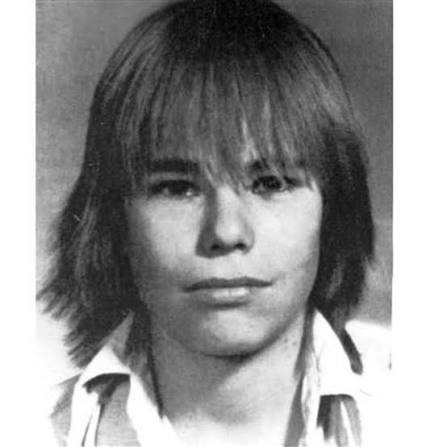
In the summer of 1981, a shadow of fear fell across British Columbia’s Lower Mainland as a string of children and teenagers vanished without a trace. One of them was Raymond Lawrence King Jr., a 15-year-old Male from New Westminster. The trusting teenager was looking for summer work, a rite of passage for many his age, but this simple ambition led him into the hands of one of Canada’s most infamous serial killers.
On July 23, 1981, Raymond went to a youth employment center, hoping to
find a job. There, he was approached by a man who offered him work. That man was Clifford Robert Olson Jr., a lifelong criminal who had been in and out of prison for most of his adult life. Olson lured Raymond away with the promise of a job, a tactic he used to prey on the vulnerability of young people. Raymond’s father, Ray King Sr., recalled working an afternoon shift that day. He grew worried when his son, who he usually called during his lunch break, didn't answer. When he returned home late that night to an empty house, he knew something was wrong and contacted the New Westminster police. They asked him to identify a bicycle left near the employment office; it was Raymond's.
For weeks, Raymond’s family lived in agonizing uncertainty, a feeling shared by several other families in the region as more youths disappeared. The break in the case came on August 8, when a body was discovered at Weaver Lake. The remains were not immediately identifiable, and the Royal Canadian Mounted Police (RCMP) needed dental records to confirm the identity. After an agonizing wait, they returned late at night to inform Ray King Sr. they were 80% sure the victim was his son. The official confirmation came the next morning. Raymond had been brutally beaten to death, his body left at the remote campsite. Other accounts state his head was bashed with rocks and his body was dumped off a steep, hillside trail.
The man responsible for this and ten other murders between 1980 and 1981 was Clifford Olson, who became known as "The Beast of British Columbia." Olson, then 41, was a predator who targeted both boys and girls, ranging in age from 9 to 18. His methods were brutal and varied, including strangulation, stabbing, and bludgeoning his victims with a hammer or rocks. He was finally arrested on August 12, 1981, after attempting to abduct two more young girls.
In a move that sparked outrage across the nation, Olson struck a deal with prosecutors. In exchange for leading investigators to the bodies of his undiscovered victims, the government agreed to pay his wife $100,000. This "cash-for-bodies" arrangement was deeply painful for the victims' families, who felt Olson was profiting from their immense loss. Thanks to the deal, Olson's trial was brief. In January 1982, he pleaded guilty to 11 counts of first-degree murder and was sentenced to life in prison with no eligibility for parole for 25 years.
For decades, Raymond's father, Ray King Sr., channeled his grief into advocacy, helping others who had lost loved ones to homicide. He spoke of the immense weight he carried until Olson's death from cancer in prison on September 30, 2011. "When Clifford Olson died it was like night and day," King Sr. said. "I felt the weight of the world lift off my shoulders because I knew I didn't have to deal with him anymore." He expressed hope that people would remember the 11 children who died, not the man who took their lives. Olson was never granted parole and died while incarcerated.