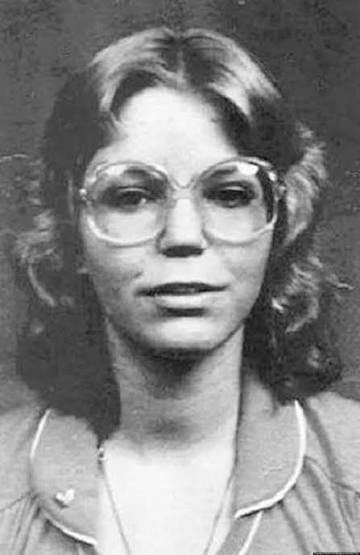
In the autumn of 1980, a shadow fell over the community of Surrey, British Columbia, with the disappearance of 12-year-old Christine Anne Weller. On November 17, the young girl was riding her bike near her home when she vanished, marking the beginning of a terrifying chapter in the region's history. Initially, police did not consider her disappearance to be suspicious, as she had a history of running away.
However, as days turned into weeks, the hope of her safe return began to fade, leaving her family and community suspended in a state of anxious uncertainty.
The grim truth of Christine's fate was discovered on Christmas Day, a time typically filled with joy and celebration. A man walking his dog along the dikes of the Fraser River in the nearby community of Richmond made a devastating find: Christine's body. The festive season was forever tainted for her loved ones by the brutal reality of her death. An autopsy would later reveal that she had been strangled and repeatedly stabbed, a violent end to a life that had barely begun. Her death was not an isolated tragedy but the first known murder committed by one of Canada's most infamous serial killers.
The man responsible for Christine's murder was Clifford Robert Olson Jr., a habitual criminal who had been released from prison just two months before her abduction. For months, Olson, who became known as "The Beast of British Columbia," continued his horrific spree, preying on children and teenagers across the Lower Mainland. He would lure his victims, both boys and girls, with promises of work before torturing and killing them. The string of disappearances and murders sowed fear throughout the province, as families grappled with the reality of a predator in their midst.
The investigation into the growing number of missing and murdered youths culminated in Olson's arrest on August 12, 1981. He was initially apprehended on Vancouver Island for attempting to abduct two young female hitchhikers. While in custody, Olson, a man with a long and varied criminal history, began a twisted negotiation with law enforcement. In a move that would spark outrage and controversy for decades, he offered to lead investigators to the hidden graves of his victims in exchange for money.
This notorious "cash-for-bodies" deal resulted in the RCMP paying $100,000 into a trust fund for Olson's wife and infant son. For $10,000 per victim, Olson guided police to the remains of the children he had murdered, including those whose disappearances had not yet been connected to him. Christine Weller was one of the victims included in this grim transaction. The deal, while leading to the recovery of the victims and providing some measure of closure for their families, was widely condemned as a pact with a monster that allowed a killer to profit from his heinous crimes.
In January 1982, Clifford Olson's trial was shockingly brief. He changed his plea to guilty on 11 counts of first-degree murder. He was sentenced to 11 concurrent life sentences, with no possibility of parole for 25 years. The judge, in sentencing him, expressed the considered opinion that Olson should never be granted parole for the remainder of his days. Olson remained incarcerated until his death from cancer on September 30, 2011, leaving behind a legacy of pain and a haunting memory of the 11 young lives he so cruelly extinguished, a reign of terror that began with the murder of a 12-year-old girl from Surrey.