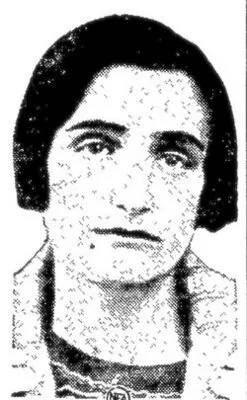
Della Sidel Sorensen: The Nebraska Family Poisoner
Overview
Della Sidel Sorensen, whose surname was also frequently written as Sorenson, was an American serial poisoner responsible for a succession of deaths in and around Dannebrog, Nebraska, between 1918 and 1924. Born on February 16, 1897, she appeared to neighbors to be an ordinary wife and mother. Behind that outward appearance, however, members of her family and social circle repeatedly became violently ill or died after consuming food or medicine she had prepared.
Sorensen eventually confessed to poisoning eight people, although some later accounts describe seven confirmed victims and question whether every death included in her confession was independently established. Her victims were overwhelmingly relatives, including her husband, her mother-in-law, young children from her extended family and children of her own. Several other people survived suspected or admitted poisoning attempts.
Her preferred poison was strychnine, a highly toxic substance that could produce agonizing muscular contractions, convulsions and respiratory failure. Because the deaths occurred years apart and involved people of different ages, the pattern initially escaped detection. Illnesses among infants and young children could be attributed to natural causes, while adult deaths were not immediately connected to earlier tragedies.
The Beginning of the Poisonings
The first widely recognized victim was Viola Cooper, the infant daughter of the sister of Sorensen’s first husband. Viola died on July 23, 1918, after Sorensen allegedly administered poison to her. At the time, there was no public reason to suspect that the child had been deliberately killed. The infant’s death became significant only years later, when Sorensen admitted that it had been the beginning of her poisoning campaign.
In 1920, Sorensen turned against members of her immediate household. Her first husband, commonly identified as Joseph or John Weldam, with the surname also written Weldman, died after being poisoned. His mother, Wilhelmina Weldam, also died from poisoning during the same general period. Surviving reports do not consistently provide exact dates for either death, making it safer to identify them only as occurring in 1920.
Sorensen later described anger, resentment and a desire for revenge as motives for some of the poisonings. She reportedly claimed that arguments or perceived insults could provoke a desire to kill. Her statements also suggested that she experienced excitement or satisfaction when someone was dying and enjoyed attending funerals. These remarks contributed to the conclusion that she was suffering from severe mental illness.
Deaths Within Her Own Family
One of the most disturbing aspects of Sorensen’s crimes was her willingness to poison her own children. Minnie Weldam, her young daughter from her first marriage, was among the dead. Historical accounts commonly state that Minnie was eight years old and died on September 7, 1921, although genealogical records contain conflicting information about the child’s age and year of death.
After the deaths connected to her first marriage, Sorensen married Emanuel Sorensen and lived in the Dannebrog area. Marriage did not end the poisonings. Her new household became another setting in which unexplained illnesses and deaths occurred. She later attempted to poison Emanuel, but he survived the attack.
Sorensen also confessed to killing a daughter from her second marriage, generally identified as Delores Sorensen or Pauline Delores Sorensen. Contemporary reports stated that the child was about one year old and died on February 19, 1924. Some later family records conflict with that date, but February 19, 1924, is the date most frequently reproduced from contemporary accounts of Sorensen’s confession.
Children Targeted During Visits
Sorensen’s former sister-in-law continued to visit her even after Viola Cooper’s unexplained death. During one such visit, Sorensen poisoned Viola’s four-month-old brother, Clifford Cooper. Reports state that Sorensen placed strychnine in candy and gave it to the infant. Clifford died on August 20, 1922.
The Cooper family apparently remained unaware that Sorensen was responsible for the children’s illnesses. When another Cooper child visited in October 1922, Sorensen allegedly attempted another poisoning. The child, often identified as Bessie Cooper, became ill but survived. The failure of that attempt did not immediately expose Sorensen.
On February 20, 1923, an infant named Ruth Brock died after being poisoned. Ruth was less than one year old and was described in contemporary reports as the daughter of one of Sorensen’s relatives or friends. Sorensen was trusted to be around the child, allowing her to administer poison without immediately attracting suspicion.
Known and Reported Victims
- Viola Cooper — An infant related to Sorensen through her first husband. She died on July 23, 1918, in rural Nebraska after Sorensen poisoned her.
- Joseph or John Weldam — Sorensen’s first husband. He died from poisoning in Nebraska in 1920. Available historical accounts do not consistently provide an exact date.
- Wilhelmina Weldam — Sorensen’s mother-in-law. She died after being poisoned in Nebraska in 1920. Her exact date of death is not consistently recorded in surviving summaries.
- Minnie Weldam — Sorensen’s daughter from her first marriage. Contemporary reports state that she died on September 7, 1921, in Nebraska after being poisoned.
- Clifford Cooper — Viola Cooper’s four-month-old brother. He died on August 20, 1922, after being given poisoned candy during a visit to Sorensen’s home in the Dannebrog area.
- Ruth Brock — An infant less than one year old and the daughter of a relative or friend. She died on February 20, 1923, in Nebraska after Sorensen poisoned her.
- Delores Sorensen — Sorensen’s young daughter from her second marriage. Contemporary reports place her death on February 19, 1924, in Nebraska.
- Unidentified infant — Sorensen confessed to poisoning another baby during 1924. Surviving accounts do not consistently preserve the child’s name, exact date of death or precise location.
Surviving Victims and Failed Attempts
Not every person targeted by Sorensen died. She admitted poisoning at least one additional Cooper child, commonly identified as Bessie Cooper, who recovered. She also poisoned children associated with the Knott family by placing strychnine in chocolate or cookies. One account identifies a surviving child as Lillian Knott. Medical treatment prevented the poisoning from becoming fatal.
Sorensen reportedly said that she targeted the Knott children because she was angry with their father and believed he had stolen wine from her. The incident demonstrated the retaliatory nature of her crimes. Rather than attacking the adult with whom she had a grievance, she selected vulnerable children who trusted her and could easily be persuaded to accept food.
She also tried to poison her second husband, Emanuel Sorensen. He became seriously ill but survived. The growing number of illnesses connected to her household eventually made it increasingly difficult to dismiss the pattern as coincidence.
Discovery and Confession
The investigation intensified in April 1925 after children became sick from food Sorensen had given them. Authorities began examining the repeated deaths and illnesses surrounding her. Sorensen was arrested on April 19, 1925, and soon provided a lengthy confession describing years of poisonings.
Her reported statements shocked investigators because she spoke about the deaths with little apparent remorse. She explained some murders as acts of revenge against people who had annoyed, criticized or angered her. She also described powerful urges to destroy and kill and reportedly said that she felt happy when someone was dying.
Although Sorensen confessed to eight murders, newspaper coverage was not always consistent. Some early reports referred to seven killings, while others listed eight victims. Differences in names, dates and family relationships also appeared in later retellings. These discrepancies were partly caused by variations in spelling, incomplete local records and uncertainty surrounding the unidentified infant included in her confession.
Mental Examination and Commitment
Sorensen was examined by doctors who concluded that she was mentally ill and unable to proceed through an ordinary criminal trial. She was diagnosed under the psychiatric terminology used during that period, with several accounts describing her condition as schizophrenia. Rather than being convicted and sentenced to prison, she was declared legally insane.
She was committed to the Nebraska state hospital at Hastings. Her confinement removed her permanently from the community in which the poisonings had occurred. Because she was institutionalized instead of tried before a jury, the full evidence surrounding each suspected victim was never publicly tested in a conventional murder trial.
Sorensen remained confined for the rest of her life. She died at the Hastings institution on June 24, 1941, at the age of 44. She was buried in Adams County, Nebraska.
Legacy of the Case
Della Sidel Sorensen’s crimes became one of Nebraska’s most notorious early twentieth-century poisoning cases. She exploited the trust normally placed in a wife, mother, relative and caregiver. Infants and young children were particularly vulnerable because they could not describe what they had consumed or identify the person who had given it to them.
The case also demonstrated how a poisoner could remain undetected when deaths occurred gradually and within a family. Each tragedy initially appeared isolated. Only after years of repeated deaths, failed poisoning attempts and Sorensen’s eventual confession did the full pattern become visible.
Although uncertainties remain about the exact number of victims and several dates, the central facts are clear: between 1918 and 1924, Sorensen repeatedly used poison against relatives and acquaintances in Nebraska. Her victims included her husband, her mother-in-law, children from her extended family and children of her own. Her crimes ended only after surviving victims and investigators exposed the deadly pattern surrounding her home.