John Bender Jr. – The Bloody Benders of Kansas
John Bender Jr. and the Bender Family
John Bender Jr. was a member of the group remembered as the Bloody Benders, a family or family-like group of killers who operated a small roadside store and lodging place in Labette County, Kansas, during the early 1870s. Historical records from the period identify the group as John Bender Sr., his wife, usually called Ma Bender, John Bender Jr., and a younger woman known as Kate Bender. Although they presented themselves as a conventional family, historians have questioned whether all four were actually related.
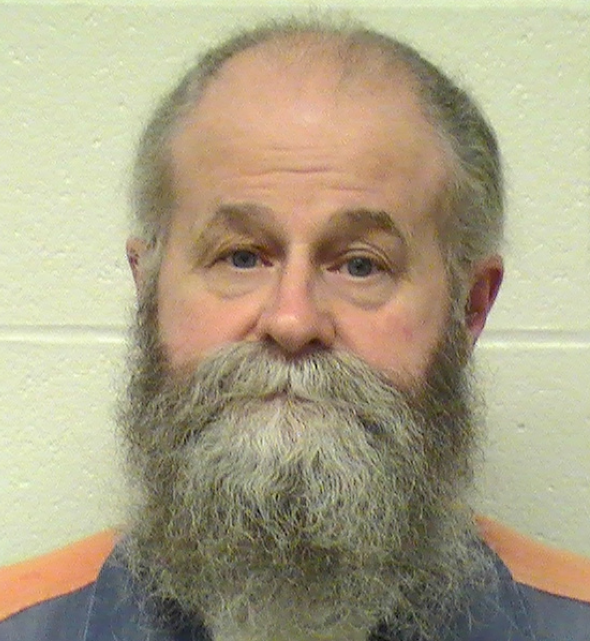
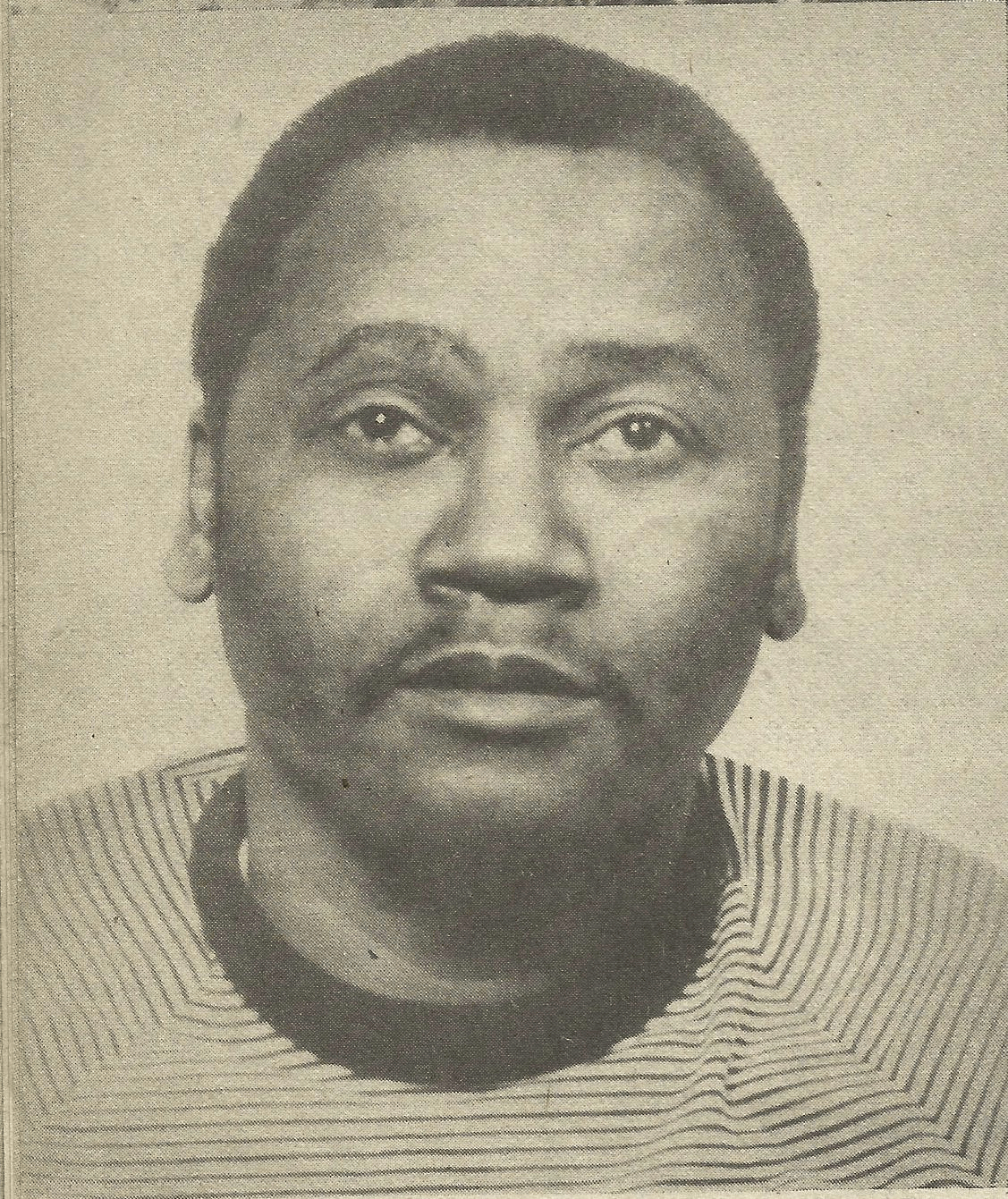
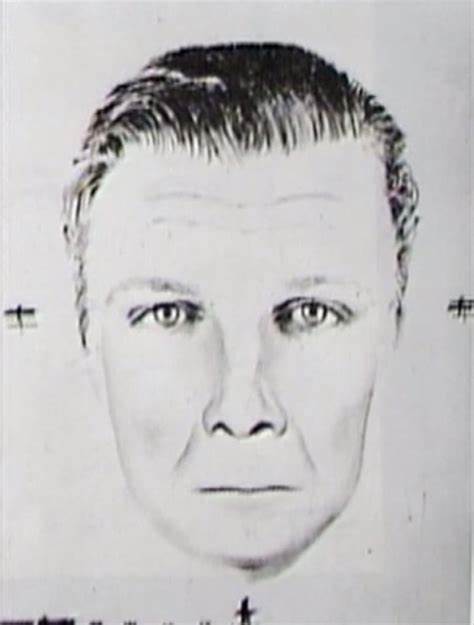
John Bender Jr. may have actually been named John Gebhardt or Gebardt. The official description issued by Kansas Governor Thomas A. Osborn in 1873 identified him as "John Bender Jr., alias John Gebardt." He was described as approximately 27 years old, about five feet eight or nine inches tall, slightly built, with brown hair, grayish-brown eyes and a light mustache. He spoke English with a German accent. Other contemporary descriptions portrayed him as considerably more sociable than the older Bender man.
The Benders settled near the Great Osage Trail, an important route used by settlers, merchants and other travelers moving through southeastern Kansas. John Bender Sr. and John Jr. were in the area by 1870 and constructed a small cabin near the road. The building later became both their residence and a primitive general store and inn. Its location provided the Benders with a steady supply of strangers who could disappear without immediately attracting attention.
The Bender Inn and the Murder Method
The Bender cabin was divided by a heavy canvas curtain. The front portion was used to sell supplies and serve meals, while the family lived behind the curtain. Travelers were sometimes encouraged to eat at a table positioned so that the guest sat with his back toward the canvas partition.
Accounts reconstructed after the crimes were discovered indicated that one of the Bender men would conceal himself behind the curtain. When the victim was in position, the attacker could deliver a powerful blow to the back or side of the head with a hammer. The victim's throat was then cut. A trapdoor in the cabin floor opened into a cellar, allowing bodies to be temporarily concealed before they were taken outside and buried.
Three hammers were eventually recovered from the Bender property, and investigators believed the shape of the weapons corresponded with injuries found on some of the victims. A knife associated with the Bender home was also recovered. Because the family escaped before they could be arrested and tried, however, investigators never established exactly which family member performed each part of every murder.
John Bender Jr. has frequently been described as one of the men who delivered the hammer blows. Surviving accounts generally state that either John Sr. or John Jr. attacked victims from behind the curtain while other members of the household assisted with the killing, robbery and disposal of the body. It is important to distinguish this reconstruction from a proven individual murder record: there was never a trial establishing that John Jr. personally killed a particular named victim.
Robbery as a Motive
Robbery appears to have been a major motive for the murders. Travelers disappeared along with cash, horses, wagons, saddles and other valuable property. The isolated frontier environment made travelers particularly vulnerable. Communication was slow, people often traveled alone, and a missing man might not be reported for weeks or months.
The Benders could therefore target people passing through the region, dispose of their bodies and sell or trade their possessions before distant relatives realized anything was wrong. Some victims were believed to have been carrying significant amounts of cash, although historical reports about the exact sums sometimes conflict.
Victims Associated With the Bender Murders
The precise number of people murdered by the Benders remains uncertain. Kansas historical records state that at least eleven people were killed, while later accounts have suggested considerably higher totals. Some bodies were badly decomposed or unidentified, and additional human remains were reportedly discovered that could not be matched with the identified victims. The dates below use the most supportable periods available; where an exact day of death cannot be established, no exact date is claimed.
- William Baldwin Jones – May 1871, Drum Creek area, Labette County, Kansas: Often identified in accounts simply as Mr. Jones, he was found in Drum Creek with a crushed skull and a cut throat. His exact day of death is not documented. Because the killing occurred before the later discovery of the Bender burial ground, his attribution to the Benders is less certain than that of victims recovered from their property.
- Two unidentified men – February 1872, southeastern Kansas: Two unidentified male bodies were discovered on the prairie with injuries similar to those associated with the later Bender murders, including crushed skulls and cut throats. Their identities and precise dates of death remain unknown.
- Ben Brown – 1872, Labette County, Kansas: Brown, reportedly from Howard County, Kansas, was found buried on the Bender property. Later accounts commonly place his death late in 1872, although an exact date cannot be reliably established. He was reportedly carrying a substantial amount of money when he disappeared.
- W. F. McCrotty – 1872, Labette County, Kansas: McCrotty, whose surname appears with spelling variations in historical retellings, was identified as a former member of Company D of the 123rd Illinois Infantry. He disappeared along with money, a wagon and a team of horses. His exact date of death is not preserved in reliable records, although he is generally placed among the Benders' 1872 victims.
- Henry McKenzie – December 1872, Labette County, Kansas: McKenzie was traveling from Hamilton County, Indiana, in connection with a move to Independence, Kansas. He disappeared with cash and a matched team of horses. His remains were among those associated with the Bender property. Historical accounts place his disappearance and death in December 1872, although the precise day is uncertain.
- Johnny Boyle – December 1872, Bender property, Labette County, Kansas: Boyle was reportedly from Howard County. When he disappeared, his possessions included money, a pacing mare and an expensive saddle. His body was subsequently found in the well on the Bender property. His death is generally placed in December 1872.
- George Newton Longcor – late November 1872, Labette County, Kansas: Longcor was a widower traveling with his young daughter, Mary Ann, as he prepared to leave Kansas and return east to relatives. Although many later victim lists give December 1872, historical research places his departure in late November 1872. George and his daughter disappeared during the journey and were later found buried together in the Benders' orchard.
- Mary Ann Longcor – late November 1872, Labette County, Kansas: Mary Ann was George Longcor's young daughter. Some early newspaper accounts disagreed about her age, but later research commonly identifies her as approximately 18 months old. Unlike most of the adult victims, her remains did not show the characteristic fatal hammer-and-knife wounds. Stories that she was deliberately buried alive have been repeated for generations, but the evidence does not establish this with certainty. She was found in the same grave as her father.
- John Greary, also reported as John Geary – 1872 or early 1873, Bender property, Labette County, Kansas: Greary is included in historical lists of people whose remains were associated with the Bender orchard. His exact date of disappearance and death has not been reliably established, and sources differ on the spelling of his surname.
- Red Smith – approximately 1872, Labette County, Kansas: Smith appears in a number of later compilations of Bender victims and is described as having been buried in the orchard. Detailed contemporary information about him is limited, and an exact death date cannot be verified.
- Abigail Roberts – approximately 1872, Labette County, Kansas: Roberts is similarly named in later lists as a victim buried in the Bender orchard. Surviving documentation concerning her identity and exact date of death is limited, so a specific day should not be assigned to her case.
- Dr. William Henry York – March 1873, Bender property, Labette County, Kansas: York's death was the murder that ultimately brought the Benders under intense scrutiny. He traveled through southeastern Kansas while investigating the disappearance of George and Mary Ann Longcor. York left Fort Scott on March 9, 1873, intending to return toward Independence. He never arrived. Evidence placed him at the Bender inn during his final journey, making his murder most likely shortly after March 9. His body was discovered buried in the Bender orchard in early May 1873. Some older victim lists incorrectly give May 1873 as his date of death because that was when his remains were discovered.
Unidentified and Possible Additional Victims
The named victims do not necessarily represent everyone killed by the Benders. Searchers reported unidentified bodies as well as human remains that apparently did not belong to the known victims. Additional bodies with crushed skulls and cut throats had also been discovered around Drum Creek and the surrounding countryside. One unidentified victim has sometimes been suggested to have been a missing traveler named Jack Bogart, but that identification was never established conclusively.
Joe Sowers, who was found dead in 1869 with injuries sometimes compared with the Bender murders, should not be counted as a confirmed Bender victim. The Benders did not settle in Labette County until approximately 1870, making the attribution chronologically doubtful.
The Disappearance of Dr. William York
Dr. William York came from a prominent Kansas family. When he failed to return home in March 1873, his disappearance received considerably more attention than those of many earlier travelers. His brothers included Alexander M. York, a lawyer and prominent Kansas political figure, and members of the York family organized an extensive effort to determine what had happened to him.
Searchers traced William York's journey toward the Bender property. When members of the York party questioned the Benders, the family acknowledged that the doctor had been at their establishment but claimed that he had continued on his way. John Bender Jr. reportedly suggested other possible explanations for the doctor's disappearance.
Suspicion continued to grow. Local residents eventually held a meeting to discuss the large number of travelers who had disappeared between Drum Creek and Big Hill Creek. Both John Bender Sr. and John Jr. attended a community meeting at which residents discussed searching properties in the area. Shortly afterward, the Benders vanished.
The Discovery of the Bender Killing Ground
In early May 1873, neighbors realized the Bender property had been abandoned. Livestock had been left behind without proper care. A search party entered the cabin and discovered a trapdoor leading to a small cellar. The cellar contained evidence of large quantities of blood that had soaked into the ground.
Searchers then turned their attention to the garden and apple orchard. The earth was examined for disturbed areas, and rods were pushed into the soil to locate possible graves. The first major discovery was the body of Dr. William York. His remains showed devastating trauma to the head and a cut throat.
Additional graves were opened. More bodies emerged from the orchard, while Johnny Boyle was recovered from the well. George Newton Longcor and Mary Ann were found together. Other remains were badly decomposed, and some could not be positively identified. The discoveries transformed what had been a series of mysterious disappearances into one of the most notorious multiple-murder investigations of the nineteenth-century American frontier.
John Bender Jr. Becomes a Fugitive
By the time investigators uncovered the graves, John Bender Jr. and the other three members of the household were already gone. Investigators followed reports that people matching their descriptions had traveled through Kansas after abandoning the farm. Railroad employees and other witnesses provided possible sightings, but the trail eventually disappeared.
On May 17, 1873, Kansas Governor Thomas A. Osborn issued a proclamation offering rewards for the capture of the four Benders. John Jr. was specifically named as a fugitive under both the Bender name and the alias John Gebardt. Despite searches extending beyond Kansas and numerous reported sightings, authorities never conclusively captured him.
What Happened to John Bender Jr.?
The fate of John Bender Jr. remains unknown. Stories circulated for decades that vigilantes caught the Benders, interrogated them and executed them before secretly burying their bodies. Other reports claimed that the family escaped separately, with John Jr. and Kate traveling toward the Southwest while the older couple took another route. None of these stories produced sufficient physical evidence to settle the question.
People were repeatedly suspected of being members of the Bender family in later years. Several alleged sightings resulted in investigations and even arrests, but none conclusively established the later identity or fate of John Bender Jr. The reward for the Benders was never successfully claimed on the basis of a verified capture.
John Bender Jr.'s Role in the Crimes
John Bender Jr. is historically classified as one of the Bloody Benders and as an active participant in the family's murder operation. He helped establish and operate the property where numerous victims were killed and buried, remained with the group throughout the period of the disappearances, and fled with the others immediately before the property was searched.
However, because John Jr. was never arrested, questioned under modern investigative standards or brought to trial, it is impossible to assign individual victims to him with certainty. Accounts describing John Sr. or John Jr. striking travelers with a hammer represent the reconstructed method of the group rather than a court-established finding concerning which man killed which victim.
Legacy of the Bloody Benders
The Bender case became one of the most sensational crimes of the American frontier. Newspapers across the country reported on the graves, the bloody cellar, the missing family and the enormous manhunt. Crowds traveled to the abandoned property, and the cabin and surrounding grounds became a grim tourist attraction before much of the site was dismantled or carried away by souvenir hunters.
John Bender Jr. remains an unusually mysterious figure in American criminal history. Even his real name and relationship to the other Benders remain subjects of debate. What is far less uncertain is that he lived at a property where travelers vanished, numerous murdered people were buried, and evidence indicated that the building itself had been systematically arranged to facilitate attacks and conceal bodies.
The Benders' escape prevented investigators from determining precisely how responsibility was divided among the four members of the household. As a result, John Bender Jr. cannot be linked individually to a specific number of murders with the certainty that would come from confessions, forensic evidence or convictions. He nevertheless remains one of the four fugitives officially accused in 1873 of operating what became one of the earliest and most infamous serial-murder sites in the United States.