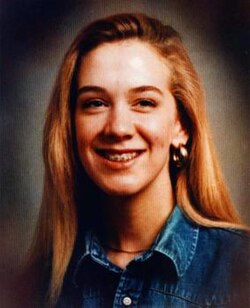
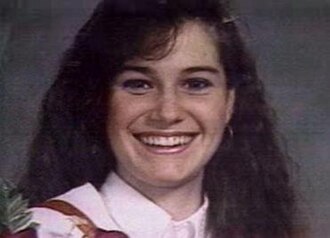
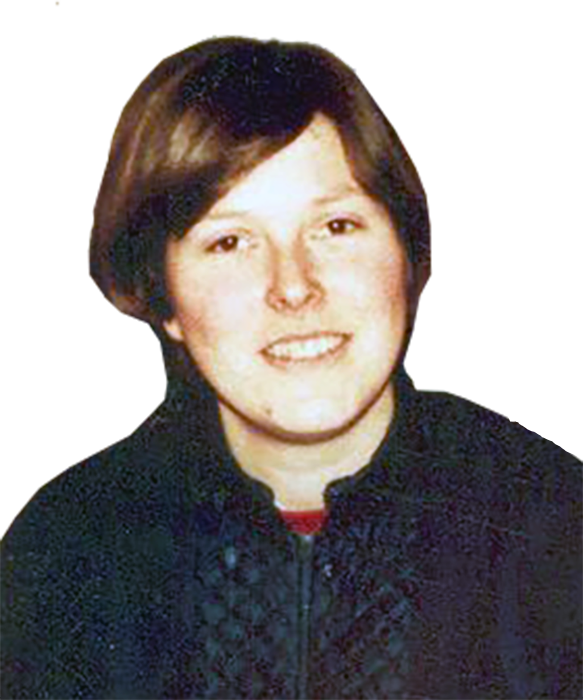
At 23 years old, Claire Samson was a young woman her family remembered as a beautiful soul and a caring, loving person. Known to some of her friends as "KC" or "Casey," she was living in Toronto, Ontario, in the late summer of 1983 and had recently moved back in with her parents. Her life, full of potential, was brutally cut short, leaving her loved ones with decades of unanswered questions about who was responsible for her death and why.
On the night of September 1, 1983, Claire was in
the area of Jarvis and Gerrard streets in Toronto. Witnesses last saw her getting into a beige-colored car driven by an older white male with graying or thin hair. It was the last time anyone would see her alive. The following day, her body was discovered in a remote, wooded area on private land just off a sideroad in Oro-Medonte Township, about 75 miles north of the city where she was abducted. An investigation by the Ontario Provincial Police (OPP) determined that Claire had been shot twice.
Despite extensive searches, public appeals for information, media interviews, and even a reward, the case went cold. Investigators had collected evidence, including DNA, from the scene, but the technology of the time could not identify a suspect. For years, Claire’s murder remained a haunting mystery, one of many unsolved cases that detectives continued to revisit. In 2001, the OPP launched Project Millennium, a new initiative aimed at reviewing unsolved homicides to see if modern forensic techniques could finally bring about a breakthrough.
The first significant break came in 2016, when a genetic link connected Claire's murder to the 1982 killing of another young woman in Toronto, 25-year-old Christine Prince. A year later, forensic scientists at the Centre of Forensic Sciences in Ontario made another shocking discovery: the same unknown male offender was also responsible for the 1997 murder of 41-year-old Gracelyn Greenidge. Police now knew they were hunting for a serial killer who had preyed on women in the Toronto area for over a decade.
The final piece of the puzzle fell into place through the use of forensic genetic genealogy. In 2022, investigators engaged a specialized lab to build a profile from the crime scene DNA. This work led them to the killer's family tree and eventually to a name: Kenneth Smith. Smith was born in South Porcupine, Ontario, and had lived and worked across Toronto during the years of the murders. He had a police record for sexual assault and had been incarcerated for his offenses. On December 3, 2025, the Centre of Forensic Sciences conclusively confirmed that the DNA from all three murder scenes belonged to Smith.
Justice, however, would not come in a courtroom. Kenneth Smith had died in Windsor, Ontario, in 2019 at the age of 72, never having been held accountable for the lives he destroyed. In December 2025, the Toronto Police Service and the OPP held a joint news conference to announce they had solved the three cold cases. While the man responsible was dead, the announcement finally provided long-awaited answers to the families of Claire Samson, Christine Prince, and Gracelyn Greenidge. Police believe it is possible Smith had other victims who have never been identified and have asked for the public's help with any information about him.