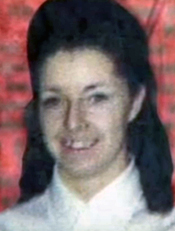
For nearly four years, the death of Alice Jane Ralston, a 42-year-old woman from Guelph, Ontario, was considered a quiet tragedy, a life cut short by natural causes. It was not until a serial killer confessed in 1977 that her family and community learned the horrifying truth: Alice had been murdered in her own home on November 30, 1973. Her death was one of the first in a string of slayings that terrorized the communities of Guelph and London for years.
The initial finding in Alice's
death was that she had succumbed to a pre-existing medical condition, specifically hardened arteries. She was found in her bed, and with no visible signs of violence or forced entry, there was little reason to suspect foul play. This conclusion, however, was a testament to the chilling methodology of her killer, who was adept at making his heinous crimes appear as deaths by natural causes. Alice was one of his early victims, and her case remained closed, her murder a secret, as he went on to kill again.
The man responsible for Alice’s death was Russell Maurice Johnson, a former auto factory worker and bodybuilder who came to be known as "The Bedroom Strangler" and "The Balcony Killer." Between 1973 and 1977, Johnson is known to have killed at least seven women and assaulted numerous others. His method was as terrifying as it was effective at evading immediate detection. Johnson would stalk women, often those living in apartment buildings, before scaling the walls and balconies, sometimes many stories high, to gain silent entry into their homes through unlocked doors or windows. Once inside, he would sometimes watch his victims sleep before strangling or suffocating them.
In the cases of his first four victims, including Alice, Johnson was so meticulous in his attacks and in leaving the scene undisturbed that medical examiners initially attributed the deaths to other causes. Another victim's death was thought to be a reaction to medication, while another was attributed to pulmonary edema. This pattern of undetected murders allowed Johnson to continue his reign of terror, leaving a trail of grief and confusion across two cities. It wasn't until his later crimes became more overtly violent, involving stabbing and leaving more evidence, that police began to connect the cases and realize a serial killer was at large.
The investigation culminated in Johnson's arrest in July 1977. He was initially charged with three of the more recent, clearly violent murders. To the shock of investigators, during questioning, Johnson confessed to four additional homicides, including that of Alice Jane Ralston. He also admitted to more than a dozen non-fatal assaults. His confession finally brought the truth to light, reclassifying Alice’s death as a homicide and revealing the terrible secret of what had happened in her Guelph apartment years earlier.
At his trial, Johnson claimed he had an "uncontrollable urge" to rape and kill. In February 1978, he was found not guilty by reason of insanity for the murders and was ordered to be confined indefinitely to a secure mental health facility. He has since been held at the Waypoint Centre for Mental Health Care in Penetanguishene, Ontario. For the families of his victims, the legal outcome meant there would be no traditional prison sentence, but rather a lifetime of attending review board hearings to advocate for his continued confinement and to ensure the public remains safe from the man who took their loved ones. The truth of Alice Ralston's death, once hidden by a killer's cunning, now stands as a permanent part of a dark chapter in Ontario's history.