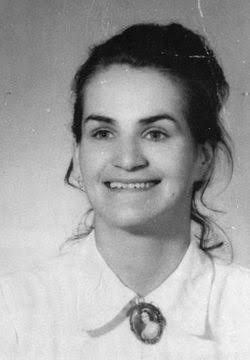
Pamela Lorraine Darlington, a 19-year-old female described by her family as outgoing and fearless, was looking forward to a night out with friends in November 1973. At 5'5" and 120 pounds, with shoulder-length blonde hair, she had worked for about a year as an operator for BC Telephone. Her cousin, Sharon, remembered her as someone who was always laughing and loved people. "When we were little, I was shy and reserved. Pam wasn't scared of anything," she recalled.
The two were close and had made plans to get an apartment together and begin their young adult lives.
The exact events of the last night of Pamela’s life remain somewhat unclear. On the evening of Tuesday, November 6, 1973, in Kamloops, British Columbia, she discovered her car would not start. According to her sister, Laurel, Pamela decided to hitchhike into town to meet her friends, a common practice at the time. She was reportedly last seen at around 10:30 p.m. hitchhiking on Tranquille Road in front of the Village Hotel. Another account from friends suggested she was at The David Thompson Pub that evening, in the company of an unknown but attractive man with "shaggy hair."
The next day, Wednesday, November 7, 1973, a 17-year-old named Frank Almond was walking his dog in a park near the Thompson River. His dog ran towards something in the shallow water along the south bank, and Almond soon realized it was a body. It was Pamela. An autopsy would later reveal that she had been sexually assaulted and brutally beaten to death.
The investigation into Pamela's murder has spanned decades and explored multiple leads without a definitive resolution. In the initial years, the Royal Canadian Mounted Police (RCMP) told her family they suspected the notorious serial killer Ted Bundy might be responsible, a belief that brought the family some relief when he was executed. However, years later, her case was officially included in Project E-PANA, an RCMP task force established in 2005 to investigate a string of unsolved murders and disappearances of women along three major British Columbia highways, including the stretch known as the "Highway of Tears." Pamela’s case met all three of the task force's criteria: she was female, engaged in a "high-risk activity" by hitchhiking, and was found near Highway 5, likely the victim of a stranger.
In 2012, the E-PANA task force announced a major development, naming a deceased American convict, Bobby Jack Fowler, as a suspect in Pamela's murder. Fowler's DNA had been found on the remains of another "Highway of Tears" victim, Colleen MacMillen, who was killed in 1974. The RCMP considered him a strong suspect in Pamela's case and the 1973 murder of 19-year-old Gale Weys, as well. Fowler, a transient worker with a violent history, had died of lung cancer in an Oregon prison in 2006. However, despite strong suspicions, U.S. officials later confirmed there was no DNA evidence linking Fowler to the murders of Pamela Darlington or Gale Weys.
Pamela’s murder is one of the oldest unsolved cases in the Project E-PANA investigation. Her family has been left with unanswered questions and enduring grief. Her parents have since passed away without knowing who was responsible for their daughter's death. Her cousin Sharon expressed the family's pain, stating, "Everyone truly wanted to know the truth about Pam, but my uncle, aunt, father and mother are now all dead." The case remains open, a painful and unresolved chapter in the tragic story of the Highway of Tears.