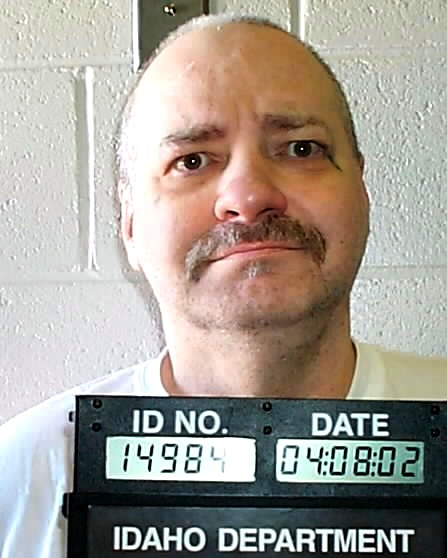
Thomas Eugene Creech: Convicted Serial Killer and Longtime Idaho Death Row Inmate
Overview
Thomas Eugene Creech, born September 9, 1950, in Hamilton, Ohio, is an American serial killer whose criminal history spans several states and more than a decade. He has been convicted of five murders committed in Idaho, Oregon, and California, while investigators have connected him to several additional killings. Creech became particularly notorious because of the extraordinary number of murders he claimed to have committed. At various times he asserted responsibility for dozens of deaths, including claims of as many as 42 killings. Investigators concluded that many of those statements could not be substantiated, and some were regarded as fabricated or greatly exaggerated. Nevertheless, several murders outside his five convictions were supported by evidence, confessions, or information Creech supplied that helped authorities locate victims.
Creech's confirmed criminal history is unusual even among serial murder cases because it continued after he had already been convicted and imprisoned for murder. After receiving life sentences for two Idaho killings and additional murder convictions in Oregon and California, Creech killed fellow prisoner David Dale Jensen inside an Idaho correctional institution in 1981. That killing ultimately placed Creech back under a death sentence and made him one of the longest-serving death-row prisoners in the United States.
The 1973 Tucson Murder Case
One of the earliest homicide investigations associated with Creech involved 70-year-old Paul Schrader in Tucson, Arizona. Schrader was killed at the Downtown Motor Hotel in October 1973. Creech and his wife had been staying at the motel, and investigators alleged that Creech left with property belonging to Schrader, including his vehicle and financial items. Creech was arrested in Utah and returned to Arizona to face a murder charge.
Creech went to trial in 1974 but was acquitted. Because a jury found him not guilty, Schrader's death is not one of Creech's murder convictions and should not be described as a legally established Creech murder. Authorities nevertheless continued to regard the case as part of the broader history surrounding him.
The Murder of Vivian Grant Robinson
During 1974, Creech spent time at the Oregon State Hospital. He later admitted that while he had permission to leave the institution for a weekend, he traveled to Sacramento, California, where Vivian Grant Robinson was killed. Robinson, a 50-year-old state tax auditor, was found dead inside his Sacramento residence on June 19, 1974. His body had been there for several days, making the precise date of death difficult to establish. Contemporary investigators were initially unable to determine the cause of death because of decomposition.
The case remained unresolved until Creech was imprisoned in Idaho and began discussing murders in other states. He gave investigators information concerning Robinson's death, including details about the residence and the killing. California investigators revisited fingerprints recovered from Robinson's home and connected them to Creech. Investigators also learned that Creech had reportedly telephoned the Oregon treatment facility from Robinson's residence to say that he would return late.
California eventually prosecuted Creech for Robinson's murder. He was convicted in September 1980 and received a life sentence. The Robinson case became particularly important when evaluating Creech's many confessions because it demonstrated that at least one seemingly improbable story he told investigators could be independently connected to an actual homicide.
William Joseph Dean and the Portland Church Murder
After leaving the Oregon State Hospital, Creech worked as a maintenance employee or sexton at St. Mark's Episcopal Church in Portland. On August 15, 1974, 22-year-old William Joseph Dean was shot and killed there. Dean had recently married and was reportedly traveling toward Alaska, where he intended to work with his father.
According to evidence later presented by prosecutors, Creech obtained a high-powered rifle and shot Dean in the chest at close range. Dean's body was concealed within Creech's living area at the church and was discovered on August 17 after people at the church noticed an odor. Creech subsequently acknowledged killing Dean.
Creech was prosecuted in Oregon and was convicted of Dean's murder in 1979. The conviction added another life sentence to the punishment Creech was already facing for murders committed elsewhere.
The Killing of Sandra Jane Ramsamooj
On August 17, 1974, two days after William Dean was killed, Sandra Jane Ramsamooj was fatally shot while working alone at a Circle K store in Salem, Oregon. Prosecutors later described the killing as a robbery in which Creech confronted Ramsamooj inside the store, shot her multiple times, and took money from the registers.
Creech confessed to the Ramsamooj killing after his November 1974 arrest. He was eventually charged in connection with her death, but Oregon authorities did not take the case through another murder trial. During Creech's 2024 clemency proceedings, an Idaho prosecutor explained that the case was dismissed because Creech already faced multiple life sentences and other murder convictions. Ramsamooj's death therefore is strongly associated with Creech in official accounts, but it is not one of the five murders for which he was convicted.
Murders Connected to Creech in Nevada and Wyoming
Creech's statements after his arrest caused law-enforcement agencies throughout the western United States to reopen old homicide and missing-person investigations. Some of his stories produced nothing, but other statements contained information sufficiently specific to lead investigators to human remains.
Gordon Lee Stanton, 44, disappeared while traveling toward Montana. Creech later confessed to killing Stanton and supplied investigators with information about where his body could be found. Stanton's remains were recovered in Nevada after authorities followed Creech's directions. The available official material establishes the killing as occurring in 1974, although an exact date of death is not consistently documented in the records. Creech was never prosecuted for Stanton's murder.
Authorities also associated Creech with the death of Charles Thomas Miller near Las Vegas, Nevada. Miller's case was among the killings investigators considered credibly connected to Creech, and modern Idaho officials have continued to name Miller among Creech's victims. An exact date of death cannot be reliably established from the available official summaries, so it should not be presented as certain.
Another case involved 22-year-old Rick Stewart McKenzie. McKenzie was traveling in a vehicle when he encountered Creech. According to the account later presented by Idaho prosecutors, Creech took McKenzie into a ravine near Baggs, Wyoming, shot him, and took his vehicle and credit cards. After Creech confessed in November 1974, Wyoming authorities searched unsuccessfully several times. Creech was eventually taken to the area and directed investigators to the location where McKenzie's body was found. Creech was at one point charged in connection with the case, but a murder prosecution was never completed.
The Murders of Edward Thomas Arnold and John Wayne Bradford
The killings that finally brought Creech into sustained police custody occurred in Idaho in November 1974. Creech and his teenage girlfriend, Carol Spaulding, were hitchhiking when they were picked up by house painters Edward Thomas Arnold, 34, and John Wayne Bradford, 40. The group traveled through Valley County near Donnelly, Idaho.
During the early morning hours of November 4, 1974, Arnold and Bradford were shot to death. Their bodies were left near Highway 55 in the Donnelly area and were discovered soon afterward. Creech and Spaulding continued traveling in the victims' automobile before eventually abandoning it and continuing their journey by other means.
Creech and Spaulding were arrested in Idaho only days later. Spaulding ultimately cooperated with authorities and testified concerning the events surrounding the murders. Creech offered differing accounts, including a claim that he had acted after the men threatened Spaulding, but a jury rejected his defense. In October 1975, Creech was convicted of two counts of first-degree murder for killing Arnold and Bradford.
On March 25, 1976, he received mandatory death sentences under the Idaho law then in effect. Changes in constitutional death-penalty law later resulted in those sentences being reduced to life imprisonment. Creech remained imprisoned in Idaho while authorities in Oregon and California pursued their own murder cases against him.
Victims Resulting in Murder Convictions
- Vivian Grant Robinson, 50 — Killed in mid-June 1974 in Sacramento, California. His body was discovered on June 19, 1974, after he had been dead for several days, so the precise date of death could not be established. Creech was convicted of Robinson's murder in California in September 1980.
- William Joseph Dean, 22 — Killed August 15, 1974, at St. Mark's Episcopal Church in Portland, Oregon. Dean was shot in the chest. His concealed body was discovered on August 17, 1974. Creech was convicted of his murder in 1979.
- Edward Thomas Arnold, 34 — Killed November 4, 1974, near Donnelly in Valley County, Idaho. Arnold was shot after he and Bradford picked up Creech and Carol Spaulding while they were hitchhiking. Creech was convicted of first-degree murder.
- John Wayne Bradford, 40 — Killed November 4, 1974, near Donnelly in Valley County, Idaho. Bradford was traveling with Arnold and was shot during the same incident. Creech was convicted of first-degree murder.
- David Dale Jensen, 23 — Killed May 13, 1981, inside the Idaho State Correctional Institution in Ada County, Idaho. Creech beat Jensen with a sock containing batteries and kicked him after a confrontation between the prisoners. Creech pleaded guilty to first-degree murder and was sentenced to death.
Other Victims and Cases Officially Linked to Creech
- Paul Schrader, 70 — Killed October 22, 1973, at a motel in Tucson, Arizona. Creech was prosecuted for the murder but was acquitted in March 1974. The case therefore remains an allegation rather than a Creech murder conviction.
- Sandra Jane Ramsamooj — Killed August 17, 1974, while working at a Circle K store in Salem, Oregon. Creech confessed to killing her. A murder charge was later dismissed rather than taken through another trial.
- Gordon Lee Stanton, 44 — Killed in 1974 and found in Nevada after Creech provided investigators with information about the body's location. The exact date of death is not reliably established in the available official record. Creech was not prosecuted for the murder.
- Charles Thomas Miller — Killed in the Las Vegas, Nevada, area in 1974 and subsequently listed by Idaho authorities among victims connected to Creech. Available official summaries do not establish a reliable exact date of death, and Creech was not convicted in the case.
- Rick Stewart McKenzie, 22 — Killed in 1974 near Baggs, Wyoming. Creech confessed and later helped authorities locate McKenzie's body. The precise death date is not consistently established in available official records. Creech was not ultimately convicted of the murder.
- Daniel Ashton Walker, 21 — Shot to death October 1, 1974, alongside Interstate 40 in San Bernardino County, California. In 2024, the San Bernardino County Sheriff's Department said its renewed investigation had linked Creech to Walker's killing. Prosecutors did not bring a new murder charge, and Creech's attorneys disputed claims that the case had been conclusively solved.
The Murder of David Dale Jensen in Prison
Creech's most consequential murder occurred after he had already accumulated multiple murder convictions. By May 1981 he was serving life sentences at the Idaho State Correctional Institution. David Dale Jensen, a 23-year-old prisoner serving time for theft, was housed in the same institution. Jensen had significant disabilities resulting from an earlier gunshot injury to his head. Part of his brain had been removed and a plate had been placed in his skull.
On May 13, 1981, Jensen and Creech became involved in a violent confrontation. Court findings describe Jensen initially attacking Creech with a sock containing batteries. Creech took the weapon away. Jensen later approached with a modified toothbrush containing a razor blade. Creech then struck Jensen with the battery-filled sock. The assault continued after Jensen was seriously injured, with Creech also kicking him in the head and neck. Jensen suffered fatal injuries and died that day.
Creech initially entered a not-guilty plea but changed his plea to guilty on August 28, 1981. A judge imposed a death sentence on January 25, 1982. The sentence went through decades of appeals, reversals, resentencing proceedings, and constitutional challenges. A death judgment imposed in 1995 remained the operative sentence afterward.
The Extraordinary Confessions
One of the most difficult aspects of Creech's history is separating established murders from his enormous collection of confessions. After his arrest in 1974, he began telling authorities that he had killed people throughout the United States. He later claimed responsibility for dozens of murders and described killings in numerous states. Some accounts involved alleged contract murders, motorcycle gangs, or supposed ritual killings.
Investigators were unable to corroborate most of the claims. Searches of places where Creech said bodies had been buried sometimes produced no evidence at all. For that reason, the frequently repeated figure of 42 victims should not be treated as a verified murder total. The strongest historical description is that Creech has five murder convictions and has been credibly linked by authorities to a number of additional deaths.
At the same time, investigators could not simply dismiss everything Creech said. His information concerning cases such as Vivian Robinson, Gordon Stanton, and Rick McKenzie corresponded with real victims or led police to evidence and bodies. This mixture of demonstrably accurate information and questionable claims has made determining Creech's actual victim count exceptionally difficult.
Death Sentence and Decades of Litigation
Creech has spent decades challenging his death sentence for David Jensen's murder. His case has moved repeatedly through Idaho state courts and the federal court system. His lengthy incarceration eventually made him one of America's longest-serving condemned prisoners.
Idaho scheduled Creech for execution by lethal injection on February 28, 2024. The execution began, but the medical team was unable to establish intravenous access sufficient to administer the lethal drugs. After repeated attempts, the Idaho Department of Correction halted the procedure. A second execution was later scheduled for November 13, 2024, but a federal court issued a stay while additional legal challenges were considered.
The litigation continued into 2026. Idaho Department of Correction records in August 2026 continued to list Thomas Eugene Creech as in custody, with two active life sentences for the Valley County murders and an active death sentence for the Ada County murder of David Dale Jensen. He remained housed at the Idaho Maximum Security Institution. Creech has also continued to litigate questions surrounding Idaho's execution procedures as the state changed its execution protocols.
Legacy of the Case
Thomas Eugene Creech's case is distinguished not simply by the number of killings associated with him but by the complex boundary between proven crimes, credible confessions, disputed allegations, and stories that investigators could never substantiate. Five murders resulted in convictions: Vivian Grant Robinson, William Joseph Dean, Edward Thomas Arnold, John Wayne Bradford, and David Dale Jensen. Other victims, including Sandra Jane Ramsamooj, Gordon Lee Stanton, Charles Thomas Miller, and Rick Stewart McKenzie, have been publicly identified by Idaho authorities as people whose deaths were connected to Creech, despite the absence of additional murder convictions.
The murder of Jensen demonstrated that imprisonment had not initially ended Creech's capacity for lethal violence. Already serving life sentences for murder, he killed another man within the correctional system and received the death sentence that has defined the subsequent decades of his case. At the same time, the enormous number of unverified killings Creech once claimed has required investigators, courts, historians, and journalists to distinguish carefully between what Creech said and what evidence could actually prove.
More than half a century after the earliest killings connected to him, Creech remains a striking example of why serial-killer victim counts must be treated cautiously. His five murder convictions are firmly documented. Several additional homicides have substantial investigative links to him. Beyond those cases, however, the much larger totals Creech claimed remain unproven, leaving the complete extent of his crimes uncertain.