Crime Solvers Central
302 Cases Solved. Advancing justice for missing persons, unsolved homicides, unidentified and unclaimed remains.

Case Description

Any updates on this case? Let us know!
Summary based on 1 source
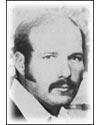
In the summer of 1974, the quiet life of Vivian Grant Robinson, a 50-year-old man working as a state tax auditor, came to a brutal and solitary end in Sacramento, California. Mr. Robinson was a bachelor who lived alone in a middle-class residential neighborhood. Little is publicly known about his personal life, his passions, or how his loved ones remembered him, as his story has been largely defined by the disturbing nature of his death and the identity of his killer. His professional life was one of civil service, dedicated to his role within the state government.

On June 19, 1974, Vivian Robinson was discovered deceased inside his home. Responding officers found his body in a state of advanced decomposition, suggesting he had been dead for at least three days. Due to the condition of his remains, the Sacramento coroner's office was initially unable to determine a cause of death. Investigators at the scene noted that dishes, bottles, and food had been left out, indicating that two people had been present in the home. They also discovered that Mr. Robinson's car was missing. The Sacramento Police Department’s homicide squad began an investigation, collecting evidence, including fingerprints, from the otherwise quiet home.

For more than a year, the case remained unsolved. The break came in October 1975, when investigators received a crucial tip from law enforcement in Idaho. A man in their custody, Thomas Eugene Creech, had confessed to a string of murders across several states, including one in Sacramento. Sacramento police re-examined the fingerprints found in Vivian Robinson's house and confirmed they matched Creech's. The investigation revealed that Creech, a serial killer with a long and violent history, had been on a weekend pass from a mental hospital in Oregon when he traveled to Sacramento and killed Robinson. In a chilling detail, authorities learned that after the murder, Creech used Robinson's own telephone to call the hospital and inform them he would be returning a day late.

Subsequent investigation and Creech's own admissions eventually established that Vivian Robinson had been suffocated or strangled. Creech, an Ohio native, had a criminal record that began years earlier and included numerous other killings. He was tried for the murder of Paul Schrader in Arizona in 1973 but was acquitted. After his release from the Oregon State Hospital, he went on to kill William Joseph Dean in Portland, Oregon, just months after murdering Robinson. Creech was ultimately arrested in Idaho in November 1974 for the murders of two house painters, Thomas Arnold and John Bradford.

While Creech was already serving time for the murders in Idaho, California authorities waited to prosecute him for the murder of Vivian Robinson. Finally, in September 1980, Thomas Eugene Creech was convicted of first-degree murder for killing Robinson. He was sentenced to life in prison for the crime. This conviction was one of five murder convictions that Creech would accumulate across multiple states.

The case of Vivian Grant Robinson is a chilling footnote in the violent cross-country crime spree of Thomas Eugene Creech. Details about memorials or the long-term impact on Robinson's family and friends are not widely available. As of February 2024, Creech remained on death row in Idaho for the 1981 murder of a fellow inmate. His execution was scheduled but ultimately could not be carried out due to technical issues with the lethal injection procedure. The murder of Vivian Robinson remains officially solved, with his killer identified and convicted, though the full story of his life has been tragically overshadowed by the circumstances of his death.

Links to Additional Sources (1)

See any mistakes? Let us know!