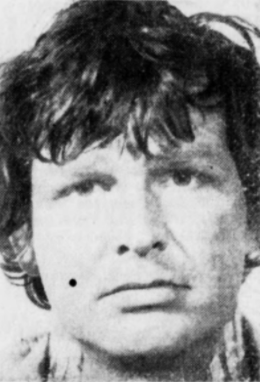
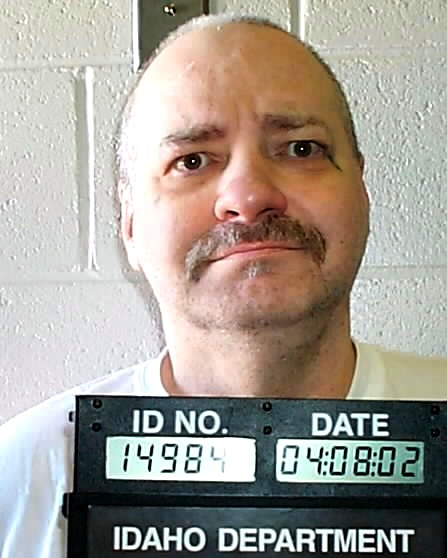
Anthony Joe LaRette Jr.: The Drifter Who Confessed to a Nationwide Trail of Murder
Overview
Anthony Joe LaRette Jr. was an American serial killer, rapist and habitual violent offender whose crimes stretched across several states during the 1970s and early 1980s. Born on October 1, 1951, in Topeka, Kansas, LaRette spent much of his adult life drifting from place to place, sometimes traveling by bus and occasionally using the false name “Mike Watson.” His movement between communities allowed him to approach women who had no connection to one another and then disappear before investigators could recognize a pattern.
LaRette was convicted of only one murder: the July 25, 1980, killing of Mary Michele Fleming in St. Charles, Missouri. While awaiting execution, however, he claimed responsibility for as many as 31 murders and approximately 10 rapes in 11 states. Investigators reportedly considered many of his statements credible because he supplied details about crime scenes, victims and evidence that had not been publicly disclosed. Authorities eventually attributed at least 15 previously unresolved killings to information he provided, although the identities of many of those victims were never publicly released and LaRette was not prosecuted for most of the additional crimes.
Early Violence and Criminal History
Long before his murder conviction, LaRette had demonstrated a pattern of sexual aggression and violence toward women. Accounts of his background described childhood behavioral problems, periods of psychiatric treatment and diagnoses involving neurological or psychological disorders. He later claimed that head injuries, hallucinations and blackout episodes affected his behavior. These explanations became important during his appeals, but they did not excuse the deliberate actions described by witnesses, investigators and LaRette himself.
LaRette served time in institutions and prisons at different points in his life. He was convicted of raping a woman in Lawrence, Kansas, in 1974. After his release, his transient lifestyle placed him in numerous cities where women were later attacked or killed. His known victims ranged from young women beginning their adult lives to middle-aged women attacked inside homes where they should have been safe.
Known and Attributed Victims
- Jeanette “Mickey” Wade — August 20, 1976 — Marathon, Florida: Wade, 26, was attacked after returning from work. LaRette had reportedly registered at local motels under the name “Mike Watson” while staying in the Florida Keys. He entered Wade’s home and confronted her in the kitchen, stabbing her repeatedly and cutting her throat. He later described leaving Marathon by hitchhiking. Although a witness provided investigators with a description of a suspicious man, LaRette was not identified as the killer at the time.
- Betty H. Brunton — August 23, 1976 — St. Petersburg, Florida: Brunton, 52, worked at Memorial Park Cemetery. She returned home during the day to retrieve her lunch, and LaRette allegedly followed her to the residence. She was stabbed to death inside the house, with the weapon reportedly left in her body. Concerned co-workers discovered her after she failed to return. LaRette later gave investigators information that led authorities to attribute the killing to him.
- Beverly Wortmann — December 7, 1977 — Kansas City, Missouri: Wortmann, 24, was a newspaper reporter and photographer. She was found murdered in her apartment after being stabbed numerous times and having her throat cut. There were no obvious signs that valuables had been stolen. A man seen near the apartment building was initially questioned, but he was released for lack of evidence. Years later, LaRette confessed and accurately described the apartment, surrounding buildings and circumstances of the attack. Prosecutors concluded that his knowledge strongly indicated that he was responsible.
- Helen Marie Alderson Hall — May 20, 1978 — St. Petersburg, Florida: Hall, 60, was found dead in the bedroom of her home by her son. She had been beaten with a blunt object, and her light-green 1971 Lincoln Continental was missing. Investigators found no clear evidence of forced entry and initially had no identified suspect. LaRette was later linked to the homicide through his confessions and his knowledge of the case.
- Tracey Gladys Miller — November 2, 1978 — Manhattan, Kansas: Miller, 26, was found at the foot of a staircase inside her home after she failed to attend a planned lunch. She had been stabbed repeatedly and her throat had been cut. Her young daughter was found unharmed upstairs. There was no clear sign of forced entry, and the murder remained unsolved for years. After LaRette’s arrest in Missouri, Kansas investigators searched his property and considered him a prime suspect. His later statements supplied information that authorities believed connected him to Miller’s death.
- Mary Michele Fleming — July 25, 1980 — St. Charles, Missouri: Fleming, identified by the investigating Major Case Squad as 19, was returning to her family’s apartment after buying groceries at a nearby store. LaRette followed her and entered the apartment, where he attacked her with a knife. He stabbed her in the chest and cut her throat as she attempted to escape. Despite her catastrophic wounds, Fleming managed to run across the street and reach a neighbor’s doorstep. She was taken to a hospital but died from massive blood loss. This was the murder for which LaRette was arrested, tried, convicted and sentenced to death.
The Murder of Mary Michele Fleming
On the morning of July 25, 1980, witnesses noticed a light-colored convertible slowly circling the apartment complex where Fleming lived with her family. Fleming had gone to a nearby grocery store and was seen walking back toward her home. LaRette later acknowledged following her to the apartment. He claimed that he had entered intending to commit a burglary and that Fleming surprised him, although evidence inside the residence indicated a prolonged and intensely violent struggle.
LaRette struck Fleming, removed portions of her clothing and pursued her through the apartment. She suffered wounds to her hands while attempting to defend herself. She was stabbed twice in the chest, with one wound penetrating her heart, and her throat was deeply cut. Blood evidence throughout the living room, kitchen, hallway and doorway showed that Fleming fought desperately and continued trying to escape despite her injuries.
After LaRette fled, Fleming crossed to a neighboring residence and collapsed. Witnesses summoned police officers and medical assistance, but doctors could not save her. The apparently random nature of the crime initially left investigators with no clear motive. The suspicious convertible and descriptions of the man seen near the complex, however, soon focused attention on LaRette, who had been visiting friends in the neighborhood.
Arrest and Incriminating Statements
After leaving Missouri, LaRette returned toward Topeka. Investigators obtained a warrant, and authorities in Missouri and Kansas began searching for him. He was located on August 7, 1980, at his sister’s residence. Before being taken into custody, he attempted to injure himself by cutting his neck and wrist. He survived and was transported to jail before being extradited to Missouri.
A critical witness against LaRette was a friend whose convertible he had used on the day of Fleming’s murder. After learning about the killing, the friend confronted LaRette by telephone. During their conversations, LaRette admitted following Fleming from the store, entering the apartment and stabbing her. He said that he disposed of the knife in a river. During one call, a police officer listened on an extension while LaRette discussed the crime and his plan to remain away from his parents’ home until the investigation quieted down.
LaRette offered shifting explanations. At different times, he said Fleming had interrupted a burglary, claimed that another man had committed the actual murder and described the killing as an unplanned reaction after Fleming screamed. Prosecutors argued that his surveillance of the neighborhood, decision to follow Fleming and pursuit of her inside the apartment demonstrated deliberate conduct rather than an accidental or momentary act.
Trial and Death Sentence
Because of extensive publicity in St. Charles County, LaRette’s trial was moved to Warren County. The prosecution presented eyewitness accounts, physical evidence from the apartment, testimony concerning his confessions and descriptions of the wounds Fleming suffered. His attorneys attempted to create doubt by suggesting that another man might have participated, but the jury rejected that theory.
In August 1981, the jury found LaRette guilty of capital murder after deliberating for approximately one hour. Jurors recommended the death penalty, and the court formally sentenced him to die. The Missouri Supreme Court upheld the conviction and sentence in 1983. LaRette remained on death row for approximately 14 years while his attorneys pursued state and federal appeals involving his mental condition, the quality of his trial representation and whether he possessed the intent required for capital murder.
Confessions to Additional Murders
While imprisoned, LaRette began providing detectives with accounts of crimes outside Missouri. In 1988, he gave recorded confessions concerning Jeanette Wade and Beverly Wortmann. He described the alias he used in Florida, the weapon involved in Wade’s murder, his movements after the crime and details of Wortmann’s apartment that investigators believed only the killer would know.
LaRette later communicated extensively with law-enforcement officers, including Alabama detective Patricia Juhl. He claimed that his victims were scattered through Arkansas, Colorado, Florida, Illinois, Kansas, Louisiana, Mississippi, Missouri, Nebraska, Texas and Virginia. His statements included accounts of killings in Denver, Biloxi, Kansas City, Independence, Morgan City, Houma and Grand Isle, as well as numerous crimes in Kansas. Some descriptions were too vague to connect to a particular victim, while others reportedly contained enough protected information for investigators to close long-dormant cases.
Authorities faced practical problems when deciding whether to prosecute him for the additional murders. He was already under a valid death sentence, many of the cases were old, physical evidence had deteriorated and witnesses were sometimes unavailable. Prosecutors in several jurisdictions concluded that new trials would consume substantial resources without increasing his punishment. As a result, his responsibility for most of the attributed killings was recorded through investigative findings rather than separate courtroom convictions.
Execution
LaRette’s final appeals continued until November 1995. His lawyers argued that childhood head injuries, psychiatric illness and inadequate legal representation had prevented a fair determination of his guilt and sentence. A temporary stay was issued shortly before his scheduled execution, but it was quickly lifted after further judicial review.
Anthony Joe LaRette Jr. was executed by lethal injection at the Potosi Correctional Center in Missouri on November 29, 1995. He was 44 years old. Shortly before his death, he repeated his claim that he had committed 31 murders and 10 rapes across 11 states. In his final statement, he apologized to members of his family and to the families of his victims.
Legacy and Unanswered Questions
LaRette’s case illustrates how a mobile offender could exploit the limited communication that existed among police departments during the 1970s. His victims were separated by hundreds of miles, and the crimes differed enough in location and circumstances that investigators initially had little reason to connect them. He sometimes used aliases, traveled without attracting attention and selected women with no known relationship to him.
Although investigators credited LaRette with numerous murders, the exact number of people he killed remains uncertain. He was legally convicted only of Mary Michele Fleming’s murder, and some of his later claims could not be independently verified. At the same time, his detailed knowledge of several unsolved cases convinced experienced detectives that many of his confessions were genuine. The publicly identified victims represent only part of the violence attributed to him, leaving additional families with cases that may have been connected to LaRette but were never fully disclosed.