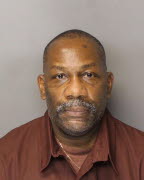
Clarence W. Walker: Suspected Interstate Serial Killer
Overview
Clarence W. Walker was an American violent offender whom investigators suspected of committing a series of murders across Tennessee, Ohio, Michigan, Illinois, and possibly Indiana. His suspected crimes extended from the 1940s through 1965 and involved victims ranging from a 14-year-old boy to women and girls between the ages of seven and 60. Authorities eventually associated Walker with approximately 14 or 15 killings, although he was never prosecuted for most of the deaths attributed to him.
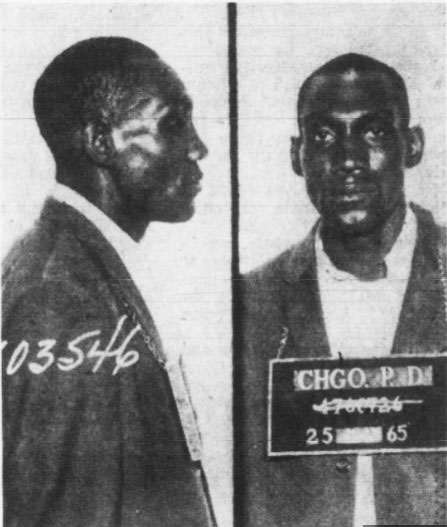
Walker was born in Tennessee on February 25, 1929. His violent criminal history began when he was still a child. At approximately 14 years old, he was convicted of manslaughter after the shooting death of another 14-year-old boy. The victim’s name and the precise date and location of that killing are not consistently documented in surviving accounts. Walker reportedly received a seven-year prison sentence and was eventually paroled.
After leaving prison, Walker began moving between different states. His transient lifestyle allowed him to avoid prolonged scrutiny in any single jurisdiction. He accumulated additional convictions, including armed robbery and grand larceny in Ohio, and served two more prison terms. Investigators later came to believe that Walker was committing murders during periods when he was free, leaving behind cases that initially appeared unrelated because they occurred in different cities and states.
Suspected Pattern of Violence
Walker’s suspected victims included women and young girls who were abducted from streets, businesses, and neighborhoods. Several victims were stabbed, sexually assaulted, mutilated, or dismembered. Other killings attributed to him reportedly involved shootings. The variation in his methods, combined with the geographical distance between the crimes, made it difficult for authorities to recognize a single offender.
Investigators eventually attributed at least three unsolved murders in the Cleveland, Ohio, area to Walker. Four additional victims were connected to him in southwestern Michigan, while approximately seven other killings were reportedly scattered across Illinois. Some accounts also place suspected crimes in Tennessee and Indiana. The complete names, circumstances, and recovery dates of many of these victims were never publicly documented, making it impossible to produce a fully verified list of every death attributed to him.
The Benton Harbor Murders
The best-documented series associated with Walker occurred in and around Benton Harbor, Michigan, during the winter and spring of 1965. At the time, Walker was reportedly living in the area under the alias “James Darnell.” Within less than two months, four women and girls disappeared or were killed in closely connected circumstances.
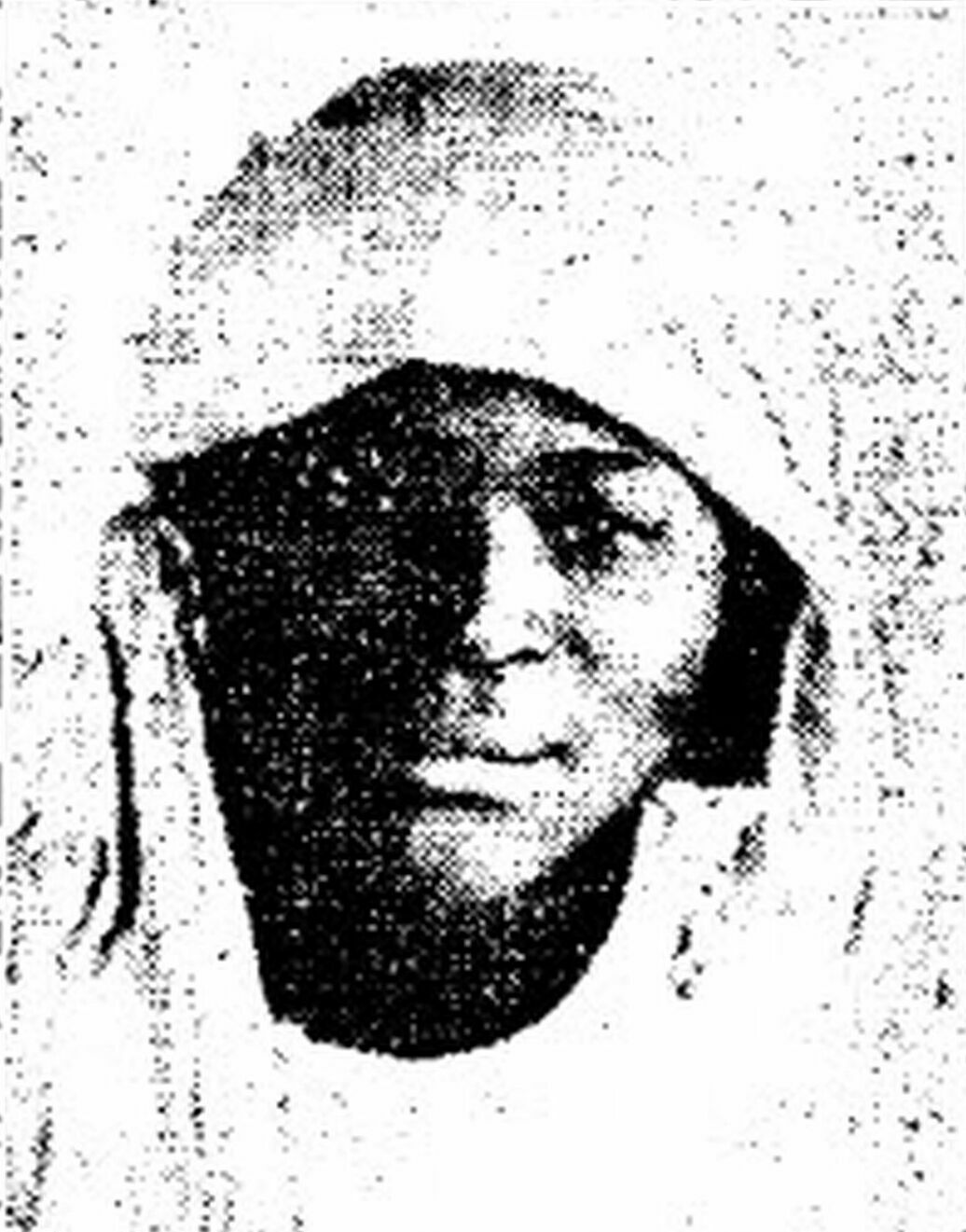
- Mary Jones, 37: Jones was reported missing from Benton Harbor, Michigan, on February 6, 1965, following a night of visiting local bars. Her mutilated remains were discovered with those of two other victims in a secluded pine grove in Bainbridge Township on April 4, 1965. Her severed skull was found separately on April 23, 1965, near the residence of a person whom Walker, using the name James Darnell, had identified as a relative. Her precise date of death could not be established publicly.
- Delores Young, 19: Young was abducted from a street in Benton Harbor on February 15, 1965. Her unclothed body was discovered on February 16, 1965, inside the ruins of a burned house in the Benton Harbor area. Evidence indicated that the building or body had been burned in an apparent attempt to conceal the crime. The exact time of her death was not publicly established, although she was killed between her abduction and the discovery of her body.
- Amelia Boyer, 60: Boyer was abducted from a laundromat in the Benton Harbor area during March 1965. Her dismembered or mutilated remains were found in the Bainbridge Township pine grove on April 4, 1965, beside the remains of Mary Jones and Diane Carter. Available accounts do not provide a verified date for her disappearance or death.
- Diane Carter, 7: Carter disappeared from a Benton Harbor neighborhood on March 30, 1965. Walker was reportedly living nearby under an assumed name when she vanished. Her mutilated remains were discovered with those of Jones and Boyer in Bainbridge Township on April 4, 1965. Her exact date of death was not conclusively established, but she was killed sometime between March 30 and April 4, 1965.
Discovery of the Bainbridge Township Victims
On April 4, 1965, searchers discovered the remains of Mary Jones, Amelia Boyer, and Diane Carter in an isolated pine grove in Bainbridge Township, outside Benton Harbor. The condition of the bodies made identification and forensic examination extremely difficult. The victims had been mutilated, and portions of their remains had been removed or scattered.
The discovery suggested that the offender had transported the victims to a secluded disposal location where he believed they would remain hidden. Mary Jones’s skull was not found with the rest of her remains. It was recovered on April 23 near a residence connected through Walker’s alias, creating one of the strongest circumstantial links between him and the Michigan killings.
By the time authorities became interested in questioning “James Darnell,” Walker had left Michigan. Investigators initially made assumptions about the offender that delayed the identification of a viable suspect. Because of the extensive mutilation, some investigators believed the killer might be a white man with surgical training. Walker was Black and had little formal education, causing him to fall outside the profile that authorities had constructed.
Possible Cleveland Victims
After Walker’s identity became known, detectives compared the Michigan cases with older unsolved murders in Cleveland, Ohio. The Cleveland victims had reportedly suffered mutilation resembling the injuries found on the Benton Harbor victims. Body parts and items of clothing associated with the Michigan remains were examined alongside evidence from the Ohio cases.
Authorities eventually concluded that Walker was likely responsible for at least three Cleveland murders. Publicly available summaries, however, do not consistently identify those victims by name or provide reliable dates of death. The similarity of the mutilations, Walker’s presence in Ohio, and his history of imprisonment there were among the circumstances investigators used to connect him to the cases.
The crimes were especially difficult to investigate because forensic techniques were far more limited than they are today. DNA profiling did not exist, law-enforcement databases were primitive, and agencies in different states did not routinely share detailed information about unsolved murders. A mobile offender such as Walker could commit a crime, cross a state line, adopt another name, and become nearly invisible to the detectives working the original case.
Illinois Crimes and Final Arrest
Walker was arrested in Chicago in June 1965, only a few months after the Benton Harbor murders. His arrest did not initially result from the Michigan homicide investigation. Instead, he was prosecuted in Cook County, Illinois, for the rape, armed robbery, and attempted murder of a surviving victim.
The surviving victim provided prosecutors with evidence strong enough to obtain convictions. In 1966, Walker was convicted of rape, armed robbery, and attempted murder. He received consecutive sentences of 100 to 150 years for rape, 100 to 150 years for armed robbery, and 19 to 20 years for attempted murder. His combined sentence amounted to a minimum of 219 years and a maximum of 320 years in prison.
Walker’s imprisonment permanently ended his suspected killing series. Although later reports sometimes state that he was sentenced in 1968, federal court records describe the convictions as having occurred in 1966. Subsequent appeals and sentencing litigation continued for many years, but Walker remained incarcerated.
Connection to the Murders
Michigan investigators did not publicly connect Walker to the Benton Harbor killings until approximately 1970. By then, he was serving his enormous Illinois sentence. Detectives from several jurisdictions reviewed his movements, aliases, criminal history, and the physical similarities between the murders.
Investigators reportedly became convinced that Walker was responsible for at least 14 killings. Some summaries count his juvenile manslaughter conviction and arrive at a total of 15 victims. The suspected distribution included the teenage boy killed during Walker’s youth, three victims in Cleveland, four victims in the Benton Harbor region, and approximately seven victims in Illinois.
Walker refused to cooperate with homicide investigators and did not provide a comprehensive confession. Prosecutors also faced significant evidentiary problems. Many of the crimes were several years old, physical evidence had deteriorated, witnesses were unavailable, and some victims had been too badly mutilated for investigators to reconstruct exactly what had happened.
Why Additional Murder Charges Were Not Filed
Authorities never prosecuted Walker for the majority of the suspected murders. Circumstantial evidence may have convinced investigators of his guilt, but that did not necessarily meet the standard required to prove each individual homicide beyond a reasonable doubt. His refusal to speak prevented detectives from learning where all of the victims had been killed, how the bodies had been transported, and whether additional victims remained undiscovered.
There was also little practical incentive to conduct several expensive interstate prosecutions after Walker received a sentence that was functionally equivalent to life imprisonment. Even if he had been convicted of additional murders, the new sentences would not have significantly changed the likelihood that he would die in custody.
As a result, agencies reportedly closed numerous unsolved cases administratively after identifying Walker as the probable offender. Administrative closure reflected the investigators’ confidence in his responsibility, but it was not the same as a criminal conviction. Walker must therefore be described as the suspected perpetrator in most of the murders attributed to him.
Aliases and Interstate Mobility
Walker’s use of aliases was an important part of his ability to avoid detection. In Michigan, he was known as James Darnell. By using a false identity and frequently changing residences, he could distance himself from his criminal record and prevent local residents from recognizing him as a convicted violent offender.
His movements through Tennessee, Ohio, Michigan, Illinois, and possibly Indiana further complicated the investigation. Each police agency initially treated its murder as a local case. Similarities involving victim selection and mutilation were not immediately visible because the relevant reports were stored in different jurisdictions.
The Walker investigation illustrates the difficulties authorities faced when investigating serial crimes before the development of computerized records, national offender databases, modern behavioral analysis, and routine forensic cooperation between states. By the time investigators compared the cases, Walker had already spent years moving through the Midwest and committing crimes under different identities.
Victim Count and Unresolved Questions
The exact number of people killed by Clarence Walker remains uncertain. Contemporary summaries generally attribute at least 14 murders to him, while some lists place the total at 15. Only four of the later suspected victims—Mary Jones, Delores Young, Amelia Boyer, and Diane Carter—are consistently identified by name in readily available accounts.
The discrepancy in the total appears to result partly from whether Walker’s juvenile manslaughter victim is counted as part of his serial killing history. It may also reflect uncertainty concerning the cases attributed to him in Illinois, Ohio, and Indiana. No complete publicly verified roster of every suspected victim has been preserved in commonly available records.
Because Walker did not confess and was not tried for the suspected serial murders, important questions remain unanswered. Investigators could not conclusively determine when the series began, how he selected every victim, whether he acted alone in all cases, or whether additional unidentified victims existed along the routes he traveled.
Legacy of the Case
Clarence Walker remains one of the lesser-known suspected interstate serial killers of the mid-20th century. The limited publicity surrounding his case may be explained by the absence of a murder trial, the incomplete victim list, and the fact that his arrest resulted from crimes against a survivor rather than from a homicide investigation.
The Benton Harbor victims provide the clearest picture of the brutality attributed to him. Four victims disappeared within a short period, three were left together in an isolated grove, and another was found in a burned building. The recovery of Mary Jones’s skull near a location associated with Walker’s alias helped transform him from a transient criminal into the central suspect in a multistate series of murders.
Although Walker was never convicted as a serial killer, investigators in several states considered the circumstantial evidence sufficiently persuasive to close numerous cases with him identified as the likely offender. His imprisonment following the Chicago prosecution brought the killings to an apparent end, but the lack of murder convictions left the victims’ families without the full judicial accounting that the scale and violence of the crimes warranted.