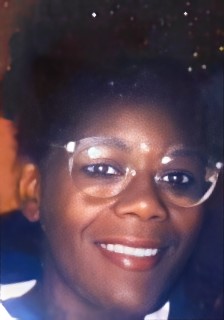
In the winter of 2003, a mother’s intuition was the first sign that something was terribly wrong. Audrey L. Harris, a 33-year-old Black female and mother of three, was last seen on Arnold Street in Woonsocket, Rhode Island, on February 9, 2003. That day, she had a conversation with her mother, Claudette, that was filled with hope. Audrey expressed a desire to finally overcome her drug addiction and enter a rehabilitation program, telling her mother, "Ma, I'm going to come over and see you.
I'm done with these drugs." She promised to visit, but Audrey never arrived. When she failed to show up, Claudette Harris knew in her heart that her daughter was in trouble.
Claudette refused to let her daughter’s disappearance go unnoticed. While police investigated, she took matters into her own hands, tirelessly posting missing person flyers with Audrey's picture across Woonsocket. For months, there were no solid leads. Audrey's life on the streets, where she was involved in sex work to support her addiction, made her vulnerable, a fact investigators knew all too well. Her family, however, remembered the woman beyond her struggles, holding onto the hope that she would be found safe. Her mother's persistence ensured that Audrey was not just another forgotten face.
The terrifying truth behind Audrey's disappearance began to surface more than a year later, as a pattern of violence against women emerged in Woonsocket. The disappearances of two other women, Christine C. Dumont, 42, and Stacie K. Goulet, 24, in the spring and summer of 2004, led investigators to suspect a serial predator was at work. The crucial break in the case came not from a discovery, but from a survivor. A woman who narrowly escaped being strangled led police to the first-floor apartment of Jeffrey S. Mailhot, a quiet machine operator who lived on Cato Street.
On July 17, 2004, police arrested Mailhot, a man with no prior criminal record who was described by neighbors as polite and unassuming. During interrogation, Mailhot’s quiet exterior crumbled, and he delivered a horrifying confession. He admitted to killing Audrey, Christine, and Stacie. He told detectives he felt an "uncontrollable urge to kill." Mailhot revealed his method: he would lure the women to his apartment, strangle them, and then dismember their bodies in his bathtub. He was reportedly inspired by an episode of "The Sopranos" for his method of dismemberment. He then placed their remains in garbage bags and discarded them in various dumpsters around the city and in neighboring communities.
A search of Mailhot's apartment uncovered the grim evidence of his crimes. Though the apartment was clean, investigators found traces of blood in his bathtub belonging to all three women, including Audrey. Mailhot, dubbed "The Rhode Island Ripper," confessed that the thrill for him was not just in the killing, but in trapping his victims inside his apartment, knowing they couldn't escape. Despite his extensive confession and the evidence found, the remains of Audrey Harris and Christine Dumont have never been recovered. Only some of Stacie Goulet's remains were found in a landfill in Johnston, Rhode Island.
In November 2004, without a body to bury but with the terrible certainty of her daughter's fate, Claudette Harris held a memorial service for Audrey. It was a moment to finally grieve the woman whose life had been so brutally cut short. The community that had seen her flyers now shared in her loss, horrified by the violence that had been secretly unfolding in their midst.
On February 16, 2006, Jeffrey S. Mailhot pleaded guilty to three counts of murder for the deaths of Audrey Harris, Christine Dumont, and Stacie Goulet, as well as one count of assault with intent to commit murder and one count of felony assault for his attacks on women who survived. He was sentenced to two consecutive life sentences plus ten years. He is currently incarcerated at the Rhode Island Maximum Security Prison and will not be eligible for parole until 2047, when he is 77 years old. Though justice was served in the legal sense, for Audrey's family, the pain remains, compounded by the fact that she was never brought home for a proper burial.