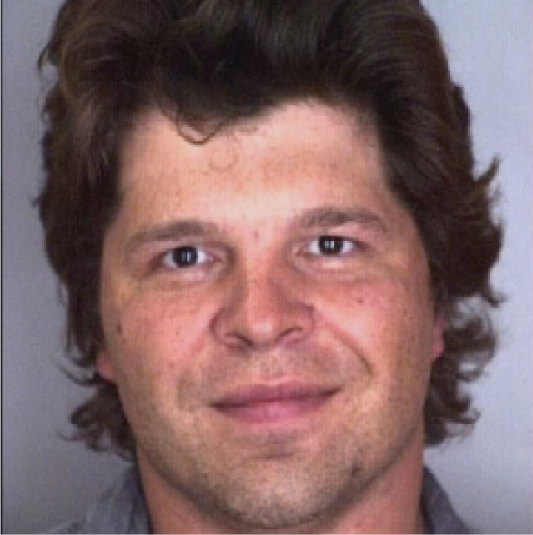
Shiquan D. Bellamy – Five Killings in Jersey City
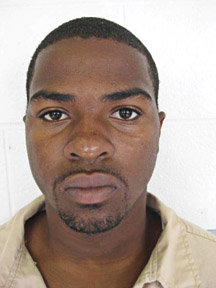
Shiquan D. Bellamy was a Jersey City, New Jersey, murderer connected to the deaths of five people during a remarkably concentrated period of violence in 2010. Bellamy was only 19 years old when authorities linked him to three separate homicide incidents occurring between February 2 and April 4, 2010. Although he is sometimes categorized as a serial killer, contemporary investigators and news reports more commonly described the murders as a killing spree because all five victims were killed within approximately two months. Legally, Bellamy was convicted of murdering two victims and pleaded guilty to aggravated manslaughter charges arising from the deaths of three others.
The February 2010 Double Homicide
The first killings connected to Bellamy occurred during the early morning hours of February 2, 2010, in Jersey City. The victims were cousins Lester Maurice "Bleek" Thompson, 26, and Mileak Richardson, 17. Police discovered Thompson and Richardson lying face down on a sidewalk along Woodlawn Avenue shortly before 4:00 a.m. Both had suffered fatal gunshot wounds. Investigators quickly concluded that the shootings did not appear random and believed that the victims had deliberately been targeted.
Prosecutors later alleged that Bellamy participated in setting up Thompson and Richardson for a robbery. Cash, cellular phones and drugs were reportedly among the property targeted during the crime. Bellamy was charged along with Hakeem Lester and Ronald Lawrence in connection with the robbery and deaths. Darmelia Lawrence, Ronald Lawrence's sister, was also later implicated in crimes involving Bellamy and would become an important prosecution witness.
The Richardson and Thompson investigation eventually became significant for another reason. When Bellamy was linked to later murders, detectives began comparing the cases and examining his associates, telephone records and other evidence. The February double homicide became part of a much larger investigation into a succession of killings that had occurred in Jersey City over only a few weeks.
The Killing of Lamonte Wright
On March 27, 2010, Lamonte Wright was killed in Jersey City in an attack that prosecutors described as strikingly senseless. Wright was walking his girlfriend to her car in the vicinity of Clerk Street and Myrtle Avenue when he was shot from behind with a shotgun. Contemporary authorities reported that there had been no robbery and no argument between Wright and Bellamy. Prosecutors described Wright as essentially a stranger to Bellamy.
The State's allegation was that Bellamy approached Wright from behind and fired the shotgun into his back. When Bellamy later resolved the criminal charges associated with Wright's death, however, he pleaded guilty to an amended charge of aggravated manslaughter rather than murder. In later court proceedings concerning that plea, Bellamy maintained that the shotgun had discharged accidentally while he was carrying it on a public street. By accepting the plea, he admitted criminal responsibility for Wright's death even though the final conviction did not require the State to prove intentional murder at trial.
The Murders of Michael Muchioki and Nia Haqq
The final and most extensively documented killings occurred during the early morning hours of April 4, 2010. Michael Muchioki, 27, and his fiancée, Nia Haqq, 25, had been celebrating their engagement with friends and relatives. They returned to their Randolph Avenue residence in Jersey City at approximately 2:30 a.m. and were unloading their belongings when they encountered Bellamy, his cousin Latonia Bellamy and Darmelia Lawrence.
According to evidence later presented in court, Shiquan Bellamy was carrying a sawed-off shotgun while a 9-millimeter handgun was also in the group's possession. The couple was confronted beside their vehicle and ordered to the ground. They surrendered rather than attempting to fight their attackers. Despite their compliance, the robbery escalated into a double homicide.
Michael Muchioki was shot at extremely close range with the shotgun. Evidence introduced at Bellamy's trial established that the shotgun wound to his head was fatal. Muchioki also suffered a handgun wound. Nia Haqq was shot with the handgun, suffering wounds to her head and thigh. Court records describing statements given after the murders said that Shiquan Bellamy fired the shotgun at Muchioki and later took possession of the handgun and fired at Haqq.
The attackers also attempted to take the couple's vehicle, but an anti-theft steering device prevented them from driving it away. Property belonging to Muchioki and Haqq, including identification, credit cards and other personal items, was discarded while the perpetrators fled the area. Investigators subsequently recovered some of those belongings near the crime scene or obtained them from neighborhood residents who had found them.
Physical Evidence and the Investigation
The investigation of the Randolph Avenue murders produced substantial physical evidence. Police recovered a sawed-off shotgun from an attic crawl space at an apartment associated with Bellamy. Testing of material recovered from the shotgun's muzzle linked the weapon to Michael Muchioki. Investigators also found an army-style jacket containing blood evidence associated with the victims. A shotgun shell was recovered from a dresser in the residence.
The 9-millimeter handgun used during the crime was never recovered, but investigators found three 9-millimeter cartridge casings at the murder scene. Fingerprints belonging to Darmelia Lawrence were recovered from the victims' vehicle. Statements from Lawrence and Latonia Bellamy, together with forensic evidence, telephone information and witness testimony, helped investigators build the case against Shiquan Bellamy.
The April killings also caused investigators to revisit the earlier Jersey City homicides. Within days, authorities announced that Bellamy was not merely a suspect in the Muchioki-Haqq murders but was being charged in connection with five deaths. His bail eventually reached millions of dollars as the separate homicide cases accumulated.
Victims
- Lester Maurice "Bleek" Thompson, 26 – Killed February 2, 2010, on Woodlawn Avenue in Jersey City, New Jersey. Thompson and his cousin Mileak Richardson were found face down on the sidewalk after being shot. Bellamy later pleaded guilty to aggravated manslaughter in connection with the death.
- Mileak Richardson, 17 – Killed February 2, 2010, on Woodlawn Avenue in Jersey City, New Jersey. Richardson was killed alongside his cousin Lester Thompson during a robbery-related double homicide. Bellamy later pleaded guilty to aggravated manslaughter in connection with the death.
- Lamonte Wright – Killed March 27, 2010, near Clerk Street and Myrtle Avenue in Jersey City, New Jersey. Wright was walking his girlfriend to her car when he was shot from behind with a shotgun. Bellamy later pleaded guilty to aggravated manslaughter in connection with Wright's death.
- Michael Muchioki, 27 – Murdered April 4, 2010, outside his Randolph Avenue residence in Jersey City, New Jersey. Muchioki had just returned from celebrating his engagement when he was robbed, ordered to the ground and fatally shot. Bellamy was convicted of first-degree murder.
- Nia Haqq, 25 – Murdered April 4, 2010, outside the Randolph Avenue residence she shared with her fiancé in Jersey City, New Jersey. Haqq was shot during the same robbery and attempted carjacking that killed Michael Muchioki. Bellamy was convicted of first-degree murder.
Trial for the Randolph Avenue Murders
Bellamy was tried separately from Latonia Bellamy and Darmelia Lawrence for the murders of Muchioki and Haqq. His first trial, held in 2013, ended without a verdict after the jury was unable to reach a unanimous decision. Prosecutors tried him again in September 2013.
During the second trial, jurors heard testimony concerning the couple's arrival home, the gunshots heard by witnesses, the recovery of the shotgun, DNA evidence, fingerprints, discarded property and statements made by Bellamy's associates. The prosecution also presented evidence tying Bellamy directly to the weapons and the robbery.
The second jury convicted Bellamy on all counts submitted to it. The convictions included two counts of first-degree murder, multiple counts of felony murder, carjacking, robbery, possession of weapons for unlawful purposes, unlawful possession of weapons and conspiracy to commit robbery.
Two Consecutive Life Sentences
On January 17, 2014, Bellamy was sentenced for the murders of Michael Muchioki and Nia Haqq. The court imposed two consecutive life sentences for the two first-degree murder convictions, with other sentences either merged or ordered to run concurrently. The structure of the sentence meant Bellamy faced an extraordinarily long period of incarceration before any possibility of release.
The murder convictions and sentences were later upheld on direct appeal. Bellamy subsequently pursued post-conviction proceedings challenging various aspects of his representation and trial, including an issue involving a relationship that developed between his trial attorney and a prosecution detective. After additional hearings and appellate review, the courts left his murder convictions intact.
Pleas in the Three Earlier Homicides
Bellamy also accepted responsibility for the deaths of Lester Thompson, Mileak Richardson and Lamonte Wright. He pleaded guilty to three amended counts of first-degree aggravated manslaughter arising from the February and March 2010 killings. The plea agreement avoided trials on the original homicide charges.
On September 11, 2014, Bellamy was sentenced to three concurrent 25-year prison terms for those three deaths. The sentences were subject to New Jersey's No Early Release Act and were ordered to run consecutively to the two life sentences Bellamy was already serving for murdering Muchioki and Haqq.
A Concentrated Series of Killings
The Bellamy cases drew extraordinary attention because of the number of lives lost in such a short period. Five people were dead within approximately nine weeks, all in Jersey City, and Bellamy was only 19 during the crimes. The victims came from different circumstances: two cousins were killed during a robbery, another man was shot while accompanying his girlfriend to her car, and an engaged couple was murdered after returning home from what should have been a celebration of their future together.
The sequence ended after the investigation of the Muchioki and Haqq murders gave detectives evidence connecting Bellamy to the earlier crimes. Ultimately, the legal record established responsibility through a combination of jury verdicts and guilty pleas: two first-degree murder convictions for the April 4 killings and three aggravated manslaughter convictions for the February and March deaths. The resulting consecutive life sentences and additional 25-year term ensured that Bellamy would remain imprisoned for the foreseeable future.