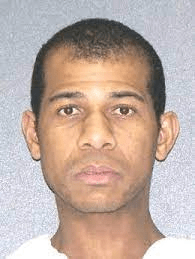
Muziwokuthula Madondo: A Multistate Trail of Murder
Background and Early Life
Muziwokuthula Selby Madondo, whose surname has also appeared in American court records and news reports as Madonda, was a South African man who committed four murders during a violent crime spree across Ohio and New Mexico in 2011. The killings unfolded within a period of approximately five weeks and were connected by robbery, identity theft, calculated deception and the use of the same firearm.
Before the murders, Madondo had followed a path that appeared far removed from violent crime. He was originally from the Pietermaritzburg area of KwaZulu-Natal, South Africa, and had reportedly been involved in student leadership. He later traveled to the United States in 2008 to study theology at a seminary in Georgia. Despite this religious education, investigators eventually described a man who was willing to manipulate acquaintances, kill for money and assume another person's identity in an effort to escape his financial and personal failures.
The Beginning of the Killing Spree
Madondo's documented series of murders began in Akron, Ohio, in February 2011. His first known victim was Jacquelyn Hilder, a 60-year-old bank executive. Madondo knew Hilder's longtime boyfriend and reportedly believed that a large amount of money was being kept inside the couple's residence. Prosecutors maintained that Madondo entered the home intending to rob its occupants and obtain money that would help finance another murder he was already planning.
Hilder was shot inside her home and died on February 18, 2011. She suffered gunshot wounds to her torso. The killing was not treated as a random attack. Investigators concluded that Madondo had specifically targeted the residence because of his mistaken belief that Hilder's banking career meant substantial cash would be available there.
The murder of Hilder became the first step in a broader plan. Madondo intended to travel to the Dayton area, kill a South African acquaintance named Zenzele Davis Mdadane and steal his identification. By taking Mdadane's documents and personal property, Madondo hoped to conceal his own identity and create a new life under the victim's name.
The Murder of Zenzele Davis Mdadane
On February 19, 2011, only a day after Hilder's death, Madondo carried out the second stage of his plan. Zenzele Davis Mdadane, a 25-year-old South African man, knew Madondo and had also obtained authorization to work in the United States. Madondo lured Mdadane to the Dayton area under false pretenses.
After Mdadane arrived, Madondo drove him to an isolated wooded location near the 10100 block of Frederick Pike in Butler Township, Montgomery County, Ohio. Away from witnesses and surrounding businesses, Madondo shot him multiple times. Mdadane's body was abandoned in the wooded area while Madondo took his belongings and identification.
The murder was carefully motivated but poorly concealed. Madondo's objective was not merely to steal money or property. Prosecutors said that he intended to assume Mdadane's identity. The killing therefore involved a combination of personal betrayal, robbery and a deliberate effort to erase the victim so that his identity could be used by someone else.
The Flight to New Mexico
After killing Mdadane, Madondo fled Ohio and traveled west. He eventually reached Tucumcari, New Mexico, where he stayed at a local motel and obtained temporary employment. His attempt to establish himself in a new location did not end the violence. Instead, two additional men soon became victims.
Madondo was staying near Bobby Gonzales and Gonzales's stepson, Gabriel Baca, at the Tucumcari Inn. The precise circumstances that brought Madondo into the men's room were disputed during the long legal proceedings, but prosecutors established that both men were shot to death and that Madondo attempted to conceal evidence inside the motel room.
Gonzales and Baca were last known to be alive during the period immediately preceding March 24, 2011. Their bodies were discovered in the bathroom of room 126 on March 24 after a concerned relative went to the motel. Both deaths were ruled homicides. Blood, drag marks and other physical evidence indicated that an effort had been made to move the victims and clean portions of the crime scene.
Confirmed Victims
- Jacquelyn Hilder, 60 — February 18, 2011 — Akron, Ohio: Hilder was a vice president and team leader at FirstMerit Bank. Madondo targeted her residence because he believed her boyfriend kept a large amount of money there. She was shot inside the home during an aggravated burglary and robbery.
- Zenzele Davis Mdadane, 25 — February 19, 2011 — Butler Township, Montgomery County, Ohio: Mdadane was a South African acquaintance of Madondo. He was lured to the Dayton area, driven to a wooded location near Frederick Pike and fatally shot. Madondo stole his belongings and planned to assume his identity.
- Bobby Gonzales, 57 — discovered March 24, 2011 — Tucumcari, New Mexico: Gonzales was shot to death inside room 126 of the Tucumcari Inn. His body was found in the bathroom after a relative became concerned and entered the room.
- Gabriel Baca, 37 — discovered March 24, 2011 — Tucumcari, New Mexico: Baca, Gonzales's stepson, was killed in the same motel-room shooting. His body was discovered alongside Gonzales. Madondo was later convicted in connection with both New Mexico murders.
The Motel Crime Scene
The scene at the Tucumcari Inn provided investigators with important evidence. The bodies of Gonzales and Baca had been moved into the bathroom, and investigators observed indications that someone had attempted to clean the room. Pools of blood and visible drag marks revealed the violence that had occurred despite the effort to hide it.
Madondo had been occupying a room close to the victims and left the area shortly after the killings. New Mexico State Police developed him as a suspect and began tracking his movements. Investigators learned that he had traveled to Texas, prompting cooperation among New Mexico authorities, the Texas Rangers, local sheriff's deputies and federal marshals.
Capture in Texas
Madondo was located near Houston, Texas, on March 27, 2011. Officers intercepted him at a Denny's restaurant in southern Montgomery County after determining that he was expected to meet someone there. Unmarked police vehicles surrounded his vehicle, and he was arrested without a violent confrontation.
A search of Madondo's vehicle uncovered a .38-caliber revolver. Ballistics evidence connected the gun to all four murders in Ohio and New Mexico. The discovery transformed what initially appeared to be separate crimes in distant jurisdictions into a single multistate killing spree.
During later questioning, Madondo made statements connecting himself to the killings. However, the legality of some of those interrogations became a major issue in the New Mexico prosecution. After initially indicating that he did not wish to speak, investigators later questioned him using his religious beliefs and personal Bible as part of their strategy. The New Mexico Supreme Court eventually determined that statements obtained during one of the interrogations had been secured in violation of his constitutional rights.
New Mexico Convictions
The suppression of Madondo's statements delayed the New Mexico case but did not end it. Prosecutors continued pursuing charges based on the physical evidence and other investigative findings. Madondo ultimately entered pleas to two counts of second-degree murder and tampering with evidence for the deaths of Gonzales and Baca.
He received a lengthy prison sentence for the Tucumcari murders. Reports have described the New Mexico term as either 24 years of actual imprisonment or a 30-year sentence with portions governed by the plea agreement and sentencing provisions. Regardless of the differing descriptions, the sentence ensured that Madondo would remain incarcerated while Ohio authorities prepared their own prosecutions.
Justice for Jacquelyn Hilder
More than a decade passed before Madondo was sentenced for the Akron murder. In 2022, he pleaded guilty in Summit County Common Pleas Court to aggravated murder, aggravated robbery and aggravated burglary in connection with Hilder's death. Firearm specifications were attached to the charges because he had used a gun during the crimes.
Madondo was sentenced to life in prison, with parole eligibility after 33 years. The Ohio sentence was ordered to run consecutively to the prison term imposed in New Mexico. Prosecutors emphasized that the combined sentences would prevent him from returning to society and harming additional victims.
For Hilder's family, the conviction ended an 11-year wait for a formal resolution. Authorities noted that Hilder had been selected because of Madondo's assumptions about her profession and finances. She had built a respected career in banking, yet that career became the basis of his mistaken belief that her home contained money he could steal.
The Final Ohio Prosecution
After resolving the Akron case, authorities transferred their attention to the murder of Zenzele Mdadane. In March 2022, a Montgomery County grand jury indicted Madondo on charges that included aggravated murder, murder, aggravated robbery and felonious assault.
On December 21, 2022, Madondo pleaded guilty to aggravated murder with a firearm specification and felonious assault. His plea eliminated the need for a trial and legally established his responsibility for luring Mdadane to Butler Township and killing him.
On January 20, 2023, Madondo was sentenced to life in prison without the possibility of parole for Mdadane's murder. An additional three-year sentence was imposed for the firearm specification. The sentence was ordered to run consecutively to both his New Mexico prison term and the life sentence imposed for Hilder's murder.
Disturbing Statements in Court
Madondo displayed little indication that he could safely return to society. During the Ohio proceedings, prosecutors reported that he warned the court that he would kill again if given the opportunity. He also described himself as someone who killed people wherever he went.
Those statements reinforced the prosecution's argument that permanent imprisonment was necessary. His crimes had not resulted from a single emotional confrontation. They involved repeated decisions to carry a firearm, identify victims, create deceptive plans and continue killing as he traveled from one state to another.
Motives and Pattern of Violence
Financial desperation appears to have been a central motive behind Madondo's crimes. He reportedly believed that he had failed to achieve the success he expected and became focused on obtaining money through criminal means. The murder of Hilder was intended to provide money, while the murder of Mdadane was intended to provide a new identity.
The New Mexico killings demonstrated how easily Madondo's violence expanded beyond his original plan. Gonzales and Baca were not connected to the Ohio victims, yet they were killed after Madondo arrived in Tucumcari. The use of the same revolver in all four murders established continuity throughout the spree.
His conduct also showed a pattern of exploitation. Hilder was targeted through his connection to her boyfriend. Mdadane was lured by someone he knew and may have trusted. Gonzales and Baca were approached while staying in temporary lodging, where Madondo believed he could kill them and conceal what had happened.
Classification as a Serial Killer
Madondo is frequently described as a serial killer because he murdered four people in separate incidents and locations. The killings were committed during a relatively short period, causing some observers to characterize the crimes as a spree rather than a traditional serial-murder pattern involving lengthy cooling-off periods.
Regardless of the terminology, the murders represented distinct acts. Hilder was killed in an Akron residence, Mdadane was killed in a wooded section of Butler Township and Gonzales and Baca were killed together in a Tucumcari motel. Madondo traveled hundreds of miles while continuing to evade authorities and use the same weapon.
Legacy of the Case
The investigation of Muziwokuthula Madondo required cooperation among law-enforcement agencies in Ohio, New Mexico and Texas. Ballistics testing, witness information, travel records and evidence recovered from his vehicle allowed investigators to connect four victims whose deaths initially appeared geographically unrelated.
The legal process lasted far longer than the killing spree itself. Constitutional questions surrounding Madondo's interrogation delayed the New Mexico prosecution, while the order in which the states handled their cases postponed the Ohio proceedings. Each jurisdiction ultimately secured a conviction, ensuring that all four confirmed victims were formally included in the final record of his crimes.
Madondo will spend the remainder of his life in prison. His consecutive sentences include life without parole for the murder of Zenzele Davis Mdadane, a separate life sentence for the murder of Jacquelyn Hilder and the prison term imposed for killing Bobby Gonzales and Gabriel Baca. The outcome closed a complex series of cases while preserving the names of the four people whose lives were taken during his violent journey across the United States.