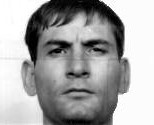
Gordon Stewart Northcott and the Wineville Chicken Coop Murders
Overview
Gordon Stewart Northcott was a Canadian-born serial killer, child abductor and sexual predator responsible for the notorious Wineville Chicken Coop Murders in Southern California. Between 1926 and 1928, Northcott used an isolated chicken ranch in Wineville, an agricultural community now known as Mira Loma, as a place to imprison, assault and murder boys. Although he was convicted of three murders, investigators suspected that he may have killed additional victims whose identities and remains were never conclusively established.
The case became one of the most disturbing criminal investigations of the 1920s. It involved missing children, human remains discovered around a rural ranch, contradictory confessions and the exploitation of Northcott’s young nephew, Sanford Clark. Northcott was ultimately convicted of murdering Lewis Winslow, Nelson Winslow and a young man identified during the trial as an unnamed Mexican victim. Later accounts have identified that victim as José González, although some historical sources have used the name Alvin Gothea. Northcott was also strongly implicated in the disappearance and presumed murder of nine-year-old Walter Collins, but he was not convicted in that case.
Early Life and the Wineville Ranch
Gordon Stewart Northcott was born on November 9, 1906, in Bladworth, Saskatchewan, Canada. He was raised primarily in British Columbia before moving with his family to the Los Angeles area in 1924. In 1926, Northcott’s father purchased property for him near Wineville in Riverside County, California. Northcott planned to operate a poultry farm there and began constructing a house, chicken coops and other buildings on the isolated property.
Northcott brought his nephew, Sanford Clark, from Canada to help build and maintain the ranch. Clark was still a young teenager and was largely under his uncle’s control. Instead of providing him with a safe home, Northcott subjected Clark to prolonged physical and sexual abuse. Northcott also threatened the boy and forced him to participate in activities connected to the crimes. Clark’s later testimony became essential to the investigation and prosecution.
The ranch’s remote location gave Northcott privacy. Boys could be brought onto the property without attracting immediate attention, and the numerous outbuildings provided places where victims could be confined. According to testimony presented during the case, Northcott abducted and sexually abused several boys. Some were released, while others were killed and buried or otherwise disposed of.
Known and Suspected Victims
- José González, approximately 18 years old: González’s headless body was discovered on February 2, 1928, in a roadside ditch near La Puente in Los Angeles County, California. Medical evidence indicated that he had probably been killed no more than approximately twenty-four hours before his body was found, placing his probable death on February 1 or February 2, 1928. He had been shot several times and decapitated. During Northcott’s trial, the victim was frequently described only as an unidentified Mexican youth. Some later accounts identify him as José González, while other sources have associated the victim with the name Alvin Gothea. Northcott was convicted of this murder.
- Walter Collins, 9 years old: Walter disappeared from Los Angeles on March 10, 1928, after leaving home to attend a movie. His body was never conclusively recovered, so an exact date of death cannot be verified. Sanford Clark stated that Walter was brought to the Wineville ranch and murdered there. Northcott’s mother, Sarah Louise Northcott, confessed to participating in Walter’s killing and pleaded guilty, although she later made conflicting statements. Gordon Northcott was implicated but was not tried or convicted for Walter’s death.
- Lewis Winslow, 12 years old: Lewis disappeared with his younger brother on May 16, 1928, while traveling home from a Model Yacht Club meeting in Pomona, California. Evidence indicated that the brothers were taken to Northcott’s ranch, imprisoned and sexually assaulted before being killed. Their exact dates of death were not conclusively established, although testimony placed the murders after their May 16 abduction and before the end of that month. Northcott was convicted of murdering Lewis.
- Nelson Winslow, 10 years old: Nelson vanished with Lewis on May 16, 1928, in Pomona. He was taken to the Wineville ranch and killed after a period of captivity. As with his brother, no independently verified exact date of death is available. Evidence indicated that Nelson died sometime after May 16, 1928, during the brothers’ imprisonment at the ranch. Northcott was convicted of Nelson’s murder.
The Murder of José González
The first victim connected to Northcott’s eventual conviction was a young man whose mutilated body was found near La Puente on February 2, 1928. The remains had been left in a ditch and partly covered with a chicken-feed sack. The victim had suffered multiple gunshot wounds, and his head had been removed, making immediate identification difficult.
During the prosecution, witnesses and investigators connected Northcott to the victim and to the disposal of the body. Sanford Clark described a young Mexican victim being held at the Wineville property and killed after Northcott became concerned that the young man knew too much. The case was complicated by the absence of the victim’s head and by uncertainty surrounding his name. Court proceedings generally referred to him by an impersonal description rather than a firmly established identity.
Later reports commonly identified the victim as José González, while other historical summaries used the name Alvin Gothea. Because the records contain conflicting identifications, the uncertainty remains an important part of the case. What was established at trial was that Northcott had participated in the killing of the unidentified young victim, and the jury found him guilty of murder.
The Disappearance of Walter Collins
Walter Collins disappeared from his Los Angeles neighborhood on March 10, 1928. His mother, Christine Collins, had given him money to attend a movie. Walter never returned. The disappearance produced extensive newspaper coverage and placed intense pressure on the Los Angeles Police Department to locate him.
Approximately five months later, a boy found in Illinois claimed to be Walter. Police brought him to California and presented him to Christine Collins, but she immediately doubted that he was her son. Despite clear physical differences and dental evidence, police pressured her to accept the boy. When she continued to challenge the identification, authorities had her confined to a psychiatric ward. The impostor eventually admitted that he was not Walter Collins.
During the investigation of the Wineville ranch, Sanford Clark said that Walter had been brought there and murdered. Sarah Louise Northcott later confessed to Walter’s killing and pleaded guilty, receiving a life sentence. Her accounts changed repeatedly, however, and Walter’s body was never conclusively identified. Gordon Northcott was not prosecuted for Walter’s murder, partly because his mother had already accepted legal responsibility for it.
Christine Collins never abandoned hope that Walter might still be alive. Because no complete, identifiable remains were found and no indisputable physical evidence established the precise circumstances of his death, Walter officially remained a missing child. His disappearance is nevertheless widely regarded as connected to Northcott and the Wineville crimes.
The Abduction of Lewis and Nelson Winslow
On May 16, 1928, Lewis and Nelson Winslow disappeared while returning home from a Model Yacht Club meeting in Pomona. Their family immediately began searching for them. The brothers’ disappearance became another highly publicized Southern California missing-child case, but authorities initially had little evidence showing where they had gone.
Testimony later established that Northcott had taken the brothers to his ranch. There, they were held captive and sexually assaulted. Sanford Clark described their imprisonment and killings in statements to investigators. According to the prosecution’s evidence, Northcott used threats and violence to force Clark into assisting him, including compelling the terrified boy to participate in one of the killings.
After the murders, the brothers’ remains were buried on or near the ranch. Northcott later became concerned that the property might be searched. Evidence indicated that the bodies were exhumed, burned and moved in an attempt to eliminate proof of the crimes. Investigators recovered fragments of human bones, personal belongings and other evidence, but they were unable to return complete remains to the Winslow family.
Items associated with the brothers were discovered during the investigation, including material linked to their activities and correspondence. This physical evidence, combined with Sanford Clark’s testimony, helped establish that Lewis and Nelson had been held at the ranch. Northcott denied killing them, but the jury rejected his claims and convicted him of both murders.
Sanford Clark and the Exposure of the Crimes
Northcott’s criminal activity was exposed largely because of Sanford Clark. Northcott had isolated, abused and threatened his nephew for an extended period. Clark feared that Northcott would kill him if he revealed what was happening. His situation changed when his older sister, Jessie Clark, visited the ranch during the summer of 1928.
Sanford told Jessie about the abuse and murders. After returning to Canada, she informed family members and contacted authorities. The information eventually reached American investigators, who placed Sanford in protective custody and questioned him. Once separated from Northcott, Clark described the ranch, the victims and the disposal of their remains.
Investigators searched the Wineville property and found bloodstains, bone fragments and personal items believed to be associated with missing boys. Some of the remains had been damaged by fire and chemicals, making identification extremely difficult. The condition of the evidence reflected deliberate attempts to destroy the bodies and prevent investigators from determining the total number of victims.
Flight and Arrest
After learning that authorities were investigating the ranch, Northcott fled California with his mother. They traveled to Canada, hoping to avoid prosecution. Canadian police arrested them on September 19, 1928, in British Columbia. Extradition problems delayed their return to California, but they were eventually transported back to face charges.
While in custody, Northcott made a series of inconsistent statements. At times he appeared to confess to several murders, only to withdraw or change his story later. Reports circulated that he had admitted killing numerous boys, possibly as many as nine. Investigators also considered the possibility that the ranch had been used to murder far more victims, with estimates sometimes reaching twenty. Those higher totals were never proven in court.
Sarah Louise Northcott also gave conflicting accounts. She confessed to Walter Collins’s murder and claimed responsibility for other acts, but repeatedly altered her statements. Her willingness to accept blame was viewed by some investigators as an attempt to protect her son. She pleaded guilty to Walter’s murder and was sentenced to life imprisonment on December 31, 1928.
Trial and Conviction
Gordon Stewart Northcott went on trial in Riverside County in January 1929. He faced charges involving the murders of Lewis Winslow, Nelson Winslow and the unidentified Mexican victim. Although Walter Collins’s disappearance was central to the broader investigation, Northcott was not tried for Walter’s presumed murder.
Northcott initially had legal representation but eventually chose to participate heavily in his own defense. His behavior in court was erratic and theatrical. He cross-examined witnesses, challenged the prosecution’s evidence and attempted to discredit Sanford Clark. The prosecution, however, presented Clark’s detailed testimony together with physical evidence recovered from the ranch and statements attributed to Northcott.
On February 8, 1929, the jury found Northcott guilty of all three murders. Five days later, on February 13, Judge George R. Freeman sentenced him to death. Northcott continued to deny responsibility for the Winslow murders and attempted to delay his execution through appeals and changing statements.
Execution
Northcott was imprisoned at San Quentin State Prison. As his execution approached, he continued giving contradictory accounts of the crimes. At certain moments he suggested that he possessed information about Walter Collins and other missing boys, but he failed to provide reliable evidence that resolved those cases.
Gordon Stewart Northcott was executed by hanging at San Quentin on October 2, 1930. He was 23 years old. Contemporary reports described him as terrified and emotionally overwhelmed as guards escorted him to the gallows. His execution ended the prosecution of the man responsible for the known Wineville murders, but it did not answer every question surrounding the ranch.
Unresolved Questions and Possible Additional Victims
The full number of Northcott’s victims remains unknown. He was convicted of three murders, and Walter Collins is generally considered a probable fourth victim. Northcott reportedly confessed at different times to killing additional boys, but his statements were inconsistent and often appeared manipulative. Investigators could not match every bone fragment or piece of evidence from the ranch to a named missing child.
The physical destruction of the victims’ remains made the investigation especially difficult. Bodies were reportedly buried, unearthed, burned and treated with substances intended to accelerate decomposition. As a result, investigators found only partial remains. Forensic science in the 1920s lacked the DNA testing and advanced identification methods that might have provided clearer answers.
Northcott was also known to have abducted or assaulted boys whom he later released. This made it difficult to distinguish confirmed murder victims from children who survived encounters with him. Although claims that he killed as many as twenty boys have been repeated for decades, only three murders resulted in convictions, and the evidence concerning additional unnamed victims remains inconclusive.
Legacy of the Wineville Murders
The Wineville Chicken Coop Murders left a lasting mark on Southern California. The publicity surrounding the ranch was so damaging that the community of Wineville changed its name to Mira Loma in 1930. The crimes became associated not only with Northcott’s brutality but also with failures by public institutions to protect vulnerable children and respond honestly to grieving families.
The treatment of Christine Collins became one of the most infamous aspects of the case. Rather than admit that the boy returned to her was an impostor, Los Angeles police attempted to silence her objections and confined her in a psychiatric institution. Her experience exposed official misconduct and demonstrated how authorities could misuse their power to avoid embarrassment.
Sanford Clark survived the ranch and later attempted to build a private life away from the case. His testimony was instrumental in bringing Northcott to justice, yet it came after years of abuse and coercion. He was both a witness to the murders and a child victim whom Northcott forced into participating in acts that terrified him.
Gordon Stewart Northcott’s crimes remain remembered for their cruelty, the young ages of the victims and the unanswered questions surrounding those who may never have been identified. The confirmed case involved three murder convictions, while the disappearance of Walter Collins and the possibility of additional victims ensured that the Wineville ranch would remain one of the most unsettling crime scenes in California history.