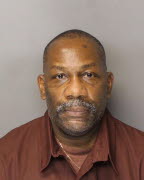
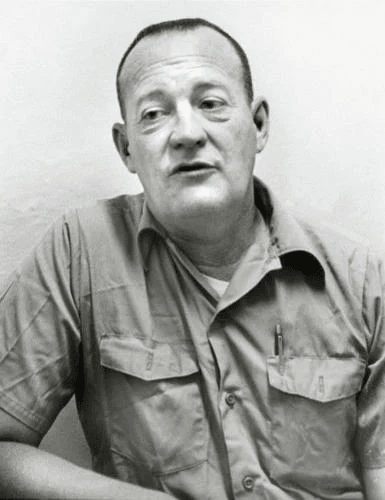
Lawrence Frank Lamont: The 1972 Multistate Murder Spree
Escape and the Beginning of the Crime Spree
Lawrence Frank Lamont was an Ohio prisoner whose name became associated with a violent series of kidnappings, robberies and murders committed during the early months of 1972. Lamont, whose first name has occasionally appeared as Laurence in court and news records, escaped from an Ohio prison with fellow inmate James Patterson in February 1972. After obtaining a stolen vehicle and a firearm, the two fugitives began traveling through several states, targeting convenience stores, service stations and other businesses where employees were working alone.
The escapees moved through parts of Ohio, Michigan and several other states while attempting to avoid capture. Their crimes were not confined to theft or efforts to obtain transportation. Store clerks and attendants were abducted, driven away from their workplaces and, in several cases, killed. Lamont later admitted participating in a broader series of killings involving as many as seven men, although only three Michigan-area murders eventually resulted in state murder convictions.
The Murders in Michigan and Ohio
The three murders for which Lamont was ultimately held responsible occurred during a short period in March 1972. The victims were men working at small businesses near the Ohio-Michigan border. Their employment placed them in vulnerable circumstances, often alone and responsible for cash registers, vehicles or other property that the fugitives needed.
- Earl R. Ludlow — March 21, 1972 — Temperance, Michigan: Ludlow, 68, was working as a clerk at a party store in the Temperance area of Monroe County. He was abducted from the business during a robbery and taken to an isolated location near LaVoy Road. Ludlow was shot three times in the head in an execution-style killing. His body was abandoned away from the store. Lamont later confessed to killing Ludlow, although he subsequently attempted to distance himself from that confession.
- Joseph Satcher — March 22, 1972 — Toledo, Ohio and Monroe County, Michigan area: Satcher, 23, was a gas-station attendant in Toledo. He was abducted during the night of March 21 into the early hours of March 22, only hours after Ludlow was killed. Satcher was taken across or near the Michigan border and murdered as the fugitives continued their flight. Lamont admitted responsibility for Satcher’s killing during the original investigation. The close timing and similar circumstances connected Satcher’s death to the abduction and murder of Ludlow.
- Frank Welzbacher — March 1972 — Monroe County, Michigan: Welzbacher was another business employee abducted during the fugitives’ crime spree. He was killed in Monroe County under circumstances connected to the robberies and kidnappings committed by Lamont and Patterson. Publicly available accounts consistently place his death in March 1972, but an exact day has not been reliably established in accessible records. Lamont later entered a no-contest plea to Welzbacher’s second-degree murder along with the murders of Ludlow and Satcher.
Methods and Pattern of Violence
Lamont and Patterson followed a recognizable pattern during the spree. They approached businesses where a lone employee could be controlled quickly, obtained money or transportation and forced the worker to leave with them. Abducting the employees reduced the possibility that an immediate alarm would be raised, but it also placed the victims completely under the fugitives’ control.
The killings appeared to be committed primarily to eliminate witnesses and prevent the victims from identifying the escapees. Earl Ludlow’s shooting was particularly deliberate, with multiple gunshots to the head after he had been removed from his workplace. The speed with which the fugitives moved from one victim to another demonstrated that the murder was not an isolated outburst. It had become part of their method of remaining free.
Authorities later described the pair as traveling through approximately five or six states. Lamont reportedly confessed to involvement in seven killings connected to the journey, including crimes possibly committed in Illinois, Indiana, Kentucky and Mississippi. The names and precise circumstances of those additional suspected victims were not consistently documented, and Lamont was never convicted of their murders. The three Monroe County cases therefore remain the confirmed killings legally attributed to him.
Capture, Confessions and Federal Convictions
The fugitives were eventually apprehended in 1972. During questioning, Lamont confessed to killing two of the three clerks later named in the Michigan prosecution. He reportedly acknowledged shooting Earl Ludlow and Joseph Satcher. Decades afterward, Lamont claimed that he had confessed because he wanted his case handled in the federal system rather than by state authorities, where he believed he might face harsher consequences.
Instead of immediately being prosecuted for the murders, Lamont pleaded guilty to two federal kidnapping charges. He received two life sentences and spent approximately four decades in federal custody. The murder investigations remained unresolved at the state level, leaving the victims’ families without direct murder convictions for most of that time.
The Cold Cases Are Reopened
Lamont was paroled from the federal prison system in April 2012. His release did not make him a free man, because he was transferred to an Ohio correctional institution to complete the sentence that had been interrupted when he escaped in 1972. The possibility that he might eventually be released renewed attention to the unsolved Michigan murders.
Michigan State Police investigators revisited the old case files and interviewed Lamont in July 2012. Although he disputed the truthfulness of his decades-old confessions, authorities determined that sufficient evidence remained to prosecute him. Monroe County charged him with open murder and felony murder in the deaths of Ludlow, Satcher and Welzbacher.
The prosecution faced enormous difficulties because more than forty years had passed. Witnesses had aged or died, physical evidence had deteriorated and the original medical examiner in at least one case was no longer alive. Earl Ludlow’s remains were exhumed so that a new examination could be conducted and his cause of death could be formally reassessed. The renewed autopsy confirmed that his death was a homicide.
Plea Agreement and Life Sentences
Lamont challenged Michigan’s effort to obtain custody of him, arguing that the extradition and detainer documents were defective. An Ohio appellate court rejected his challenge in July 2013, allowing the Michigan prosecution to proceed.
In December 2013, Lamont entered no-contest pleas to three counts of second-degree murder. A no-contest plea does not require a defendant to verbally admit the facts of the offense, but it permits the court to treat those facts as established and impose a criminal sentence. The agreement avoided a trial in which prosecutors would have been required to reconstruct crimes committed more than four decades earlier.
In February 2014, Lamont was sentenced to three life terms for the murders of Earl Ludlow, Joseph Satcher and Frank Welzbacher. The sentences ensured that the long-delayed prosecutions ended with formal findings of responsibility for all three deaths. James Patterson, Lamont’s fellow escapee and alleged accomplice, had already died in prison and could not be prosecuted with him.
Legacy of the Crimes
Lawrence Frank Lamont’s crimes illustrate the devastating consequences of a prison escape that evolved into a multistate campaign of abduction and murder. The victims were ordinary employees performing routine work when they were confronted by two armed fugitives. They were removed from familiar surroundings, transported against their will and killed to protect the freedom of the men who had abducted them.
The case also demonstrates the difficulties investigators face when justice is delayed for decades. The families of Ludlow, Satcher and Welzbacher lived for more than forty years without murder convictions, even though Lamont had made incriminating statements soon after the killings. The reopening of the cases required investigators and prosecutors to locate surviving records, reconstruct the fugitives’ movements and overcome legal challenges involving events from another era.
Although Lamont was suspected of participating in additional murders during the 1972 journey, only three victims have been conclusively connected to him through murder convictions. The full extent of the violence may never be known. His eventual life sentences nevertheless provided a measure of legal accountability for the three men whose lives were taken during the brief but deadly spree.