Klutuk: The Mad Trapper of Bristol Bay
Introduction
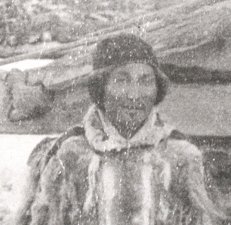
Klutuk was the name given to a mysterious and feared trapper who reportedly lived in the remote wilderness of western Alaska during the early twentieth century. Often called the Mad Trapper of Bristol Bay or the Man from the Mountain, he was accused of killing trappers, prospectors, surveyors, and Indigenous residents who entered the territory he considered his own. Stories placed his camps along the upper Nushagak River and in the vast watersheds draining toward Bristol Bay and the Kuskokwim River.
Unlike many documented serial killers, Klutuk was never arrested, formally identified, tried, or convicted. Much of his story survives through old newspaper reports, frontier memoirs, and oral accounts. His real name remains unknown, descriptions of his appearance conflict, and many killings blamed on him cannot now be independently verified. Nevertheless, contemporary reports indicate that residents and law-enforcement officers regarded him as a real and dangerous fugitive rather than merely a fictional character.
Klutuk's Background
Newspapers described Klutuk as a Yup'ik man born in the Nushagak River district during the final years of the nineteenth century. The name Klutuk reportedly came from a small tributary of the Nushagak River near one of his wilderness camps. Some descriptions portrayed him as unusually large and powerful, while others said he was approximately five feet four inches tall and weighed about 140 pounds. These contradictions helped transform him into a legendary figure whose appearance seemed to change with each retelling.
Klutuk reportedly lived alone except for a small black dog. He survived by trapping and hunting and was said to use a bow and arrow when taking game. For human targets, however, stories consistently associated him with a .30-30 rifle. He allegedly told others that killing a person was no different from shooting a moose, although the precise origin of that statement is uncertain.
The Beginning of the Killings
Klutuk reportedly became notorious in 1919 after killing two Indigenous men in the upper Nushagak region. According to a 1931 newspaper account, he announced after those killings that he intended to kill two more people. The identities of the two victims and their precise dates of death were not preserved in the available historical reports.
During the years that followed, unexplained disappearances and shootings throughout the Bristol Bay interior were frequently attributed to Klutuk. Trappers and prospectors entered the country searching for valuable furs, gold, and other resources. Klutuk allegedly regarded these newcomers as trespassers. Men traveling alone were particularly vulnerable because they could disappear in a wilderness where bodies might remain undiscovered for months or never be found at all.
Methods and Territory
Klutuk was believed to know the remote river systems, mountain passes, and trapping routes better than the officers sent to find him. His reported territory extended across thousands of square miles, from the upper Nushagak drainage toward the Kuskokwim River and possibly as far east as Cook Inlet. Such an enormous region contained few permanent settlements and almost no roads, making an organized search extremely difficult.
Accounts suggested that Klutuk watched the cabins and traplines of newcomers before attacking. Some victims were reportedly ambushed and shot from behind. Their cabins were then searched or ransacked, possibly for ammunition, food, tools, or other supplies. Because he moved through the wilderness without leaving an obvious trail, residents began to believe that he possessed an uncanny ability to learn whenever another person entered his country.
Authorities never established a verified total. One newspaper estimated that Klutuk had killed at least 20 people. Other stories attributed additional disappearances to him, although some of those cases may have involved accidents, exposure, drowning, animal attacks, or unrelated violence. The absence of formal investigations and surviving records makes it impossible to separate every genuine victim from the legends that accumulated around his name.
Known and Alleged Victims
- Two unidentified Indigenous men — 1919 — Upper Nushagak River district, Alaska: Historical newspaper accounts identified these two men as Klutuk's earliest reported victims. Their names, exact dates of death, and the specific location of the killings were not recorded in the surviving accounts.
- Unidentified trapping companion of Butch Smith — Date unknown — Western Alaska: Trapper Butch Smith reportedly said that Klutuk killed one of his companions after the men encountered him deep in the wilderness. No reliable victim name or exact death date is available.
- Unidentified friends of Butch Smith — Dates unknown — Nushagak region, Alaska: Smith claimed that several other men he knew had also been killed by Klutuk. Their names and individual circumstances were not preserved in the available record.
- Three unidentified government surveyors — Approximately 1935 — Nushagak River near Ekwok, Alaska: The bodies of three government surveyors were reportedly recovered from the Nushagak River. All three had been shot. Local opinion blamed Klutuk, but their names and exact dates of death remain unavailable.
- Jake Savolly — Approximately 1935 or 1936 — Wood-Tikchik Lake region, Alaska: Savolly was a trapper who disappeared while working in the wilderness. Fred Hatfield later reported finding his remains in the woods near his ransacked cabin. Savolly appeared to have been shot in the back and dragged away. No exact date of death has been reliably documented.
The Long Manhunt
Territorial marshals, deputies, trappers, and friends of missing men repeatedly searched for Klutuk. The search was hindered by harsh winters, dense brush, mountains, rivers, and the immense distance between settlements. A person familiar with the region could observe a search party from a distance, abandon a camp, and disappear along any number of waterways or game trails.
The legend of Klutuk also created economic concerns. Mining companies and other investors were considering development in the Bristol Bay interior, but workers feared entering an area associated with a killer. Every disappearance increased the belief that the territory was controlled by a man willing to murder anyone who crossed an invisible boundary.
In 1929, newspapers reported that Klutuk had finally been killed. The reports offered little evidence. Residents near Dillingham hinted that someone had taken justice into his own hands, pointing to a temporary decline in killings as proof. The story soon collapsed when sightings and new accusations began circulating again.
The 1931 Discovery
During the summer of 1931, Deputy United States Marshal Stanley Nichols reported finding a dead man in a cabin near the headwaters of the Mulchatna River. Nichols believed the body belonged to Klutuk and said the man appeared to have died from natural causes. Territorial authorities treated the discovery as the end of the manhunt, and newspapers announced that the feared trapper was dead.
Many residents doubted the identification. No dependable method existed to confirm the corpse's identity, especially because Klutuk's real name and appearance remained uncertain. Some believed authorities had declared the case closed to calm the public and encourage development. Later killings and sightings reinforced suspicions that the body in the cabin had belonged to someone else.
Fred Hatfield and the Final Hunt
Fred Hatfield arrived in Alaska in 1933 and later began trapping near the Wood-Tikchik Lakes. In 1936, Butch Smith warned him that Klutuk might be living approximately 40 miles from the place where Hatfield intended to establish a trapline. Smith also asked Hatfield to search for his missing friend, Jake Savolly.
Hatfield found Savolly's remains in the woods near his cabin. The body had reportedly been shot in the back and dragged away, while the cabin had been ransacked. Hatfield became convinced that Klutuk was responsible and believed that the killer soon began watching and pursuing him. He later described spending much of his first winter armed and alert, too frightened to devote proper attention to trapping.
According to Hatfield's memoir, the struggle continued for approximately two years. In the spring of 1938, Hatfield prepared a trap of his own. Before leaving the region for the summer fishing season, he mixed strychnine with sugar and left the poisoned sugar in a tea can inside his cabin. He expected that Klutuk would break in and consume it.
When Hatfield returned in the fall of 1938, he claimed that the sugar container was empty and that a dead man lay outside the cabin. Hatfield identified the corpse as Klutuk because the man carried a .30-30 rifle and wore unusual mukluks decorated with claws from the hind feet of a brown bear. Hatfield concluded that the poisoned sugar had killed the fugitive.
Controversy Surrounding Klutuk's Death
Hatfield did not publish his account until 1990, more than half a century after the alleged poisoning. Critics questioned whether the incident had happened as described. Some suspected that he had embellished a wilderness story, while others feared that he might have poisoned an innocent traveler who entered the unlocked cabin seeking food or shelter.
Remote Alaskan cabins traditionally remained available to travelers facing emergencies. Food, firewood, and matches might be left behind for anyone in danger. Leaving poisoned sugar in such a cabin therefore presented a risk to people other than Klutuk. A state prosecutor reportedly asked police to consider a homicide investigation after Hatfield's story became public, but the passage of time and lack of physical evidence prevented a conclusive finding.
Hatfield maintained that he had killed Klutuk or another man who had been stalking him. No known grave, body, weapon, photograph, or official identification has conclusively established the dead man's identity. Hatfield's version nevertheless became one of the most widely repeated explanations for Klutuk's disappearance.
Legend and Historical Uncertainty
Klutuk occupies an uncertain place between documented criminal history and frontier folklore. Several murders and discoveries described in accounts appear to have been based on real events, including the death of Jake Savolly and the shooting of three government surveyors. However, no surviving evidence proves that Klutuk personally committed every crime attributed to him.
His reputation may have grown because he became a convenient explanation for almost any disappearance in the region. Western Alaska was dangerous even without a killer. Travelers could drown in rivers, freeze during sudden storms, become lost, suffer injuries, or die when isolated cabins ran out of supplies. Violent disputes over trapping territory were also possible, and some killers may have allowed Klutuk to receive the blame for their crimes.
At the same time, the repeated warnings, organized manhunts, newspaper reports, and testimony of experienced trappers indicate that fear of Klutuk was genuine. Whether he murdered five people, 20 people, or some other number cannot be established. He was never convicted, and nearly all of his alleged victims remain unidentified in published accounts.
Legacy
Klutuk is remembered as one of Alaska's earliest alleged serial killers and as a symbol of the final years of the northern frontier. His story reflects a period when law enforcement had little ability to investigate crimes committed far from established towns. A killer with wilderness knowledge could remain hidden for years, while rumors and incomplete reports transformed him into something larger and more frightening than an ordinary fugitive.
Today, the rivers and lakes once associated with Klutuk are better known for salmon, wildlife, and spectacular wilderness. The murderous trapper has largely faded from public memory, yet his name survives in books and historical accounts. The truth about his identity, the number of people he killed, and the circumstances of his death remains unresolved.