Herbert Richard Baumeister: The Fox Hollow Farm Murders
Herbert Baumeister and the Crimes at Fox Hollow Farm
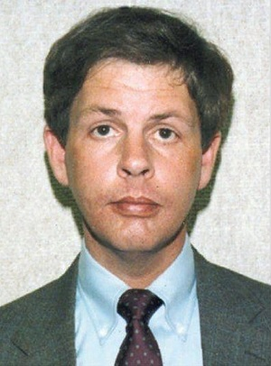
Herbert Richard Baumeister was an Indiana businessman who became the central suspect in one of the most disturbing serial murder investigations in the state's history. Born on April 7, 1947, in Indianapolis, Baumeister lived for years behind the outward appearance of a married father and business owner. By the 1990s he and his family were living at Fox Hollow Farm, a large property on East 156th Street in Westfield, Indiana, north of Indianapolis. Behind the secluded home, investigators would eventually uncover thousands of pieces of human remains belonging to numerous men who had disappeared from the Indianapolis area.
Baumeister was never brought to trial. He fled after authorities began searching his property in June 1996 and died by suicide in Ontario, Canada, on July 3, 1996. Because he died before investigators could fully question or prosecute him, many aspects of the case remain officially unresolved. Nevertheless, the location of the remains, witness evidence, the disappearances of men connected to Indianapolis gay bars, and the circumstances surrounding Baumeister made him the primary suspect in the deaths.
The Disappearance of Men in Indianapolis
During the early and middle 1990s, a disturbing pattern developed in Indianapolis. Men associated with the city's gay nightlife began disappearing. Several had last been seen at or near gay bars before seemingly vanishing without explanation. At the time, the disappearances were investigated individually, and families and members of the gay community became increasingly concerned that the cases might be connected.
A major break came through a surviving witness who described meeting a man who used the name "Brian Smart." The witness said he had been taken to a large suburban residence and nearly strangled during an encounter there. He survived and later encountered the same man again. In 1995, information from the man's vehicle ultimately allowed investigators to connect "Brian Smart" with Herbert Baumeister.
Police wanted to search Fox Hollow Farm, but Baumeister refused to consent. His wife, Juliana "Julie" Baumeister, initially declined as well. Investigators therefore had suspicions but lacked the evidence necessary to enter and conduct the extensive property search that would ultimately expose what had happened there.
The Human Skull at Fox Hollow Farm
Unknown to investigators, the Baumeister family had already encountered evidence on the property. In late 1994, one of Baumeister's children discovered a human skull in the wooded area behind the house. Other bones were reportedly nearby. When Baumeister was confronted about the discovery, he offered an explanation involving an old medical skeleton supposedly associated with his father, who had been a physician.
The explanation delayed the significance of the discovery from becoming clear. As Baumeister's marriage deteriorated and police continued questioning the family about missing men, Julie reconsidered what her son had found. She filed for divorce in January 1996 and eventually informed investigators about the skull.
The June 24, 1996 Search
On June 24, 1996, while Herbert Baumeister was away, Julie Baumeister gave investigators permission to search Fox Hollow Farm. She directed police to the wooded portion of the property where the skull and bones had previously been discovered.
The investigation rapidly expanded after apparent human bone was found. Police, forensic anthropologists and other specialists began examining the woods and surrounding property. What initially appeared to be an isolated discovery became an enormous recovery operation. Thousands of bones, teeth and bone fragments were eventually collected. Many had been broken, burned or scattered throughout the property. Investigators also recovered items including remnants of handcuffs and spent ammunition.
The condition of the remains made the forensic investigation exceptionally difficult. The victims had not been recovered as intact bodies, and many remains had been exposed to weather, fire, animals and other environmental conditions. This is one reason exact dates and causes of death could not be established for every victim. Investigators nevertheless concluded that multiple people had died and that the remains were connected to men who had disappeared from the Indianapolis area.
Identified Victims of Fox Hollow Farm
As of 2026, ten people whose remains were recovered from Fox Hollow Farm have been positively identified. Because most were not found until years after they disappeared, exact dates of death generally cannot be scientifically established. The dates below are verified disappearance or last-seen dates where they are known and should not be interpreted as officially certified dates of death.
- John Lee "Johnny" Bayer - Bayer disappeared from the Indianapolis area on May 28, 1993. His remains were later identified among those recovered from Fox Hollow Farm. His exact date of death could not be independently established from the recovered remains.
- Jeffrey Allen "Jeff" Jones - Jones disappeared from the Indianapolis area on July 6, 1993. Remains associated with Jones were recovered from Fox Hollow Farm. Modern DNA testing later provided additional confirmation of his identification during the renewed investigation.
- Richard Douglas Hamilton Jr. - Hamilton disappeared in Indianapolis on July 31, 1993. His remains were recovered from Fox Hollow Farm and identified during the investigation. The exact time of his death remains uncertain.
- Allen Lee Livingston - Livingston disappeared from Indianapolis on August 6, 1993. His remains had been among the unidentified material recovered from Fox Hollow Farm in 1996. Modern forensic testing finally identified him in 2023, approximately three decades after his disappearance.
- Manuel M. Resendez - Resendez, who had ties to Lafayette, Indiana, was last seen in downtown Indianapolis on August 6, 1993. His remains were among those recovered from Fox Hollow Farm. Earlier identification work was later strengthened through modern DNA testing, with the Hamilton County Coroner announcing DNA confirmation in January 2024.
- Steven Spurlin Hale - Hale disappeared from the Indianapolis area on April 1, 1994. His remains were subsequently recovered from Fox Hollow Farm and identified as part of the original investigation.
- Allen Wayne Broussard - Broussard disappeared from Indianapolis on June 6, 1994. His family was among those seeking answers concerning men vanishing from the city's gay community. His remains were eventually identified among the material recovered from Baumeister's property.
- Roger Allen Goodlet - Goodlet disappeared from Indianapolis on July 22, 1994. His disappearance became especially important to the developing investigation because people searching for him helped expose the pattern involving missing men. His remains were subsequently identified at Fox Hollow Farm.
- Michael Frederick "Mike" Keirn - Keirn was last seen in the Indianapolis area on March 31, 1995. His remains were later identified among those recovered at Fox Hollow Farm.
- Daniel Thomas Halloran - Halloran was from Indianapolis, but investigators have not publicly established a precise date on which he disappeared or died. His remains had been recovered from Fox Hollow Farm in 1996 but remained unidentified for decades. In April 2025, forensic genetic genealogy successfully identified the remains as Halloran's, making him the tenth positively identified Fox Hollow Farm victim.
An Unknown Number of Additional Victims
The ten identified men may represent only part of the total number of people whose remains were placed at Fox Hollow Farm. Approximately 10,000 bones and bone fragments were recovered during the investigation, and subsequent forensic work has established additional unique DNA profiles that have not yet been matched to names. Investigators have at various times estimated that the property could contain remains representing considerably more than the ten people currently identified, with some estimates reaching approximately 25 individuals.
The difficulty is that many of the fragments are extremely small, damaged or burned. A single person can also be represented by hundreds of separate fragments, making it impossible simply to count the pieces and determine a victim total. Modern investigators instead rely on DNA profiles, forensic anthropology, genetic genealogy and comparisons with relatives of missing persons.
How Investigators Believe the Murders Occurred
Investigators developed the theory that Baumeister approached men in Indianapolis gay bars, sometimes using another name, and invited them to his secluded Westfield home when his wife and children were away. A surviving witness described being taken to the property and subjected to strangulation before escaping, providing investigators with important information about Baumeister's behavior.
Strangulation became a major element of the theory surrounding the Fox Hollow murders, although the severe decomposition and fragmentation of the recovered remains prevented authorities from establishing an exact cause of death for every identified victim. After death, investigators believe victims were concealed on the property, primarily in wooded areas behind the residence. Evidence showed that some remains had been burned, broken apart, moved or scattered before their discovery.
The isolation of Fox Hollow Farm gave its owner considerable privacy. The residence sat on a large tract of land with extensive wooded areas, allowing activity behind the home to remain largely invisible to neighbors and visitors. For years, families searching for missing sons, brothers and friends had no reason to know that evidence connected to their disappearances might be hidden behind an affluent suburban residence.
Baumeister Flees Indiana
The discovery of the remains placed Baumeister at the center of an expanding homicide investigation. Rather than return to face investigators, he left Indiana and traveled north. Authorities sought him as the Fox Hollow investigation intensified.
Baumeister eventually reached Ontario, Canada. On July 3, 1996, he was found dead at Pinery Provincial Park from a self-inflicted gunshot wound. He left behind a suicide note discussing the collapse of his marriage and financial problems involving his business, but he did not confess to the Fox Hollow deaths or identify any victims.
His death prevented detectives from interrogating him about the thousands of human remains on his property. It also ensured that there would never be a criminal trial in which prosecutors could present evidence and establish individual murder charges before a jury. Consequently, Baumeister is routinely described as a suspected or presumed serial killer even though investigators consider the evidence linking him to Fox Hollow Farm overwhelming.
Possible Connection to the I-70 Strangler Murders
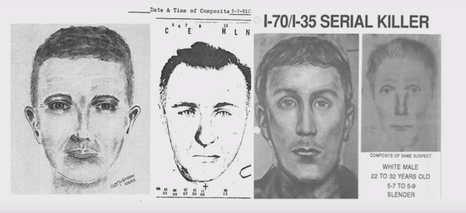
After Baumeister's death, investigators also examined whether he could have been responsible for an earlier series of murders attributed to the so-called I-70 Strangler. From 1980 through 1991, a number of boys and men were found strangled in Indiana and Ohio, frequently in rural locations accessible from major highways. Several victims had connections to Indianapolis gay bars or the same general social environment from which Baumeister's later suspected victims disappeared.
Investigators noted similarities between the cases, particularly victim characteristics, strangulation and Baumeister's access to Indiana and Ohio. They also examined the fact that the roadside series ended before the Fox Hollow Farm disappearances became apparent. Baumeister was eventually regarded by investigators as a major suspect in the I-70 Strangler cases.
However, the distinction between suspicion and proof is important. Baumeister was never prosecuted for the I-70 murders, and no trial established that he committed them. For that reason, victims attributed to the I-70 Strangler should be kept separate from the positively identified Fox Hollow Farm victims rather than automatically counted among Baumeister's confirmed victims.
Renewed Identification Efforts
For many years after the original investigation, unidentified remains from Fox Hollow Farm remained without names. Advances in DNA technology eventually made it possible to revisit evidence that had produced little information during the 1990s.
The Hamilton County Coroner's Office renewed the identification effort in 2022. Investigators began developing additional DNA profiles and requesting reference samples from relatives of men who had disappeared from Indiana and surrounding areas during the relevant decades. That effort produced the identification of Allen Livingston in 2023 and helped reconfirm earlier identifications using modern DNA methods. Jeffrey Jones and Manuel Resendez were among the previously known victims whose identifications received additional forensic confirmation.
In April 2025, investigators announced a major breakthrough when Daniel Thomas Halloran was identified through forensic genetic genealogy. Halloran had not previously been one of the best-known names associated with the investigation, demonstrating that unidentified remains could belong to men whose disappearances had never been successfully connected to Fox Hollow Farm.
As of 2026, the investigation remains active. Ten victims have been positively identified, while other distinct human remains still await identification. Modern forensic laboratories continue attempting to extract usable DNA from material that was burned, crushed or environmentally damaged decades ago.
The Legacy of Fox Hollow Farm
The Fox Hollow Farm case remains significant not merely because of the scale of the discoveries but because so many victims disappeared from a community that often felt ignored or marginalized during the period. Families searched for missing relatives while members of Indianapolis's gay community warned one another that men seemed to be disappearing. Only gradually did investigators develop the evidence necessary to connect those disappearances to one man and one property.
Baumeister's suicide meant there would be no confession, trial or complete accounting of his actions. Investigators were left to reconstruct the case through skeletal remains, missing-person reports, witness statements, surviving evidence and later DNA testing. Every new identification has therefore become an important part of restoring an individual identity to remains that spent decades cataloged only as forensic evidence.
Herbert Richard Baumeister died without explaining what happened at Fox Hollow Farm. The ten men now identified provide a documented core of the case, but unidentified remains mean the full number of victims is still unknown. Decades after the original June 1996 search, investigators continue working to determine who else was buried or scattered across the Westfield property and to return their names to families who have waited years for answers.