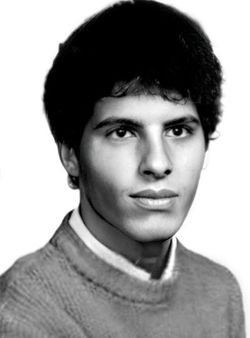
In August 1993, a 34-year-old Hispanic male named Manuel Martinez Resendez vanished from Indianapolis, Indiana, leaving behind a concerned family and a community searching for answers. Employed as a children's counselor, Resendez was last seen at a downtown Indianapolis establishment before disappearing without a trace. His case remained a missing person investigation for several years, part of a troubling pattern of similar disappearances involving men in the area during the early to
mid-1990s.
The mystery of his whereabouts took a grim turn in 1996 when investigators descended upon Fox Hollow Farm, an 18-acre estate in Westfield, Indiana. The property belonged to Herbert Baumeister, a seemingly successful businessman and married father who had come under suspicion for the string of disappearances. A search of the wooded grounds uncovered thousands of charred bone fragments and human remains, eventually revealing that the estate was the burial ground for numerous victims.
As law enforcement closed in on Baumeister as the prime suspect in the murders, he fled the state. Before he could be arrested and charged for the crimes discovered at his Westfield home, Baumeister died by suicide in a park in Ontario, Canada, in July 1996. While he never faced trial, investigators attributed the remains of at least 11 men found on his property to his actions, believing he lured victims to his home before killing them and disposing of their bodies in the backyard.
Although Resendez was initially identified through dental records shortly after the 1996 discovery, his family sought absolute certainty through modern forensic science. In January 2024, the Hamilton County Coroner’s Office announced a definitive identification of Resendez's remains using advanced DNA matching technology. This confirmation provided final scientific validation for his family more than three decades after he first disappeared, closing a painful chapter in one of Indiana's most notorious criminal cases.