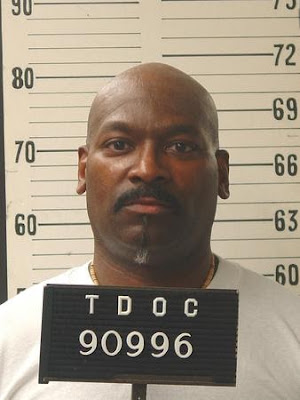
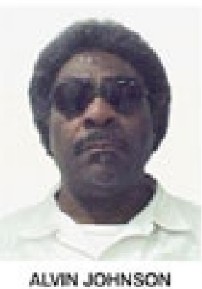
Cecil Johnson Jr.: The Nashville Market Murderer
Overview
Cecil C. Johnson Jr. was a Tennessee man whose brief, violent crime spree in 1980 left an indelible scar on the city of Nashville. In a robbery that netted about $200, he murdered three people, including a 12-year-old boy, and wounded two others. His calculated cruelty, aimed at eliminating all witnesses, shocked the community. Five years later, while on death row for the triple homicide, he killed again, beating a fellow inmate to death. Johnson's case would spend nearly three decades winding through the American legal system, a focal point for debates on capital punishment, the appeals process, and the nature of justice. Though he maintained his innocence in the initial murders to the end, his execution in 2009 closed a painful chapter for the families of his victims, particularly for the father who witnessed his only son's murder and then, 29 years later, the execution of the man responsible.
Early Life and Background
Cecil C. Johnson Jr. was born in Maury County, Tennessee, on August 29, 1956, the oldest of ten children. His childhood was reportedly one of poverty and abuse. Those who knew him or studied his case described a difficult upbringing in an impoverished, unstable home. He dropped out of school in the ninth grade.
By the age of 21, Johnson was married and had a child. At the time of the murders in July 1980, the 23-year-old Johnson was living in Nashville and working as a dishwasher and cook at Vanderbilt University. He was a familiar face in the neighborhood where he would commit his most notorious crimes, a fact that made his actions seem all the more reckless to investigators.
The Nashville Market Murders
On the evening of July 5, 1980, around 9:45 p.m., Cecil Johnson walked into Bob Bell's Market, a small convenience store on 12th Avenue South in Nashville. It was a place he had shopped at before. Inside were the owner, Bob Bell Sr., his 12-year-old son, Robert "Bobby" Bell III, and a friend, Lewis Smith, who was repairing a boat motor for Bell.
Johnson produced a gun, ordering Bell and Smith to get behind the counter where young Bobby was standing. During the robbery, a woman and her two children entered the store. Johnson concealed his weapon and instructed his captives to act naturally until the customers left. Once they were gone, Johnson ordered Bobby to empty the cash register into a bag.
With about $200 from the register, Johnson's intent shifted from robbery to murder. His goal, as prosecutors would later argue and a detective would surmise, was to leave no witnesses. He turned his gun first on the most helpless person there: 12-year-old Bobby Bell. He shot the boy in the head. As Lewis Smith tried to shield the fallen child, Johnson shot him in the throat and hand. He then fired at Bob Bell Sr., who deflected the shot with his hand, suffering a wound to his wrist. Both Bell Sr. and Smith survived.
Johnson fled the market, but his killing spree was not over. Outside, a Supreme Taxi cab was parked near the entrance. Inside were the driver, 41-year-old James Moore, and his passenger, 35-year-old Charles House. House had reportedly entered the market moments earlier during the robbery and been ordered to leave by Johnson. Johnson shot and killed both men before disappearing into the night. A retired homicide detective later remarked grimly, "He had six shots and he accounted for them all."
The Victims
- Robert "Bobby" Bell III, 12 — July 5, 1980, Nashville, Tennessee. The only child of the market's owner, Bobby was helping his father at the store when he was shot and killed. His father, Bob Bell Sr., witnessed the murder and remained profoundly affected by the loss for the rest of his life.
- Charles House, 35 — July 5, 1980, Nashville, Tennessee. A passenger in a taxi parked outside the market, he was an innocent bystander murdered as Johnson made his escape.
- James Moore, 41 — July 5, 1980, Nashville, Tennessee. The driver of the taxi, he was waiting for his fare when he was senselessly shot and killed.
- Laron Williams, 36 — July 8, 1985, Nashville, Tennessee. A fellow death row inmate at the Tennessee State Penitentiary, Williams was beaten to death by Johnson and another prisoner, reportedly during a dispute over a telephone.
Investigation and Capture
The investigation moved swiftly, largely due to Johnson's fatal error of robbing a store in his own neighborhood where he was known. Word on the street quickly identified him as the shooter. The most crucial break, however, came from within Johnson's own family. Two days after the murders, on July 7, 1980, Johnson's father turned him in to the Metro Nashville Police Department.
Cecil Johnson was arrested and charged with three counts of first-degree murder, two counts of assault with intent to commit murder, and armed robbery. Despite an intensive search, the murder weapon was never recovered. The case against him would be built on the powerful and harrowing testimony of the survivors.
Trial and Sentencing
Johnson's trial began in January 1981, just six months after the murders. The prosecution, led in part by future Nashville District Attorney Torry Johnson, presented a compelling case. The state's key witness was Victor Davis, a friend of Johnson's who was initially intended to be his alibi. Davis had first told police that he and Johnson were together and nowhere near the market. However, after being arrested on unrelated charges a week before the trial, Davis changed his story. Granted immunity, Davis testified that he had driven Johnson to the vicinity of the market that night. He told the jury that Johnson had stated he was going to rob the store and "try not to leave any witnesses." Davis also testified that Johnson later admitted, "I didn't mean to shoot that boy."
The most damning evidence came from the two men who survived the carnage. Both Bob Bell Sr. and Lewis Smith took the stand and unequivocally identified Cecil Johnson as the man who had robbed them and murdered Bobby Bell. Another customer who had been in the store during the robbery also identified Johnson.
Johnson testified in his own defense, maintaining that he was with Davis and never went to the market. His father also testified that Johnson arrived at his house, a block from the market, just before 10:00 p.m. The jury, however, believed the survivors and Victor Davis. On January 19, 1981, they found Cecil Johnson guilty on all counts. The following day, after deliberating on his fate, the jury recommended death. Judge A. A. Birch Jr. sentenced Johnson to death for each of the three murders, making him the first person sentenced to die under Tennessee's newly reinstated capital punishment statute. He also received consecutive life sentences for the armed robbery and assault convictions.
A Second Murder on Death Row
While incarcerated on death row at the old Tennessee State Penitentiary in Nashville, Johnson killed again. On July 8, 1985, he and another condemned inmate, Tony "Philip" Bobo, attacked fellow death row prisoner Laron Williams in the prison exercise yard. Williams was himself a convicted serial killer, sentenced to death for the murders of a police officer and a priest. The motive for the attack was reportedly anger over Williams monopolizing a prison telephone.
Johnson and Bobo repeatedly dropped two thirty-five-pound dumbbells on Williams' head and chest, inflicting fatal blunt force trauma. In 1987, both men were convicted of second-degree murder and sentenced to life imprisonment. However, the Tennessee Supreme Court overturned the convictions on appeal due to a juror being improperly replaced during deliberations. At a retrial in February 1994, Johnson and Bobo were convicted of the lesser charge of voluntary manslaughter and sentenced to eight years in prison.
Decades of Appeals
For the next 28 years, Johnson's case was mired in the appellate court system. His death sentences were vacated by an appeals court in 1988 but reinstated by the Tennessee Supreme Court in 1990. His legal team filed numerous appeals in both state and federal courts, raising a variety of issues.
One appeal centered on a juror from the original trial who later signed an affidavit stating she didn't understand she could have voted for a life sentence and felt pressured by the judge to vote for death. This appeal was denied, with the court citing rules against impeaching a verdict based on a juror's internal thought processes. Another major line of appeal, pursued for years, argued that the prosecution had withheld police reports that could have been used to impeach the eyewitness testimony against him. This claim was also ultimately rejected by the courts.
As the years turned into decades, Johnson's case became a subject of debate for death penalty opponents, who argued that the nearly 29-year wait for execution constituted cruel and unusual punishment. In a statement on the U.S. Supreme Court's final denial of a stay, Justice John Paul Stevens wrote that he believed executing a defendant after such a long and "inhumane delay" was "unacceptably cruel." All of these legal challenges, however, failed to overturn his conviction or his sentence.
Final Days and Execution
On July 22, 2009, the Tennessee Supreme Court set Cecil Johnson's execution date for December 2, 2009. In the final weeks, his lawyers made last-ditch efforts to save his life. A plea for clemency was denied by Tennessee Governor Phil Bredesen on November 25. Final appeals to the federal courts and the U.S. Supreme Court were rejected in the hours leading up to the execution.
Johnson spent his last day meeting with family, lawyers, and his spiritual advisor, Rev. James Thomas. He declined a special last meal. In a poignant moment, he received a message of love and forgiveness from his 29-year-old son, James, who was himself incarcerated in a West Tennessee prison. The message, relayed by the warden, stated that his son did not blame him for his own imprisonment.
In the early morning hours of December 2, 2009, at the Riverbend Maximum Security Institution, Cecil Johnson Jr. was led into the execution chamber. Among the witnesses was Bob Bell Sr., the father of his first victim. As the lethal injection process began, Johnson repeatedly mouthed "I love you" to his family members present. His final spoken words were, "You all stay strong, and keep trusting in the Lord." He was pronounced dead at 1:34 a.m.
Aftermath and Legacy
Cecil Johnson was the sixth person executed in Tennessee since the state resumed capital punishment in 2000. To his death, he maintained his innocence in the 1980 murders, and his supporters argued he had become a changed, religious man during his decades in prison. His brother David told reporters after the execution, "He's in a better place because he gave his life to the Lord."
The case remains a painful memory in Nashville, a brutal illustration of how a senseless act of violence can shatter multiple lives in a matter of minutes. The murders at Bob Bell's Market not only took three lives but also left two men wounded and a father to grieve his only child for nearly three decades. The long and tortuous legal path of Cecil Johnson's case serves as a stark example of the complexities, controversies, and profound human cost inherent in the American system of capital punishment.