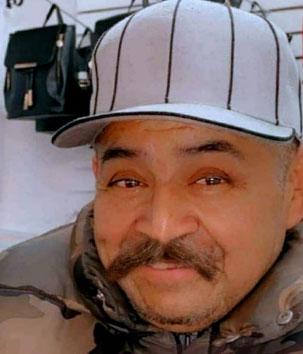
Ernest Miller, a 23-year-old Black man, was living in Chicago when he traveled to Milwaukee over the 1990 Labor Day weekend to visit relatives. Primary law-enforcement records give his date of birth as May 5, 1967, and place his disappearance and killing in the early hours of September 3, 1990, rather than September 2. His aunt, Vivian Miller, told investigators that Ernest arrived from Chicago on September 1 and left during the early morning hours of September 3.
FBI records indicate he was last seen leaving a friend's residence at about 1:30 a.m. and was reported missing by relatives the following day.
What happened after Miller left his family remained unknown for months. According to the criminal complaint and Jeffrey Dahmer's subsequent statements to investigators, Dahmer encountered Miller outside a bookstore in the 800 block of North 27th Street in Milwaukee. Dahmer said he offered Miller money to accompany him to his apartment at 924 North 25th Street, Apartment 213. Miller agreed, and the two went to the apartment.
Dahmer later confessed that after they had sexual contact, he drugged Miller. Unlike many of his other killings in which victims were strangled after being rendered unconscious, Dahmer killed Miller by cutting his throat. Evidence presented during Dahmer's later sanity trial indicated that Dahmer feared Miller might regain consciousness because the amount of sedative he had given him was insufficient. Dahmer used a knife to cut Miller in the area of the carotid artery.
Afterward, Dahmer photographed and dismembered Miller's body. According to the criminal complaint, he disposed of most of the flesh but retained Miller's biceps in his freezer. He also kept Miller's skull, which he painted, and preserved his skeleton after bleaching the bones. These details ultimately became important evidence linking Miller directly to Dahmer rather than leaving his disappearance as an unresolved missing-person case.
The truth did not emerge until July 1991. Dahmer was arrested in Milwaukee on July 22 after another man, Tracy Edwards, escaped from his apartment and brought police back to the residence. The subsequent search uncovered human remains and other evidence connected to numerous missing men and boys. Miller's skull was among the remains recovered from Dahmer's apartment. Forensic odontologist Dr. L.T. Johnson compared the recovered skull with Miller's known dental records and confirmed his identity. FBI records state that Miller's parents were notified of his death on July 26, 1991, and the Milwaukee Police Department assigned the investigation homicide case number M2482.
Jeffrey Lionel Dahmer was formally accused of Miller's murder. An amended Milwaukee County criminal complaint charged Dahmer with first-degree intentional homicide, alleging that on or about September 3, 1990, at 924 North 25th Street, he intentionally caused Ernest Miller's death. When prosecutors filed an expanded complaint on August 6, 1991, Miller was specifically named among the victims, and Dahmer was being held on $5 million cash bail while authorities continued investigating the series of killings.
The case eventually became part of the prosecution involving 15 Wisconsin murders. On January 13, 1992, Dahmer entered guilty-but-insane pleas, meaning his responsibility for the killings was no longer disputed and the principal issue for trial became whether he was legally responsible for his actions at the time of the murders. After weeks of psychiatric testimony and evidence describing the killings, a Milwaukee County jury determined on February 15, 1992, that Dahmer was legally sane when he committed all 15 murders before the court.
On February 17, 1992, Judge Laurence C. Gram Jr. sentenced Dahmer to 15 consecutive life prison terms. During the sentencing hearing, Miller's uncle Stanley Miller addressed Dahmer and spoke about the devastating loss inflicted on the family. The sentence ensured that Dahmer would spend the remainder of his life in prison rather than being committed under an insanity verdict.
For Miller's family, the discovery brought an answer after nearly eleven months of uncertainty, but it came through the identification of remains recovered from Dahmer's apartment and the details of a particularly brutal homicide. What began as a Labor Day weekend visit to relatives in Milwaukee became one of the murders that ultimately exposed the full extent of Dahmer's crimes and led to his arrest, prosecution, conviction, and imprisonment.