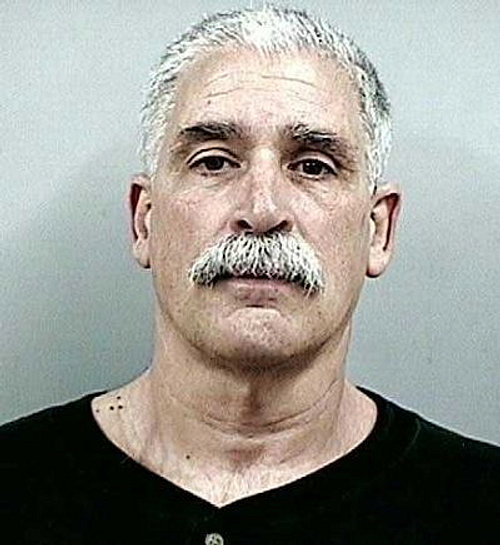
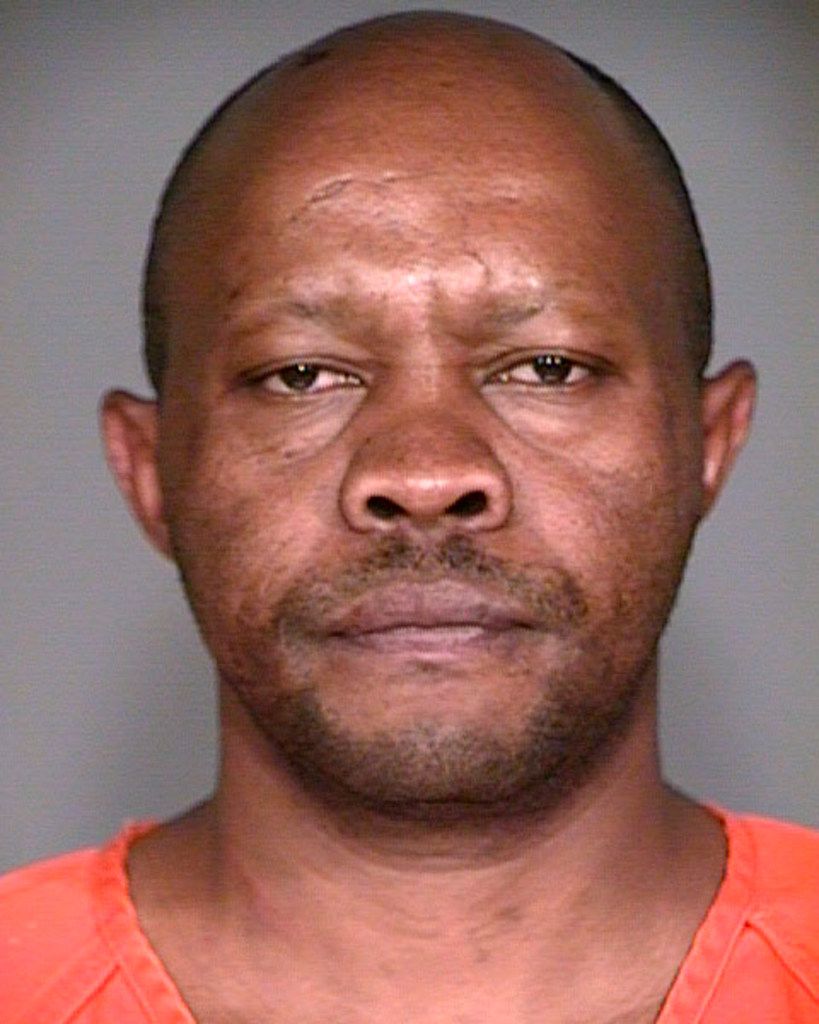
Roy Lewis Norris: The Crimes of the “Tool Box Killers”
Background and Early Criminal History
Roy Lewis Norris was born on February 5, 1948, in Greeley, Colorado. Long before he became involved in a series of murders, Norris had accumulated a record of sexual violence. After serving in the United States Navy, he committed several attacks against women and was repeatedly arrested, evaluated and imprisoned. In 1975, he was convicted of rape and sent to the California Men’s Colony at San Luis Obispo.
While imprisoned, Norris met Lawrence Sigmund Bittaker, an intelligent but deeply violent offender who had been convicted of stabbing a supermarket employee. The two men discussed sexual assault, kidnapping and ways of preventing victims from identifying their attackers. Bittaker was paroled in November 1978, and Norris was released in January 1979. After Norris returned to California, the men resumed their friendship and began turning their prison conversations into a deliberate plan.
The Partnership with Lawrence Bittaker
Bittaker purchased a silver 1977 GMC cargo van that had no rear side windows and a large sliding door. The men later called it “Murder Mack.” They modified the rear compartment with a mattress and stored restraints, tools and other equipment inside. They drove through beach communities in Los Angeles County looking for teenage girls who were alone, walking near the road or hitchhiking.
Norris frequently helped identify potential victims and physically forced them into the van. Bittaker usually drove while Norris restrained and guarded the abducted girl. The pair took their victims to isolated fire roads in the San Gabriel Mountains, where cries for help were unlikely to be heard. Between June and October 1979, they kidnapped and murdered five girls.
Known Victims
- Lucinda Lynn “Cindy” Schaefer, 16 — June 24, 1979 — Redondo Beach and the San Gabriel Mountains, California: Schaefer was walking toward her grandmother’s home after attending a church youth meeting when Norris and Bittaker noticed her. After she refused an offer of a ride, the men parked farther down the street. Norris pretended to be working on the van and grabbed Schaefer as she passed. She was dragged into the vehicle, restrained and driven to a remote mountain fire road. After being assaulted, she asked for time to pray. Norris initially argued that she should be released, but Bittaker insisted that she could identify them. Norris participated in attempts to strangle her before Bittaker tightened a wire coat hanger around her neck with pliers. Her body was thrown into vegetation beside the mountain road and has never been recovered.
- Andrea Joy Hall, 18 — July 8, 1979 — Redondo Beach and the San Gabriel Mountains, California: Hall was hitchhiking near the Pacific Coast Highway when Bittaker offered her a ride. Norris was concealed in the back of the van and attacked her after she entered. Hall fought back but was overpowered, bound and gagged. She was transported to several isolated mountain locations, sexually assaulted and photographed. Bittaker eventually killed her by forcing an ice pick through her ears and then strangling her. Her body was thrown down an embankment. Despite extensive searches and Norris’s later cooperation with investigators, Hall’s remains have never been found.
- Jacqueline Doris “Jackie” Gilliam, 15 — September 3, 1979 — Redondo Beach and the San Gabriel Mountains, California: Gilliam and her friend Leah Lamp were hitchhiking in Redondo Beach on September 2 when Bittaker and Norris picked them up. Norris attacked and restrained the girls inside the van. The pair drove them deep into the mountains and held them overnight. Gilliam was repeatedly assaulted and photographed. On September 3, Bittaker took her from the van, attacked her with an ice pick and strangled her. Her body was thrown over an embankment into dense chaparral. Norris later led investigators to the area, where Gilliam’s skull was recovered with part of an ice pick still embedded in it.
- Jacqueline Leah “Leah” Lamp, 13 — September 3, 1979 — Redondo Beach and the San Gabriel Mountains, California: Lamp was abducted with Gilliam after entering the men’s van. She was struck with a weighted object but regained consciousness and attempted to escape. Bittaker caught her and forced her back into the vehicle. She was restrained, drugged and held through the night. After Gilliam was killed, Lamp was awakened and ordered out of the van. Bittaker struck her with a sledgehammer, and Norris joined the attack. She was also strangled before her body was thrown down the mountainside beside Gilliam’s. Her remains were later located after Norris provided investigators with directions.
- Shirley Lynette Ledford, 16 — October 31, 1979 — Sunland-Tujunga, Los Angeles, California: Ledford was abducted while hitchhiking home on Halloween night. She may have entered the van because she recognized Bittaker as a customer from the restaurant where she worked. Bittaker and Norris restrained her and drove through the Los Angeles area for an extended period. The assault was recorded on an audiocassette found inside the van after the men were arrested. Norris eventually strangled Ledford with a wire coat hanger. Her body was left in ivy beside a residential property in the Sunland-Tujunga area and was discovered early the following morning by a jogger.
Other Attacks and Escaped Victims
The five murders were not the only crimes associated with Norris and Bittaker. In June 1979, Norris attempted to attack a woman who managed to escape. The incident reportedly persuaded the two men that they should commit future abductions together so that one could control the victim while the other drove.
On September 27, 1979, the men attempted to seize another unidentified woman, but she avoided them and escaped. Three days later, they targeted Jan Malin as she closed the garage door of her apartment building. Bittaker sprayed her with chemical irritant and attempted to pull her toward the van. Malin screamed, drawing the attention of neighbors. Norris drove away, leaving Bittaker to flee on foot.
That same night, the men abducted and sexually assaulted Robin Robeck. Unlike the murder victims, Robeck was eventually released. She reported the crime and provided police with information about the van and her attackers. Her account became an important part of the investigation that ultimately connected Norris and Bittaker to a wider series of disappearances.
The Confession That Exposed the Murders
Norris helped bring about his own arrest by speaking about the crimes to an acquaintance named Jimmy Dalton, whom he had known in prison. Norris described the abductions and murders in enough detail to alarm Dalton, who contacted an attorney and then law enforcement. Investigators began examining Norris, Bittaker and the distinctive cargo van.
Police placed Norris under surveillance and arrested him on November 20, 1979, for a parole violation. Bittaker was arrested the same day at the Scott Motel in Burbank. Searches of Bittaker’s room and van produced restraints, a sledgehammer, photographs of missing girls, jewelry belonging to victims and the recording of Shirley Ledford’s assault. Investigators also found evidence suggesting that the pair intended to continue abducting and killing girls.
Norris’s Cooperation with Prosecutors
Faced with the evidence and the possibility of receiving a death sentence, Norris agreed to cooperate. He gave investigators detailed accounts of the five murders and identified the isolated mountain locations where the crimes had occurred. His information led police to the remains of Gilliam and Lamp, although the bodies of Schaefer and Hall were never found.
Norris entered guilty pleas to five murder charges, as well as charges involving kidnapping, rape and robbery. Under his agreement with prosecutors, he avoided a possible death sentence and received a prison term of 45 years to life. He then became the principal prosecution witness against Bittaker.
The Trial of Lawrence Bittaker
At Bittaker’s 1981 trial, Norris described the kidnappings, assaults and murders in chronological detail. Prosecutors supported his testimony with photographs, physical evidence, victim property and the recording recovered from the van. The jury convicted Bittaker of five murders and numerous counts of kidnapping, rape and other offenses.
Bittaker was sentenced to death on March 24, 1981. His convictions and sentence were later upheld by the California Supreme Court. He remained on death row at San Quentin State Prison for decades and died of natural causes on December 13, 2019, before the sentence could be carried out.
Imprisonment and Death
Norris spent the remainder of his life in the California prison system. Because his sentence technically allowed the possibility of parole after the minimum term had been served, he appeared before the parole board several times. Release was repeatedly denied because of the calculated nature of the crimes, his history of sexual violence and the continuing danger authorities believed he posed.
Roy Lewis Norris died on February 24, 2020, at the California Medical Facility in Vacaville. He was 72 years old and had been incarcerated for more than four decades. His death came less than three months after Bittaker died at San Quentin.
Legacy of the Case
Norris and Bittaker became known as the “Tool Box Killers” because of the household and construction tools used during their attacks. Their crimes were not impulsive encounters. The van, restraints, remote locations, photography equipment and recording devices demonstrated preparation and an intention to preserve evidence of the victims’ suffering for their own gratification.
The case remains one of the most disturbing examples of two offenders reinforcing and escalating each other’s violence. Norris was not merely a passive companion to Bittaker. He selected victims, conducted abductions, restrained and assaulted the girls, participated directly in killings and helped dispose of their bodies. His later testimony was essential to the prosecution, but it came only after five young lives had been taken and investigators had assembled evidence capable of exposing the pair.
Lucinda Schaefer, Andrea Hall, Jacqueline Gilliam, Leah Lamp and Shirley Ledford are remembered as the victims of a deliberately planned series of crimes committed across Southern California in 1979. Although Norris’s cooperation clarified what happened to them, two families were never able to recover their daughters’ remains. The murders continue to be studied as an example of predatory partnership, calculated victim selection and the catastrophic consequences of releasing violent repeat offenders without adequate supervision.