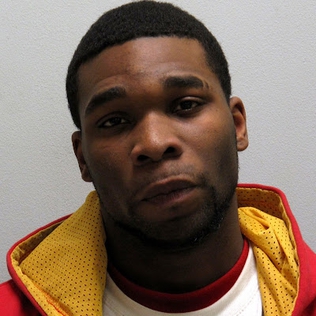
Brandon Dewayne Johnson: The Reservoir Road Robber
Overview
Between the fall of 2008 and the winter of 2009, a wave of violent armed robberies terrorized Little Rock, Arkansas, leaving a trail of death and injury. The perpetrator, Brandon Dewayne Johnson, then just 20 years old, targeted individuals in a series of brutal attacks, primarily in apartment complexes along or near Reservoir Road. Armed with a .380-caliber handgun, Johnson murdered three men and wounded eight others in his relentless pursuit of money and valuables. His victims were often Hispanic men, chosen for their perceived vulnerability. The spree came to an end with his arrest in January 2009. Prosecutors initially sought the death penalty, but a crucial discovery altered the course of justice: IQ testing revealed Johnson was intellectually disabled, making him ineligible for execution under Arkansas law. In a plea agreement, Johnson pleaded guilty to three counts of first-degree murder and a host of other charges, receiving a 100-year prison sentence that ensures he will likely never walk free again.
Early Life and Background
Brandon Dewayne Johnson was born on January 18, 1988, in Little Rock, Arkansas, the city he would later terrorize. Publicly available records offer little insight into his upbringing, family environment, or education. What is known is that by the time his violent crime spree began in September 2008, he was already in the criminal justice system. Johnson was on probation for misdemeanor charges of car theft and check fraud. This prior criminal history consisted of relatively minor property crimes, offering no clear indication of the extreme violence he was about to unleash upon the community.
A pivotal aspect of Johnson's background emerged only after his arrest for murder. During pre-trial proceedings, his defense attorneys raised questions about his mental capacity. He underwent evaluation at the Arkansas State Hospital, where IQ testing determined he had an IQ of 55. This score placed him in the range of intellectual disability, a finding that would profoundly impact his legal fate. Under a 2002 U.S. Supreme Court ruling, Atkins v. Virginia, and corresponding Arkansas law, executing individuals with intellectual disabilities is deemed cruel and unusual punishment and is therefore prohibited.
The Murders
Brandon Johnson’s series of attacks began in the fall of 2008, escalating in violence and frequency over several months. He pleaded guilty to four specific shootings, which included all three of the fatal encounters.
The first murder occurred on the evening of December 18, 2008. Joseph Bittengle, a 50-year-old associate professor at the University of Arkansas for Medical Sciences (UAMS), was at his home in the Barrington Hills Apartments on Reservoir Road. He was helping his 71-year-old mother, Hazel, pack her car for her trip back to Ohio after a holiday visit. As they were outside, Johnson approached them. He robbed Bittengle of his wallet and his mother of her purse. Without provocation, Johnson then shot Joseph Bittengle in the stomach before fleeing. Bittengle died from the wound. Johnson later told authorities he targeted Bittengle because he looked vulnerable. The murder was not an isolated incident in that location; Johnson had previously shot and wounded another man in the same apartment complex parking lot. Just ten minutes before killing Bittengle, Johnson had robbed and shot another man, Carlos Lario, in the hand in the same complex. Lario survived.
The violence peaked on a single day, January 13, 2009, when Johnson murdered two men in separate attacks. His first victim that day was Akshaya Nandam, a 26-year-old who had moved to the United States from India four years earlier. Nandam had just dropped his girlfriend off at their apartment and was walking outside when Johnson confronted him. Johnson, who later said he believed Nandam was Hispanic, demanded his wallet. After Nandam was on the ground, Johnson shot him in the leg and took his wallet. The bullet struck an artery, and Akshaya Nandam died from his injury the following day. Johnson quickly used his victim's credit card at a nearby McDonald's.
Hours later on the same day, Johnson targeted 24-year-old Eric German. A married father of a toddler, German was on his way to his job at a McDonald's restaurant when Johnson accosted him. After German surrendered his wallet, Johnson shot and killed him. These two murders in rapid succession marked the bloody end of his deadly spree.
The Non-Fatal Attacks
In addition to the three murders, Johnson admitted to a string of other armed robberies where he shot and wounded eight other men. These attacks demonstrated a consistent and terrifying pattern of violence. On November 15, 2008, he approached Armando Guerrero and Andy Tapia outside an apartment, asking to use a cellphone. When they said they didn't have one, he robbed them at gunpoint.
Just two days later, on November 17, Jairo Castorena-Mendez was leaving his sister's apartment for work when he saw a man standing near the door wearing a mask from the horror movie "Scream." Castorena-Mendez quickly shut the door, but Johnson fired his handgun through it, striking him in the arm.
On December 10, a hit-and-run incident led to an argument between Johnson and two other men. Johnson opened fire on them. While no one was hit, one of the men, Shamar Womack, crashed his car while fleeing and abandoned it. This event would later provide a crucial clue for investigators.
The Victims
Johnson's rampage cut short three lives and irrevocably altered many more.
- Joseph Robert Bittengle, Jr., 50 — A beloved and respected Associate Professor and the Division Director of Radiologic Imaging Sciences at UAMS, Joseph was killed on December 18, 2008. Born in Ohio, he was a devoted father to his two sons, Joseph and Adam. He was also a member and subdeacon of the Holy Trinity Orthodox Church in Little Rock. His colleagues and students remembered him as one of the best instructors they ever had, a man who genuinely loved his work and cared deeply for every student. In his memory, the Joseph R. Bittengle Scholarship Fund was established at the UAMS College of Health Related Professions.
- Akshaya Nandam, 26 — An immigrant from India who had come to the United States four years prior in pursuit of a better life, Akshaya was shot on January 13, 2009, and died the next day. He was in the prime of his life, killed in a senseless act of violence just outside his own home after saying goodnight to his girlfriend.
- Eric German, 24 — Murdered on January 13, 2009, Eric was a young husband and father to a toddler. He was on his way to work at McDonald's, providing for his family, when he was robbed and killed. His death left a young child to grow up without a father and a wife to mourn her partner.
Investigation and Capture
The series of violent, seemingly random robberies and shootings created a climate of fear in Little Rock, particularly within the Hispanic community that Johnson frequently targeted. The Little Rock Police Department was under immense pressure to find the man responsible. A significant break in the case came from an unlikely source: a car crash.
On December 10, 2008, after opening fire on two men during a dispute, Johnson's associate, Shamar Womack, crashed the 2005 Chevrolet Impala he was driving. When police investigated the abandoned vehicle, they recovered .380-caliber shell casings from inside. Ballistics analysis later confirmed these casings matched those found at the scenes of several of the robberies and murders.
When detectives located and questioned Womack, he implicated Johnson in the shootings. The investigation swiftly zeroed in on Johnson. On January 15, 2009, just two days after the murders of Akshaya Nandam and Eric German, Brandon Dewayne Johnson was arrested. He was held without bail at the Pulaski County jail. Investigators also recovered the .380-caliber handgun from his girlfriend's residence, which was definitively linked to the crimes. His girlfriend, Victoria McCoy, was charged with using one of the victim's credit cards, and Shamar Womack was charged with aggravated robbery for his role in some of the incidents.
Trial and Sentence
Prosecutors initially charged Brandon Dewayne Johnson with three counts of capital murder and announced their intention to seek the death penalty. However, the case took a significant turn when Johnson's defense team raised concerns about his intellectual capacity. The court-ordered mental evaluation and subsequent IQ test, which resulted in a score of 55, legally barred the state from pursuing execution.
With the death penalty off the table, prosecutors, after consulting with the victims' families, entered into a plea agreement with Johnson. In July 2010, he pleaded guilty to three counts of first-degree murder, as well as multiple counts of first-degree battery, aggravated robbery, and theft of property. In exchange for his plea, numerous other charges were dropped.
During the sentencing hearing, Pulaski County Circuit Judge Marion Humphrey pressed Johnson for an explanation for his horrific crimes. "How can you just walk up to these people and shoot them?" the judge asked. Johnson, after glancing at his lawyers, offered a simple, chillingly inadequate response: "Bad mistake. I apologize." He initially claimed the robberies were a result of "bad judgment" and a poor choice of friends.
Judge Humphrey, unsatisfied, brought up a letter Johnson had written to his girlfriend in which he claimed he committed the robberies to buy food and diapers for children. When asked if this was true, a nervous Johnson admitted he was lying. "I'm trying to understand," Humphrey said. "I want to understand you. You'd take somebody's life for this?"
Ultimately, the judge accepted the plea agreement. Brandon Dewayne Johnson was sentenced to 100 years in prison with the possibility of parole.
Aftermath and Legacy
Brandon Dewayne Johnson is currently incarcerated at the Cummins Unit, a maximum-security prison in Grady, Arkansas. His behavior in prison has been poor; he has accumulated more than 30 infractions for offenses including battery, possessing contraband, disobeying orders, and sexual activity. Under the terms of his sentence, he will not become eligible for parole until October 12, 2071, at which point he will be 83 years old.
The legacy of Johnson's crime spree is one of lasting pain for the families of Joseph Bittengle, Akshaya Nandam, and Eric German, and the eight men who survived his attacks but were left with physical and emotional scars. The wave of violence he unleashed brought fear to the streets of Little Rock, a stark reminder of the devastating and random nature of violent crime. His case also highlighted the complex intersection of intellectual disability and the criminal justice system, ultimately sparing him from the ultimate penalty but ensuring he will spend the vast majority of his life behind bars.