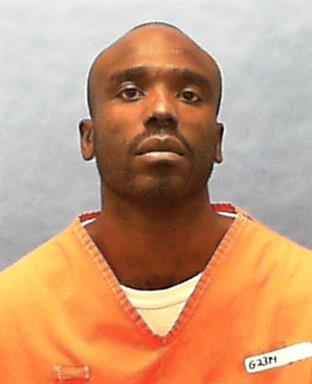
Robert Jimmy White Jr.: A Pattern of Violence Against Women
Early Life and Criminal History
Robert Jimmy White Jr. was born on August 9, 1960, in Hartford, Connecticut. Over several decades, he developed an extensive record of sexual violence and lethal attacks against women. His known crimes began when he was 19 years old and continued after repeated periods of incarceration and release. White was ultimately held responsible for the deaths of four women in Hartford between 1980 and 2013.
White's history demonstrated a recurring pattern. He approached women, gained access to them or isolated them, and then used overwhelming physical violence. His attacks frequently involved sexual assault, strangulation, stabbing or severe blows to the head. Although his first known killing resulted in a manslaughter conviction rather than a murder conviction, it marked the beginning of a criminal career that later caused prosecutors and investigators to describe him as a serial sexual predator.
The Fatal Attack on Betty Jo Robertson
On April 23, 1980, 46-year-old Betty Jo Robertson encountered White at a bar on Albany Avenue in Hartford. White later admitted that he had entered the establishment intending to find a woman to sexually assault. He began speaking with Robertson and persuaded her to allow him to accompany her as she walked home.
After the two left the bar, White forced Robertson into a secluded area and attempted to assault her. Robertson resisted. White bit, scratched and grabbed her before throwing her onto a concrete sidewalk and repeatedly striking her head against the pavement. Witnesses saw portions of the attack and contacted authorities. Robertson was transported to a hospital with devastating injuries and died on April 24, 1980.
Investigators connected White to the assault through witness information and physical evidence, including a cap found near the scene. He was taken into custody in June 1980 and confessed, claiming that he had intended to rape Robertson but had not intended to kill her. He was initially accused of felony murder, but the case was reduced to first-degree manslaughter. On November 24, 1980, White pleaded guilty and received a prison sentence of 10 to 20 years.
Release From Prison
White served approximately eight and a half years before being released on parole in July 1989. His conviction for Robertson's death had already established that he was capable of extreme violence against women. Nevertheless, he eventually returned to Hartford's streets.
The full extent of White's conduct during the years immediately following his release remains unclear. What is known is that his violence continued. In 1997, he committed another sexually motivated killing that remained unsolved for nearly two decades.
The Murder of Shiraleen Crawford
On August 10, 1997, White met 30-year-old Shiraleen Crawford on Martin Street in Hartford. The two went to Crawford's apartment, where they spent time drinking and engaging in sexual activity. At some point during the encounter, White produced a knife and attacked her.
White cut Crawford's throat and stabbed her repeatedly in the head, neck and chest. When the knife broke during the assault, he obtained a hammer and struck her in the head. Investigators later determined that Crawford died from blunt-force trauma while also suffering numerous stab wounds.
White left Crawford inside the apartment. Her body was discovered several days later, on August 14, 1997, after a friend went to check on her. The condition of the apartment and the violence inflicted on Crawford indicated that the killing had been prolonged and intensely personal. Despite the evidence collected at the scene, investigators were initially unable to identify her killer.
The Crawford homicide remained unsolved for approximately 19 years. White continued to live without being charged in connection with her death, although he was convicted in 1998 of first-degree sexual assault in an unrelated case. He received a 14-year prison sentence for that offense and remained incarcerated until 2011.
The Killing of Sonia Rivera
After returning to the community, White resumed his violent behavior. On September 27, 2012, he encountered 48-year-old Sonia Rivera near Washington Street in Hartford. Rivera was a mother of five.
White sexually assaulted Rivera and severely beat her behind a building near 216 Washington Street. She was found partially unclothed, unconscious and bleeding from extensive head injuries. A brick recovered nearby was believed to have been used during the assault.
Rivera was transported to Hartford Hospital, where doctors attempted to treat her injuries. She never recovered and died on October 2, 2012. Her death was classified as a homicide caused by the trauma inflicted during the attack.
The investigation initially focused on another man, Denzil Nurse. Nurse was arrested and charged with Rivera's murder in 2014 after investigators believed DNA evidence connected him to the crime. He remained accused until a later review determined that the evidence did not establish that he was the killer. The charge against Nurse was dismissed in May 2016.
The Murder of Sawarie Krichindath
White became involved in a relationship with 59-year-old Sawarie Krichindath after his release from prison. Because he lacked stable housing, he eventually moved into her apartment at 76 Main Street in Hartford. Their relationship became troubled, and Krichindath reportedly attempted to remove him from her home.
On February 27, 2013, an argument between White and Krichindath escalated into a deadly attack. White suffocated her by placing a pillow and a plastic bag over her head. He also stabbed her in the neck. After killing her, he took her apartment access card and continued using it to enter secured portions of the building.
Krichindath's body remained inside the apartment for more than two weeks. On March 16, 2013, her daughter entered the residence and discovered her. Police determined that Krichindath had been the victim of a domestic-violence homicide.
Investigators quickly focused on White. Building records showed that he had continued using Krichindath's access card after her death. Police arrested him on March 18, 2013. During questioning, White confessed to suffocating and stabbing her.
Conviction for Krichindath's Murder
White pleaded guilty to murdering Sawarie Krichindath. On February 28, 2014, he was sentenced to 50 years in prison, the maximum punishment available under the terms of the case. The sentencing judge emphasized White's long history of violence and the danger he posed to women and the community.
The conviction also required White to provide a DNA sample for entry into Connecticut's offender database. That sample became the key to exposing two additional murders that had remained unresolved.
DNA Links White to the Cold Cases
In April 2016, forensic testing connected White's DNA to evidence preserved from the 1997 murder of Shiraleen Crawford. Cold-case investigators questioned White while he was serving his sentence for Krichindath's murder.
White initially denied knowing Crawford. When detectives confronted him with the DNA evidence, he admitted that he had killed her. He described meeting Crawford, going to her apartment and attacking her with a knife and hammer.
Investigators then questioned White about other unsolved killings. He admitted responsibility for the assault that caused Sonia Rivera's death in 2012. The confession and supporting forensic evidence confirmed that Rivera had been killed by White rather than Denzil Nurse, the man who had previously been charged.
Final Murder Convictions
In September 2016, prosecutors formally charged White with the murders of Shiraleen Crawford and Sonia Rivera. The charges included murder, felony murder and murder involving special circumstances. By that time, White was already serving the 50-year sentence imposed for killing Krichindath.
In 2018, White entered Alford pleas in the Crawford and Rivera cases. Under an Alford plea, a defendant does not necessarily provide a traditional admission of guilt in court but acknowledges that prosecutors possess enough evidence to obtain a conviction. The pleas resulted in murder convictions for both deaths.
On August 3, 2018, White received another 50-year prison sentence. The sentence was ordered to run concurrently with the term he was already serving. Although the additional punishment did not significantly change his expected time in prison, the convictions officially resolved the two long-standing homicide cases and formally established White's responsibility for four deaths.
Known Victims
- Betty Jo Robertson, 46 — Attacked on April 23, 1980, near Albany Avenue in Hartford, Connecticut. White attempted to sexually assault her and repeatedly struck her head against a concrete sidewalk. Robertson died in a hospital on April 24, 1980. White pleaded guilty to first-degree manslaughter.
- Shiraleen Crawford, 30 — Murdered on August 10, 1997, inside her apartment on Martin Street in Hartford, Connecticut. She was stabbed and beaten with a hammer. Her body was discovered on August 14, 1997. White was linked to the crime through DNA evidence and convicted in 2018.
- Sonia Rivera, 48 — Attacked on September 27, 2012, behind a building near 216 Washington Street in Hartford, Connecticut. She was sexually assaulted and severely beaten. Rivera died at Hartford Hospital on October 2, 2012. White later confessed and was convicted in 2018.
- Sawarie Krichindath, 59 — Murdered on February 27, 2013, inside her apartment at 76 Main Street in Hartford, Connecticut. White suffocated her and stabbed her in the neck. Her body was discovered by her daughter on March 16, 2013. White pleaded guilty and was sentenced in 2014.
A Repeated Failure to Prevent Further Violence
White's criminal record revealed how repeatedly he returned to violence after leaving prison. His first known victim died in 1980. After serving less than half of his potential 20-year sentence, he was paroled. He later murdered Crawford, committed another sexual assault that resulted in a lengthy prison sentence, and then killed Rivera and Krichindath following his release in 2011.
The gaps between his crimes were largely caused by periods of incarceration rather than evidence that his violent impulses had ended. His attacks also displayed consistent characteristics: women were isolated, subjected to sexual or domestic violence and killed through close-contact methods such as beating, stabbing, strangulation or suffocation.
Legacy of the Investigation
The investigation of Robert Jimmy White Jr. demonstrated the importance of preserving biological evidence from unsolved homicides. The DNA collected after his 2014 conviction allowed investigators to revisit Crawford's murder nearly 19 years after it occurred. That discovery led detectives to question him about Rivera and correct the earlier accusation against an innocent suspect.
White's convictions brought legal resolution to four cases spanning more than three decades. They also revealed that a man repeatedly convicted of serious violence against women had continued committing lethal offenses after returning to the community. His final convictions ensured that the deaths of Betty Jo Robertson, Shiraleen Crawford, Sonia Rivera and Sawarie Krichindath were officially connected to the same offender.