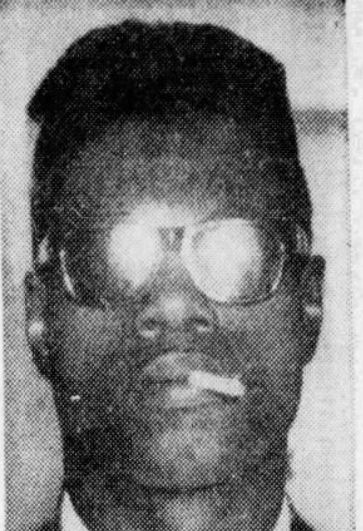
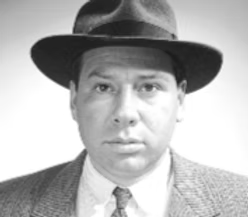
Richard Trenton Chase: The "Vampire of Sacramento"
Richard Trenton Chase was an American serial killer whose brief but extraordinarily violent murder spree terrorized Sacramento, California, during the winter of 1977 and 1978. Known after his arrest as the "Vampire of Sacramento," Chase murdered six people between December 29, 1977, and January 27, 1978. His crimes involved shootings, home invasions, postmortem mutilation, cannibalism, and the consumption of his victims' blood. His victims ranged from a 51-year-old father to a 22-month-old child.
Unlike offenders who carefully selected and stalked particular victims, Chase often appeared to choose people almost randomly. He later described testing doors as he wandered through residential neighborhoods. In his delusional thinking, an unlocked door represented permission to enter, while a locked door meant he should move on. This behavior made his attacks particularly frightening because his victims had little or no connection to him and generally had no reason to believe they were in danger.
Early Life and Severe Mental Deterioration
Richard Trenton Chase was born on May 23, 1950, in Santa Clara County, California. During his early adulthood, his behavior became increasingly unstable. He abused drugs and developed severe paranoid and physical delusions. At various times he believed that his heart was shrinking, that his blood was disappearing or turning into powder, that portions of his body were malfunctioning, and that outside forces were poisoning or manipulating him.
Chase received psychiatric treatment and was diagnosed with severe psychotic illness, including paranoid schizophrenia. His behavior became so disturbed that he spent periods in psychiatric institutions. Medical personnel encountered a man who was disorganized, suspicious, physically neglected, and consumed by bizarre beliefs about his body and blood.
Long before he attacked people, Chase killed animals. He drank animal blood and consumed animal tissue because he believed doing so was necessary to keep himself alive. This fixation on blood eventually became one of the defining characteristics of his later murders. By late 1977, his psychological condition had deteriorated dramatically, and his behavior was becoming increasingly dangerous.
The .22-Caliber Pistol and Escalation Toward Murder
On December 2, 1977, Chase purchased a .22-caliber semiautomatic pistol. After the required waiting period, he obtained the weapon later that month. Neighbors subsequently heard gunfire coming from his apartment, where he apparently practiced firing the weapon.
His actions outside the apartment also became more threatening. He prowled neighborhoods, entered homes, stole property, killed animals, and fired his gun recklessly. By the end of December, the violence that had previously been directed primarily toward animals escalated into murder.
The Murder of Ambrose Griffin - December 29, 1977
Chase's first confirmed human victim was 51-year-old Ambrose Edward Griffin, an engineer and father who lived in Sacramento. On December 29, 1977, Griffin and his wife had returned home from shopping. Griffin was outside carrying groceries between the family vehicle and the house when gunfire suddenly erupted.
Chase fired from a passing vehicle. One bullet missed Griffin, while another struck him in the chest. Griffin collapsed in front of his wife. He was rushed for medical treatment but died from the gunshot wound.
The killing initially appeared completely random. Griffin had no known relationship with the shooter, and investigators had little evidence indicating why he had been targeted. The seemingly motiveless shooting would only later be connected with Chase as Sacramento was confronted with a far more disturbing series of crimes.
The Murder of Teresa Wallin - January 23, 1978
On January 23, 1978, Chase entered the Sacramento home of 22-year-old Teresa Lyn Wallin on Tioga Way. Wallin was approximately three months pregnant. She was preparing to take garbage outside when she encountered Chase, who had entered through an unlocked door.
Chase opened fire with his .22-caliber pistol. Wallin was struck several times, including a fatal close-range gunshot to the head. After killing her, Chase dragged her body into a bedroom. The attack then continued after her death.
Chase used a knife from the home to mutilate Wallin's body. Investigators determined that he opened portions of her torso, removed or disturbed internal tissue and organs, and collected and consumed blood. Authorities also found evidence of postmortem sexual abuse. The crime scene demonstrated that Chase's obsession with blood and his increasingly extreme delusions had become directly connected with his murders.
Wallin's husband returned home and discovered her body. The sheer violence of the scene immediately convinced investigators that they were dealing with an unusually dangerous offender. Evidence from the residence would later help police recognize similarities between Wallin's murder and Chase's final attacks.
The Merrywood Drive Murders - January 27, 1978
Only four days after killing Teresa Wallin, Chase entered another Sacramento residence, this time on Merrywood Drive. The home belonged to Evelyn E. Miroth, who was 36 years old. Her six-year-old son, Jason Bradford Miroth, was there, as was her 22-month-old nephew, David Michael Ferreira. Daniel James Meredith, a longtime friend of the family and Jason's godfather, was also present.
The exact sequence of the four murders has never been established with complete certainty, but physical evidence showed that Chase attacked the occupants with his .22-caliber pistol. Daniel Meredith was shot in the head. Evelyn Miroth and the two children were also shot and killed inside the residence.
Chase then mutilated Evelyn Miroth's body with knives obtained from the house. As in the murder of Teresa Wallin, the attack involved blood consumption, mutilation, cannibalistic behavior, and evidence of postmortem sexual abuse. The similarities between the two crime scenes quickly suggested to detectives that the same person had committed both attacks.
During the assault, someone came to the residence, causing Chase to leave. He took Daniel Meredith's vehicle and removed 22-month-old David Ferreira's body from the house. David's disappearance initially led to a large search because investigators did not immediately know whether the child might still be alive. His remains were discovered weeks later in a cardboard box that had been discarded in a vacant area.
Confirmed Victims
- Ambrose Edward Griffin, 51 - December 29, 1977 - Sacramento, California: Griffin was outside his home after returning from a shopping trip when Chase fired at him from a passing vehicle. A bullet struck Griffin in the chest, causing a fatal wound.
- Teresa Lyn Wallin, 22 - January 23, 1978 - Tioga Way, Sacramento, California: Wallin, who was approximately three months pregnant, encountered Chase after he entered her home through an unlocked door. She was shot several times and killed before Chase mutilated her body and consumed her blood.
- Evelyn E. Miroth, 36 - January 27, 1978 - Merrywood Drive, Sacramento, California: Miroth was shot and killed inside her home. Chase subsequently mutilated her body and engaged in cannibalistic and other postmortem acts.
- Daniel James Meredith - January 27, 1978 - Merrywood Drive, Sacramento, California: Meredith, a longtime family friend and Jason Miroth's godfather, was shot in the head inside the Miroth residence. Chase later stole his vehicle.
- Jason Bradford Miroth, 6 - January 27, 1978 - Merrywood Drive, Sacramento, California: Jason, Evelyn Miroth's young son, was shot and killed during the attack on the family's home.
- David Michael Ferreira, 22 months - January 27, 1978 - Merrywood Drive, Sacramento, California: David, Evelyn Miroth's nephew, was shot and killed while she was caring for him. Chase removed the child's body from the house after the murders. His remains were recovered several weeks later.
The Investigation
The January 27 murders produced evidence that investigators could connect with the Wallin killing. Bloody handprints and shoe impressions were left at the Miroth crime scene, and the extreme nature of the mutilation bore unmistakable similarities to the January 23 attack.
Witnesses also provided information about a disheveled man who had been wandering through Sacramento neighborhoods. Several people remembered a suspicious man wearing a distinctive orange parka. Investigators began developing a description and psychological profile of the likely offender.
An important lead came from a woman who had known Richard Chase in high school. She had encountered him shortly before the murders and was alarmed by his deteriorated appearance and strange behavior. Her information helped investigators focus their attention on Chase.
Arrest - January 28, 1978
Police went to Chase's Sacramento apartment on January 28, 1978, only one day after the Merrywood Drive murders. Chase initially refused to open the door. Officers remained nearby, and when he eventually emerged from the apartment, they arrested him after a brief struggle.
The evidence discovered in connection with Chase was overwhelming. He was carrying property connected with Daniel Meredith, and investigators searching his apartment encountered bloodstained items, weapons, animal remains, and human biological material. Blood was found on numerous surfaces and household objects. The apartment provided investigators with powerful physical evidence connecting Chase to the murders and confirming the horrific nature of his obsession with blood.
Police also found material suggesting that Chase had been contemplating future violence. A calendar contained the word "Today" written on the dates corresponding with some of the murders as well as on numerous future dates. Although it cannot be known with certainty what Chase intended to do on those later dates, investigators feared that his attacks would have continued if he had not been captured.
Interrogation and Mental Illness
Chase's severe mental illness became a major issue after his arrest. He expressed extraordinary delusions about his body, blood, poisons, conspiracies, and other imagined threats. His psychiatric history was undeniable, and professionals who examined him recognized that he suffered from serious psychosis.
At the same time, prosecutors argued that mental illness alone did not establish legal insanity. The central question was whether Chase understood the nature of his actions and knew that killing his victims was legally and morally wrong. Evidence that he fled crime scenes, stole a victim's vehicle, disposed of evidence, and attempted to avoid police became significant during the legal proceedings.
Trial and Conviction
Chase went on trial in 1979 for six counts of murder. His defense argued that he was legally insane because of his severe psychiatric disorders and delusions. Prosecutors maintained that although Chase was unquestionably mentally ill, he still understood enough about his actions to be held criminally responsible.
In May 1979, the jury convicted Richard Trenton Chase of six counts of first-degree murder. The jury also concluded that he was legally sane at the time of the crimes. During the penalty phase, jurors recommended that he receive the death penalty.
On June 8, 1979, Chase was formally sentenced to death. He was transferred to California's San Quentin State Prison to await execution.
Death at San Quentin - December 26, 1980
Richard Trenton Chase never reached the execution chamber. On December 26, 1980, prison personnel found him dead in his cell at San Quentin. He had died by suicide after overdosing on medication that he had accumulated while incarcerated. He was 30 years old.
Legacy of the Sacramento Murders
Richard Chase's murders remain among the most disturbing crimes in Sacramento history because of their randomness, the extreme postmortem violence, and the very short period in which six people were killed. From the murder of Ambrose Griffin on December 29, 1977, to the four killings at the Miroth residence on January 27, 1978, less than one month passed.
The case also became widely discussed in criminal profiling because Chase displayed many characteristics later associated with a severely disorganized offender. He left substantial evidence behind, selected victims opportunistically, entered residences with little planning, and made minimal effort to conceal the physical evidence of his crimes.
Although Chase became notorious under names such as the "Vampire of Sacramento," the lasting human cost of the case was borne by the six people he murdered and the families they left behind. Ambrose Griffin, Teresa Wallin and her unborn child, Evelyn Miroth, Daniel Meredith, Jason Miroth, and David Ferreira were ordinary people whose lives intersected with Chase largely through chance. Their deaths between December 29, 1977, and January 27, 1978, brought an abrupt end to one of the most violent serial murder episodes in California history.