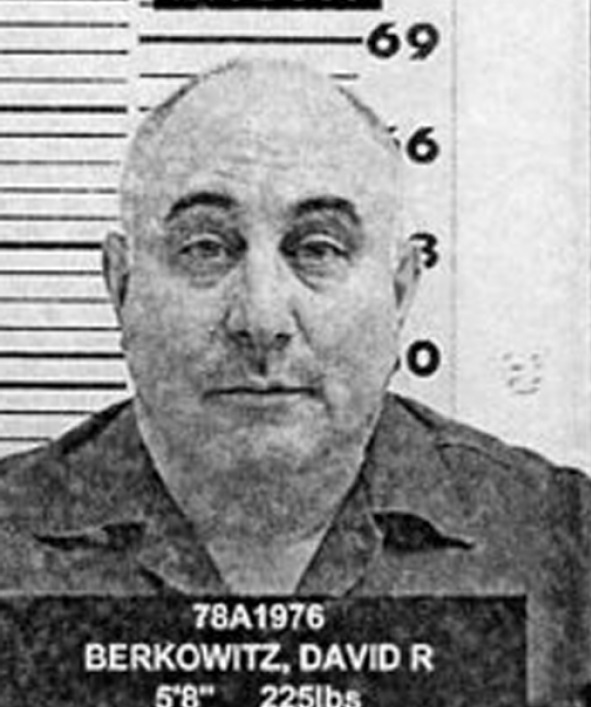
David Richard Berkowitz: The “Son of Sam” Serial Killer
Background and Early Life
David Richard Berkowitz became one of the most notorious serial killers in New York City history after carrying out a series of shootings that terrorized the city between July 1976 and July 1977. During the approximately year-long series of attacks, Berkowitz killed six people and wounded seven others, most of them young adults. His crimes became nationally known first under the nickname the “.44 Caliber Killer” and later as the “Son of Sam.”
Berkowitz was born Richard David Falco in Brooklyn, New York, on June 1, 1953. He was adopted as an infant by Nathan and Pearl Berkowitz and raised in the Bronx. His adoptive mother died when he was a teenager, an event that was reportedly devastating to him. As he grew older, Berkowitz became increasingly isolated and experienced periods of anger and emotional instability.
In 1971, Berkowitz entered the United States Army. He served until 1974 and spent part of his military service in South Korea. After leaving the Army, he returned to New York, where he held several jobs before eventually working as a postal employee. During this period, his behavior reportedly became increasingly disturbing. Berkowitz later admitted setting numerous fires and recording some of them in personal journals.
Violence Before the .44-Caliber Shootings
Before the murders for which he became infamous, Berkowitz had already begun attacking people. On December 24, 1975, he attacked teenager Michelle Forman with a knife in the Bronx. Forman survived. Berkowitz later described stabbing attacks as an early stage in the escalation of his violence, although the shooting campaign beginning the following summer became the series definitively associated with the Son of Sam case.
The Murder of Donna Lauria
During the early morning hours of July 29, 1976, 18-year-old Donna Lauria and her friend Jody Valenti were sitting inside a parked car outside Lauria's apartment building on Buhre Avenue in the Bronx. A man approached the vehicle, produced a .44-caliber revolver and suddenly opened fire.
Lauria was fatally wounded and died at the scene on July 29, 1976. Valenti was wounded but survived. There was no apparent robbery, argument or personal connection between the women and the gunman. At the time, investigators had little reason to know that the seemingly inexplicable shooting was the beginning of a series of attacks that would eventually grip New York City with fear.
The Shooting of Carl Denaro
On October 23, 1976, Carl Denaro and Rosemary Keenan were sitting together in a parked car near Bowne Park in Flushing, Queens. Without warning, several shots were fired into the automobile. Denaro was struck in the head and suffered a severe injury, while Keenan escaped without a gunshot wound.
Denaro survived after extensive medical treatment. Investigators determined that .44-caliber ammunition had been used, but the connection with the Lauria murder was not immediately recognized. The random nature of the attack and the absence of an obvious motive made identifying the shooter extremely difficult.
The Attack on Donna DeMasi and Joanne Lomino
Shortly after midnight on November 27, 1976, teenagers Donna DeMasi and Joanne Lomino were near Lomino's home in Queens after returning from a movie. A man approached them and appeared to ask for directions. He then drew a revolver and opened fire.
DeMasi was wounded in the neck and survived. Lomino was shot in the back and suffered devastating injuries that left her paralyzed. Unlike some of the earlier victims, the young women had seen their attacker, providing investigators with information that could be used in attempts to develop a description of the gunman.
The Murder of Christine Freund
During the early morning of January 30, 1977, 26-year-old Christine Freund and her fiancé, John Diel, were sitting inside Diel's automobile in Forest Hills, Queens, following an evening out. A gunman approached and fired several rounds into the vehicle.
Freund was struck by two bullets and was taken to a hospital, where she died from her injuries several hours later on January 30, 1977. Diel survived. Ballistics evidence and similarities between the attacks strengthened investigators' suspicions that several of the seemingly random shootings were connected.
The unusual caliber of the weapon became particularly important. Investigators determined that a .44-caliber Charter Arms Bulldog revolver was associated with the attacks, leading newspapers to begin referring to the unknown gunman as the “.44 Caliber Killer.”
The Murder of Virginia Voskerichian
On the evening of March 8, 1977, Barnard College student Virginia Voskerichian was walking home in Forest Hills, Queens. The location was close to where Christine Freund had been attacked several weeks earlier.
Berkowitz approached Voskerichian on the street and fired at her at close range. She was fatally wounded and died at the scene on March 8, 1977. The recovery and examination of ballistic evidence from the shooting provided investigators with additional evidence connecting the murder to the earlier .44-caliber attacks.
By this stage, detectives increasingly understood that they were dealing with a repeat killer rather than a collection of unrelated shootings. New York police assembled a large investigative effort to identify and capture the gunman.
The Murders of Valentina Suriani and Alexander Esau
In the early morning hours of April 17, 1977, 18-year-old Valentina Suriani and 20-year-old Alexander Esau were sitting together inside a parked car along the Hutchinson River Parkway service road in the Bronx. The location was only a short distance from the neighborhood where Donna Lauria had been murdered the previous year.
Berkowitz approached the vehicle and opened fire. Suriani was fatally wounded and died at the scene. Esau was also critically wounded and died after being transported to a hospital. Both deaths occurred on April 17, 1977.
This double murder became a turning point in the investigation because the killer deliberately left behind a handwritten letter addressed to NYPD Captain Joseph Borrelli. In the letter, the writer taunted police and identified himself using the name that would soon become infamous: “Son of Sam.”
The Son of Sam Letters
The letters transformed the case from an already frightening series of shootings into a public spectacle. The writer used bizarre language, discussed killing and mocked the investigators attempting to find him. Another letter was later mailed to New York Daily News columnist Jimmy Breslin.
The publicity surrounding the letters greatly increased public fear. Newspapers published extensive coverage of the killings, police investigation and mysterious communications. New Yorkers followed every development as investigators searched for the person responsible.
Berkowitz would later claim that “Sam” referred to his neighbor, Sam Carr. After his arrest, Berkowitz initially told investigators that a demonic force communicating through Carr's dog had commanded him to kill. He later acknowledged that the supernatural explanation was fabricated or greatly exaggerated. Whatever explanation Berkowitz gave for his behavior, investigators established that he deliberately selected victims, carried a firearm to the scenes and repeatedly fled after his attacks.
The Bayside Shooting
On June 26, 1977, Judy Placido and Salvatore “Sal” Lupo left a discotheque in Bayside, Queens, and sat together inside a parked automobile. Berkowitz again approached a vehicle containing a young couple and opened fire.
Both Placido and Lupo were wounded, but both survived. The fact that the Son of Sam had struck again despite an enormous police investigation intensified the growing anxiety throughout New York City.
The Murder of Stacy Moskowitz
During the early morning of July 31, 1977, 20-year-old Stacy Moskowitz and 20-year-old Robert “Bobby” Violante were sitting in a parked car in the Bath Beach section of Brooklyn following a date. Berkowitz approached the vehicle and fired into it.
Both victims suffered catastrophic head injuries. Violante survived but lost his left eye and suffered severe damage to the vision in his right eye. Moskowitz was taken to a hospital in critical condition.
Although the shooting occurred on July 31, Moskowitz did not die that day. She remained alive for approximately 39 hours before dying from her injuries at about 5:30 p.m. on August 1, 1977. She was the sixth and final murder victim of Berkowitz's confirmed .44-caliber shooting series.
Confirmed Murder Victims
- Donna Lauria – Died July 29, 1976. Lauria, 18, was shot while sitting in a parked car outside her home on Buhre Avenue in the Bronx. She died at the scene. Her friend Jody Valenti was wounded and survived.
- Christine Freund – Died January 30, 1977. Freund, 26, was shot while sitting inside a car with her fiancé, John Diel, in Forest Hills, Queens. She was transported to a hospital but died several hours after the shooting.
- Virginia Voskerichian – Died March 8, 1977. She was attacked while walking home in Forest Hills, Queens, close to the location of the Freund shooting. She died at the scene.
- Valentina Suriani – Died April 17, 1977. Suriani, 18, was shot while sitting in a parked vehicle along the Hutchinson River Parkway service road in the Bronx. She died at the scene.
- Alexander Esau – Died April 17, 1977. Esau, 20, was shot during the same attack that killed Valentina Suriani in the Bronx. He was taken to a hospital but died from his wounds later that day.
- Stacy Moskowitz – Died August 1, 1977. Moskowitz, 20, was shot during the early morning of July 31 while sitting in a parked car in Bath Beach, Brooklyn. She survived for approximately 39 hours before dying from her injuries on August 1.
Survivors of the .44-Caliber Attacks
- Jody Valenti – Wounded July 29, 1976, in the Bronx during the attack that killed Donna Lauria.
- Carl Denaro – Critically wounded October 23, 1976, near Bowne Park in Flushing, Queens. He survived a gunshot wound to the head.
- Donna DeMasi – Wounded November 27, 1976, near Joanne Lomino's home in Queens. She survived a gunshot wound to the neck.
- Joanne Lomino – Wounded November 27, 1976, in Queens. A bullet struck her in the back, leaving her paralyzed.
- Judy Placido – Wounded June 26, 1977, while sitting in a parked car in Bayside, Queens. She survived.
- Salvatore “Sal” Lupo – Wounded June 26, 1977, during the same Bayside attack as Judy Placido. He survived.
- Robert “Bobby” Violante – Wounded July 31, 1977, in Bath Beach, Brooklyn, during the attack that ultimately killed Stacy Moskowitz. Violante survived but suffered permanent damage to his eyesight, including the loss of his left eye.
The Investigation and Break in the Case
The investigation into the Son of Sam shootings became one of the largest manhunts New York City had undertaken. Detectives compared ballistic evidence, interviewed witnesses, followed thousands of tips and attempted to reconcile varying descriptions of the killer. The apparently random selection of victims made traditional investigative methods especially difficult because there was often no relationship between Berkowitz and the people he attacked.
The crucial break came after the Moskowitz-Violante shooting in Brooklyn. Investigators learned that parking tickets had been issued in the area around the time of the attack. One of the ticketed vehicles was registered to David Berkowitz of Yonkers.
At roughly the same time, authorities in Yonkers had become suspicious of Berkowitz because of threatening letters connected to his neighbors, including Sam Carr, and an incident in which Carr's Labrador retriever, Harvey, had been shot and wounded. The separate lines of investigation began converging on the same man.
Arrest of David Berkowitz
On August 10, 1977, police went to Berkowitz's residence on Pine Street in Yonkers. Investigators located his vehicle and ultimately took him into custody as he left his apartment building. Police recovered the .44-caliber Charter Arms Bulldog revolver associated with the Son of Sam shootings.
His arrest brought an abrupt end to more than a year of fear. Berkowitz admitted responsibility for the shootings and provided investigators with details about the crimes. The previously unknown postal worker was suddenly identified as the man whose attacks and letters had dominated New York headlines.
Guilty Pleas and Sentencing
Questions initially arose over whether Berkowitz was mentally competent to stand trial. Psychiatrists examined him, and he was eventually found competent. Rather than proceeding through a lengthy murder trial, Berkowitz pleaded guilty on May 8, 1978, to the six murders.
On June 12, 1978, he was sentenced to six terms of 25 years to life for the murders, along with additional punishment associated with the attacks on survivors. He entered the New York State prison system, where he has remained incarcerated for decades.
The “Son of Sam” Explanation
Immediately after his arrest, Berkowitz gave authorities a bizarre explanation for his crimes. He claimed that supernatural forces and demons had influenced him and said that his neighbor Sam Carr's dog was being used to transmit commands ordering him to kill. The story became one of the most famous elements of the case.
Berkowitz later admitted that the story about receiving murderous commands from a demonically possessed dog was not a truthful explanation of the killings. His later statements made clear that the attacks involved deliberate choices rather than uncontrollable supernatural commands. His changing accounts have continued to generate discussion about his psychology and motives.
Impact on New York City
The Son of Sam murders created an atmosphere of extraordinary fear during the summer of 1977. News coverage was relentless, and many New Yorkers altered their routines because the victims appeared to have been selected at random. Young couples became particularly cautious about sitting in parked cars at night, while some women changed their hairstyles because of widespread reports that the killer preferred women with long, dark hair.
The attacks also demonstrated the difficulties that can arise when crimes cross precinct and borough boundaries. The shootings occurred in the Bronx, Queens and Brooklyn, requiring investigators to compare evidence from multiple jurisdictions and recognize common characteristics among cases that initially appeared unrelated.
The Son of Sam Law
The enormous public interest in Berkowitz continued after his arrest. When it became known that criminals could potentially earn substantial amounts of money by selling the rights to stories about their crimes, New York adopted legislation designed to prevent offenders from profiting while their victims received nothing. The legislation became popularly known as the “Son of Sam law.”
The original New York law was later struck down on constitutional grounds, but the Berkowitz case permanently associated the phrase “Son of Sam law” with statutes designed to redirect or restrict profits criminals might receive from exploiting the stories of their offenses.
Legacy of the Case
David Berkowitz's crimes remain among the most infamous serial murder cases in American history. His attacks were notable not because of an unusually large number of murders, but because of their randomness, the intense media attention, his threatening letters and the widespread fear produced across one of the world's largest cities.
Behind the nickname and sensational headlines were six people whose lives were taken: Donna Lauria, Christine Freund, Virginia Voskerichian, Valentina Suriani, Alexander Esau and Stacy Moskowitz. Seven additional people survived being shot, several with permanent and life-changing injuries. Their experiences remain central to understanding the true impact of the Son of Sam murders.
Berkowitz's arrest on August 10, 1977, ended the immediate threat, but the case continued to influence criminal investigations, media coverage of serial offenders and laws concerning criminals who attempt to profit from their notoriety. More than anything, the year-long series of shootings remains a reminder of the devastating effect a single offender can have not only on individual victims and their families, but on an entire city.