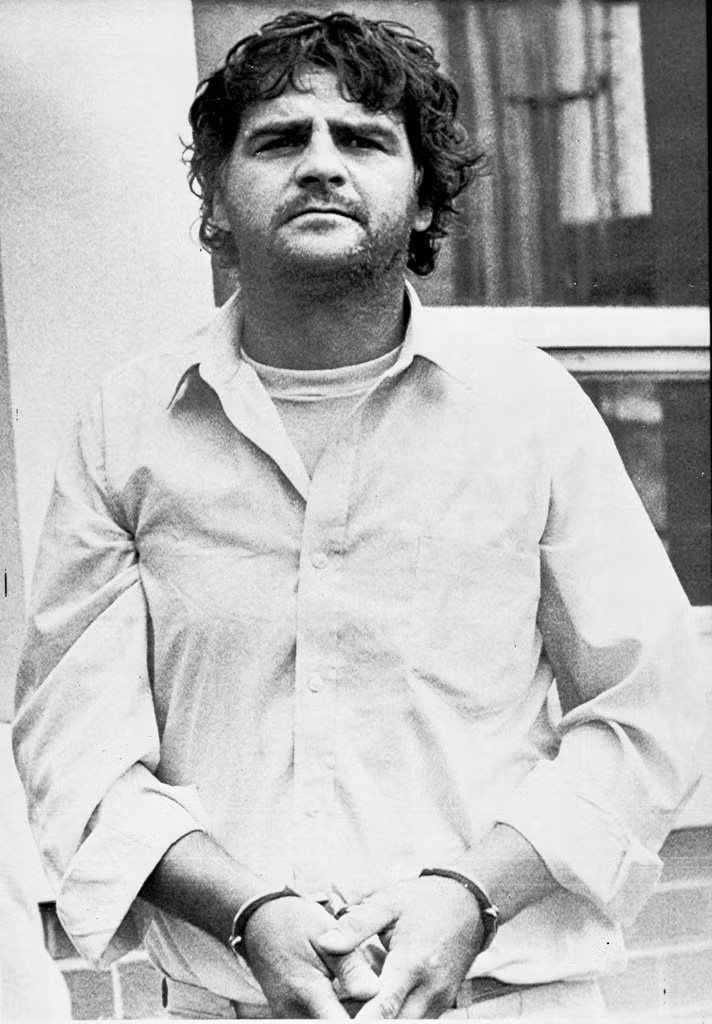
Charles William Davis: The Baltimore Ambulance Killer
Overview
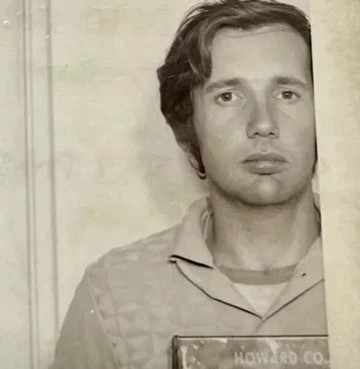
Charles William Davis Jr. was a serial rapist and murderer who terrorized the Baltimore, Maryland, area between 1974 and 1977. The son of a police lieutenant and a volunteer ambulance worker himself, Davis used his knowledge of law enforcement procedures to evade capture for years. He was known for his brazen tactic of calling authorities to report the location of his victims' bodies, sometimes even participating in the emergency response. Davis was ultimately convicted of three murders and is serving multiple life sentences. In 2025, nearly 50 years after the crime, he confessed to a fourth murder, bringing a long-awaited, albeit partial, resolution to another family.
Early Life and Background
Charles William Davis Jr. was born in Baltimore, Maryland, on June 18, 1947. His father was a lieutenant with the local police department, which gave Davis an early and intimate understanding of police work. In his adult life, he drifted between various jobs, including electrician and security guard. He also served as a volunteer assistant chief for the Baltimore Volunteer Rescue Squad. This role not only provided him with medical knowledge but also put him in close contact with law enforcement officers, allowing him to study their investigative techniques.
In the early 1970s, Davis was married and had a son, but the marriage ended in divorce, and he lost custody of his child. This loss reportedly fueled a deep-seated anger that would manifest in extreme violence. He had a minor criminal record, including a handgun violation in 1973. His work and volunteer activities gave him a veneer of respectability that masked the violent predator he was becoming.
The Murders
Davis's violent spree began in late 1974 with a brutal attack on a 23-year-old woman. After she was involved in a traffic accident, Davis offered his assistance, only to drag her into a wooded area where he raped and attempted to strangle her. He left her for dead, but she survived and provided police with a composite sketch of her attacker.
The first confirmed murder occurred on August 24, 1975. Davis met 20-year-old Roseann "Ann" Sturtz at a bar in Howard County. He lured her to a secluded area, where he sexually assaulted and strangled her. Her body was found four months later, on December 15, in a wooded area in Columbia. For decades, her case remained unsolved.
On September 11, 1975, Davis went on a date with 16-year-old Lydia Victoria Norman. When she refused his sexual advances, he strangled her and left her body near the Baltimore-Washington International Airport in Hanover.
On New Year's Eve of 1975, Davis committed his next murder in a case of mistaken identity. Intending to frighten a social worker he blamed for losing custody of his son, he lured a woman from a nightclub parking lot. The woman was not the social worker but 24-year-old Kathleen Diane Cook, the daughter-in-law of a Maryland State Police lieutenant colonel. When Cook realized his mistake and laughed at him, Davis became enraged. He drove her to a vacant lot in Catonsville, raped her, and then shot her four times in the chest. When she survived the gunshots and tried to get help, he stabbed her to death.
On August 24, 1976, Davis targeted 23-year-old Peggy Ellen Pumpian. She had pulled over on Interstate 95 and asked him for directions. Davis followed her, convinced her to pull over again by offering a better route, and got into her car. After drawing a map, he pulled out a revolver, robbed her, and raped her at gunpoint. When Pumpian fought back, he shot her five times in the chest, killing her. He then wiped his fingerprints from her car and fled.
Throughout his active years, Davis also committed several other rapes where he allowed the victims to live.
The Victims
- Roseann "Ann" Michelle Sturtz, 20 — Last seen alive on August 24, 1975, outside a Baltimore club. Her family endured nearly 50 years of uncertainty before her killer was definitively identified, bringing them a measure of closure.
- Lydia Victoria Norman, 16 — Murdered on September 11, 1975, after a date. She was a young girl whose life was cut tragically short when she refused her attacker's advances.
- Kathleen Diane Cook, 24 — Killed on December 31, 1975, after being mistaken for someone else. She was celebrating New Year's Eve with her husband and friends when she was abducted and murdered.
- Peggy Ellen Pumpian, 23 — Murdered on August 24, 1976, after stopping to ask for directions. She was the beloved daughter of a retired Pikesville clothier and a sister.
Investigation and Capture
Davis's knowledge of police procedures helped him avoid suspicion for some time. A major break in the case came from ballistics. The bullets recovered from Peggy Pumpian's body matched those used to kill Kathleen Cook, confirming police were hunting for a single individual.
Davis had been questioned in connection with the Cook and Pumpian murders, but there was insufficient evidence to charge him. The investigation gained momentum in 1977. On July 20, two state troopers recognized Davis, who was driving a Volkswagen with stolen license plates, and pulled him over. A search of his car revealed a stolen CB radio that was later traced to a credit card stolen from a rape victim, Carol Willingham. Willingham subsequently identified Davis as her attacker.
With an arrest warrant issued for the rape and robbery of Willingham, police moved to apprehend Davis, but he had already fled Maryland. An informant tipped off authorities that Davis was in Reno, Nevada, working as an ambulance dispatcher. On September 1, 1977, he was arrested by local police.
During his extradition back to Baltimore, Davis began to confess. On the trip, he told the escorting troopers that he wanted to talk about the Pumpian murder. Back in Maryland, after being read his Miranda rights, he gave a full, videotaped confession to the murders of both Peggy Pumpian and Kathleen Cook.
Trial and Sentence
Charles William Davis Jr.'s trial for the murder of Kathleen Cook was moved to Allegany County. In early 1978, a jury found him guilty of first-degree murder and use of a handgun in the commission of a crime. On April 12, 1978, he was sentenced to life in prison.
Following this conviction, he stood trial for the murder of Peggy Pumpian. His defense attorney's motion for a mistrial was granted, but he was found guilty in a second trial in April 1979 and received a second life sentence. His defense's claim that the confessions were coerced was rejected by the court.
In early 1980, Davis was tried and convicted for the murder of Lydia Norman, receiving a third life sentence. In total, he was sentenced to three life sentences plus 45 years and has been incarcerated at the Jessup Correctional Institution in Jessup, Maryland, since 1978.
Cold Case Breakthrough
For decades, the 1975 murder of Roseann "Ann" Sturtz remained one of Howard County's oldest cold cases. Investigators had long suspected Davis's involvement. In a 1981 interview with detectives, Davis had even discussed the case in exchange for full immunity from prosecution for that crime. However, when shown a high school photograph of Sturtz, he claimed not to recognize her, and the case went cold again.
In 2022, a cold case detective, Corporal Wade Zufall, reopened the investigation. He discovered the 1981 cassette tape of Davis's interview and the immunity letter. In November 2024, Zufall interviewed Davis, now in his late 70s. He showed Davis a more recent photograph of Sturtz, taken shortly before her death, which clearly showed a scar on her cheek. Upon seeing this new photo, Davis immediately identified her and confessed to her murder, stating he wanted to provide closure for her family.
Due to the 1981 immunity agreement, Davis will not face charges for the murder of Roseann Sturtz. However, the confession officially closed the case, finally providing answers to her family after nearly 50 years.
Aftermath and Legacy
Charles William Davis Jr. remains imprisoned, a chilling example of a predator who used his position of trust and inside knowledge to commit horrific crimes. His case was studied by FBI profiler John Douglas as part of the Bureau's efforts to understand the psychology of serial killers. The recent resolution of the Roseann Sturtz case highlights the dedication of cold case detectives and the profound, long-lasting impact these crimes have on the families of victims, who waited half a century for the truth. In a statement, Sturtz's family expressed their gratitude for the closure they had prayed for since 1975.