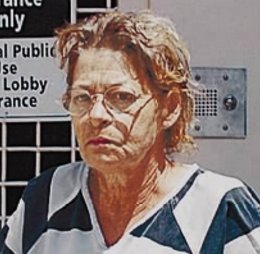
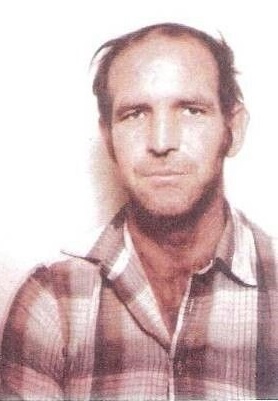
Nathaniel White: The Hudson Valley Serial Killer
Six Murders in New York’s Hudson Valley
Nathaniel White was an American serial killer who murdered six women and girls in New York’s Hudson Valley between March 1991 and July 1992. His victims ranged from 14 to 34 years old and included women he knew personally, a child related to his girlfriend, and women he encountered socially. He used knives and severe physical beatings, leaving several victims in isolated areas around Middletown and Goshen in Orange County.
White’s crimes were especially disturbing because most of the murders occurred shortly after he had been released from prison. His criminal history had already demonstrated a pattern of violence toward women, yet he returned to the community and rapidly escalated into a concentrated series of killings. By the time investigators recognized the connection among the cases, six lives had been taken.
Early Life and Criminal History
Nathaniel White was born on July 28, 1960, in Poughkeepsie, New York. He graduated from Poughkeepsie High School in 1979 and served in the United States Army from approximately 1980 until 1983. During the period of the murders, he lived in the Town of Wallkill near Middletown.
White accumulated a serious criminal record before becoming a serial killer. He was convicted of armed robbery in the 1980s and later attempted to abduct a 16-year-old girl. He was accused of forcing the teenager into a vehicle at knifepoint, but she managed to escape. White eventually pleaded guilty to a reduced misdemeanor charge arising from the incident.
The plea agreement allowed White to receive a comparatively short sentence. He was already awaiting incarceration when he committed his first known murder in March 1991. After serving approximately one year, he was released on parole in April 1992. Within several weeks of returning to Orange County, he began killing again.
The Murder of Juliana R. Frank
White’s first known victim was Juliana R. Frank, a 29-year-old Middletown woman who was pregnant with her third child. She was killed on March 25, 1991. Her unclothed body was abandoned near disused railroad tracks in Middletown.
Frank had been stabbed and deliberately positioned after her death. White later made the sensational claim that he had copied elements of the attack from a violent scene in the movie RoboCop 2. He said that he imitated the manner in which a character’s throat and torso were cut and then arranged Frank’s body in a similar position.
White’s attempt to blame or credit a motion picture did not explain the larger pattern behind his violence. His history of armed robbery, attempted abduction, sexual aggression, and threats toward women had begun well before the film was released. Frank’s murder remained unsolved while White entered prison on the reduced charge connected to the attempted abduction.
Release from Prison and Renewed Violence
White was paroled in April 1992 and returned to the Middletown area. He lived with his girlfriend, Jill Garrison, whose family included 14-year-old Christine Klebbe. Christine had recently completed the eighth grade and was the youngest of White’s victims.
White’s access to people close to his girlfriend placed him in a position of trust. According to later reports, Christine had been asked to provide information concerning allegations that White had sexually abused her and other children. White killed her on June 29, 1992, less than three months after his release from prison.
The Murder of Christine M. Klebbe
Christine Klebbe disappeared on June 29, 1992. Her family reported her missing on July 1. At first, her disappearance was not publicly connected to the other violence occurring in the region.
White stabbed Christine and concealed her body in a rural area near Echo Lake Road in Goshen. She remained missing for more than a month. After his eventual confession, White directed investigators to the location where he had left her. Her remains were recovered on August 4, 1992.
The killing of a 14-year-old member of his girlfriend’s extended family demonstrated that White did not limit his attacks to strangers. He was willing to exploit personal relationships and the trust of people around him. Christine’s murder also occurred shortly before four additional women were killed during July 1992.
The Murder of Laurette Huggins Reviere
Laurette Huggins Reviere was a 34-year-old Middletown mother of three and a close friend of White’s girlfriend. She was killed inside her Middletown residence on July 10, 1992. White stabbed her repeatedly and cut her throat.
Reviere had allowed her children to spend time at the home shared by White and Jill Garrison, demonstrating the level of familiarity between the families. At the time of her murder, she was reportedly preparing to return with her family to St. Vincent and the Grenadines, the Caribbean nation from which she came.
Police found Reviere inside her home. Her death showed that White was prepared to enter the personal spaces of women who knew him and attack them where they should have felt safest. The close relationship between Reviere and White’s household initially made his participation difficult for those around him to comprehend.
The Murders of Angelina Hopkins and Brenda L. Whiteside
On July 20, 1992, cousins Angelina Hopkins and Brenda L. Whiteside visited the Blue Note Tavern in Poughkeepsie. Hopkins was 23 years old, and Whiteside was 20. The women encountered White at the tavern and were last seen leaving with him in his pickup truck.
Both women were beaten to death. The attacks caused catastrophic injuries to their heads and faces. White transported their bodies approximately 35 miles away and left them in woods near an abandoned farmhouse off Harriman Drive in Goshen.
Angelina’s sister, Cecilia Hopkins, had witnessed the women leaving the tavern with White and other men. When the initial missing-person inquiry produced little progress, Cecilia and her mother began asking questions themselves. Their efforts ultimately became crucial to identifying White and connecting him to the missing women.
The bodies of Hopkins and Whiteside were recovered on August 4, 1992, after White directed investigators to the isolated property. Their discovery near one of his other disposal sites established that the rural Goshen area had been used as a dumping ground for multiple victims.
The Murder of Adriane M. Hunter
Adriane M. Hunter, a 27-year-old Middletown mother of two, was White’s final known victim. She was killed during the early morning hours of July 30, 1992. White stabbed her and abandoned her body near the burned remains of the former Hillcrest Manor Restaurant in Goshen.
Hunter’s body was discovered later that same day. Unlike the victims who remained missing for days or weeks, the rapid discovery of her remains immediately gave investigators a fresh crime scene. The location also raised concerns that her death might be connected to other missing women from the region.
The finding of Hunter’s body marked a turning point. New York State Police intensified their investigation, while the family of Angelina Hopkins continued tracing the people who had been at the Blue Note Tavern on the night Angelina and Brenda disappeared.
Verified Victims, Dates and Locations
- Juliana R. Frank, 29: Murdered on March 25, 1991, in Middletown, New York. Her body was left near abandoned railroad tracks. She was pregnant with her third child.
- Christine M. Klebbe, 14: Murdered on June 29, 1992. Her body was concealed near Echo Lake Road in Goshen, New York, and recovered on August 4, 1992.
- Laurette Huggins Reviere, 34: Murdered on July 10, 1992, inside her home in Middletown, New York.
- Angelina Hopkins, 23: Murdered on or shortly after July 20, 1992. Her body was left in a wooded area near Harriman Drive in Goshen, New York, and recovered on August 4, 1992.
- Brenda L. Whiteside, 20: Murdered on or shortly after July 20, 1992. Her body was found with Angelina Hopkins near an abandoned farmhouse in Goshen, New York, on August 4, 1992.
- Adriane M. Hunter, 27: Murdered on July 30, 1992. Her body was discovered that day near the remains of the Hillcrest Manor Restaurant in Goshen, New York.
The Investigation Closes In
The families of Angelina Hopkins and Brenda Whiteside played a major role in advancing the investigation. Cecilia Hopkins remembered the men who had been with the cousins at the Blue Note Tavern. She and her mother returned to the establishment and attempted to identify the people who had last been seen with them.
On August 2, 1992, White returned to the tavern. Cecilia recognized him as one of the men who had left with Angelina and Brenda. Police took White into custody and questioned him about the disappearances and the recent murder of Adriane Hunter.
During interrogation, White confessed to killing six victims. He subsequently accompanied investigators into rural sections of Goshen and showed them where he had concealed the remains of Christine Klebbe, Angelina Hopkins, and Brenda Whiteside. The discoveries confirmed his confession and connected him to murders that had previously appeared to be separate cases.
Confession and Attempted Explanations
White offered several explanations for his behavior. He claimed that violent entertainment influenced the manner in which he killed Juliana Frank. He also blamed alcohol and said that he heard voices urging him to attack. Family members of his victims rejected these statements as excuses intended to shift responsibility away from his own deliberate actions.
The murders displayed planning and concealment. White selected vulnerable victims, moved some of their bodies, used isolated disposal sites, and continued killing despite knowing that several women associated with him had disappeared. He was also capable of appearing calm in social settings and returning to the same tavern where he had met two of his victims.
His pattern varied between stabbing and beating, but the attacks were consistently excessive and deeply personal. Some victims were killed inside their homes, while others were taken to remote areas. The repeated injuries and concealment of bodies demonstrated an effort not merely to kill, but to dominate his victims and delay discovery.
Indictment and Trial
An Orange County grand jury initially indicted White for the murder of Christine Klebbe on August 7, 1992. Five additional counts of second-degree murder were added on September 9, covering the deaths of Juliana Frank, Laurette Reviere, Angelina Hopkins, Brenda Whiteside, and Adriane Hunter.
White entered a plea of not guilty by reason of mental disease or defect. His defense attempted to establish that psychological problems prevented him from understanding or controlling his conduct. Prosecutors countered that his actions before and after the murders demonstrated awareness, calculation, and an ability to appreciate the criminal nature of what he had done.
On April 14, 1993, a jury found Nathaniel White guilty of all six counts of second-degree murder. The verdict rejected his insanity defense and held him legally responsible for every killing included in the indictment.
Sentence of 150 Years to Life
On May 27, 1993, White was sentenced to six consecutive prison terms of 25 years to life, producing a combined sentence of 150 years to life. The consecutive terms ensured that each victim was individually represented in the punishment and made White’s eventual release extraordinarily unlikely.
The sentencing brought a measure of legal resolution, but it could not repair the damage caused to six families. Several of the victims were mothers, one was pregnant, and the youngest had only recently completed middle school. Their deaths left children without parents, parents without daughters, and communities struggling to understand how a known violent offender had been permitted to return to the area.
Criticism of the Criminal Justice and Parole Systems
White’s case led to intense criticism of the decisions made before his 1992 release. He had a history of violent crime and had attempted to abduct a teenage girl while armed with a knife. Nevertheless, the reduced charge and relatively brief sentence allowed him to become eligible for parole.
Juliana Frank was killed after White had been convicted in the abduction case but before he began serving his sentence. Authorities did not identify him as Frank’s killer at the time. When White was paroled in April 1992, the justice system therefore treated him as a robber and attempted abductor rather than as an undiscovered murderer.
Once released, White killed five more people in approximately one month. The speed with which he resumed and intensified his violence became one of the most troubling features of the case. Officials and members of the public questioned whether a more complete prosecution of the abduction or a more cautious parole review could have prevented the later murders.
A Community Changed by Violence
The murders transformed ordinary locations across the Hudson Valley into scenes associated with fear and loss. Railroad tracks, private residences, taverns, wooded roads, an abandoned farmhouse, and the ruins of a restaurant became connected by White’s movements and his efforts to hide what he had done.
The case also demonstrated the importance of victims’ relatives refusing to allow disappearances to be ignored. The persistence of Angelina Hopkins’s family helped investigators identify the man who had last been seen with Angelina and Brenda. That recognition accelerated White’s arrest and led police to the remains of three victims.
Nathaniel White’s crimes remain among the most infamous serial murder cases in the history of New York’s Hudson Valley. Over a period of 16 months, he killed six people through stabbing or blunt-force attacks. His conviction ended the immediate danger, but the consequences of his actions continued through the families and children whose lives were permanently altered by the loss of Juliana Frank, Christine Klebbe, Laurette Huggins Reviere, Angelina Hopkins, Brenda Whiteside, and Adriane Hunter.