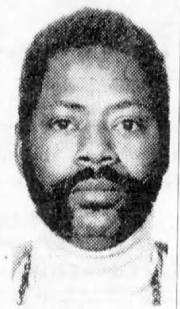
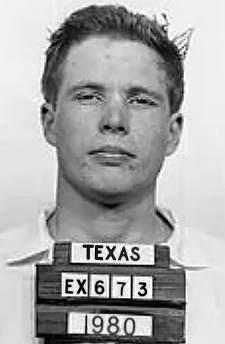
Serial Killer Roberto V. Arguelles
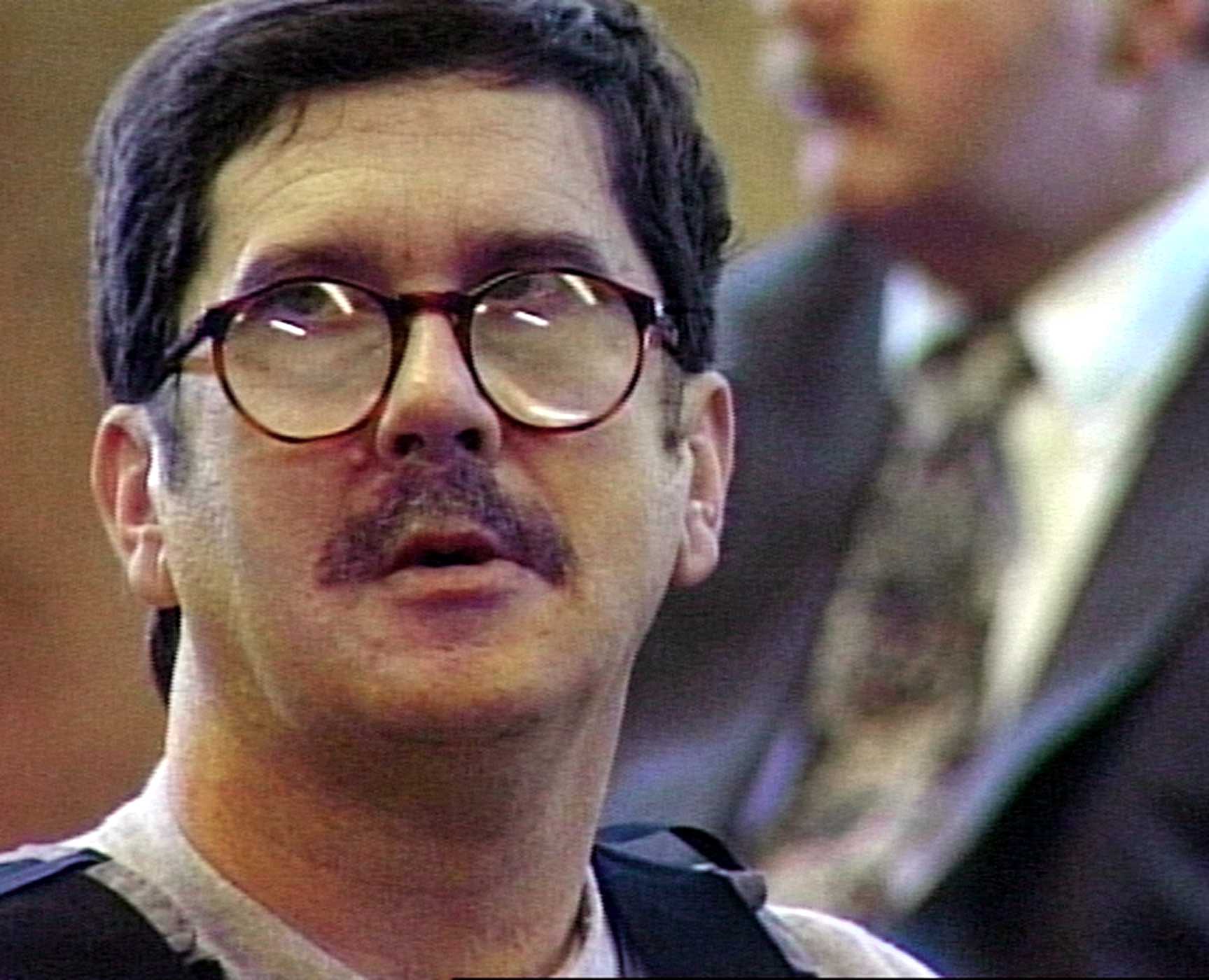
Roberto V. Arguelles was an American serial killer and repeat violent sex offender whose long criminal history culminated in the kidnapping, sexual assault, and murders of four people in Utah during a period of less than six weeks in 1992. His confirmed victims were 42-year-old Margo Bond and three teenage girls: Stephanie Blundell, Lisa Martinez, and Tuesday Roberts. The murders occurred after Arguelles had already spent years incarcerated for serious sexual assaults and attempted homicide and had been released on parole.
The four killings remained partly unresolved for several years. Arguelles eventually confessed on April 26, 1996, while incarcerated for unrelated sexual offenses against children. His confession provided investigators with detailed accounts of the crimes and information that helped authorities locate previously undiscovered remains. He pleaded guilty to four counts of aggravated murder and was sentenced to death in 1997.
Early Criminal History
Arguelles displayed serious criminal and violent behavior long before the 1992 murders. According to the record later considered by the Utah Supreme Court, he was convicted of car and gasoline theft in October 1977 when he was only 15 years old. The following year, in October 1978, he sexually abused a 10-year-old girl. He was convicted of that offense in March 1979.
In February 1979, Arguelles raped a 16-year-old girl, although that particular case was eventually dismissed following his conviction for the earlier sexual-abuse offense. His violence escalated further after his release from juvenile custody.
In 1980, Arguelles attacked two teenage girls. The resulting prosecution led to his May 1980 convictions for aggravated sexual assault involving a 15-year-old girl and attempted capital homicide involving another 15-year-old girl. One of the attacks was particularly serious, involving a victim whose throat was slashed but who survived and was able to obtain help.
Arguelles received lengthy prison sentences and spent most of the following decade incarcerated. Despite the severity of his criminal history, he was eventually released on parole on June 25, 1991. Less than a year later, he began the series of murders for which he became notorious.
The Murder of Margo Bond
Arguelles' first confirmed murder victim was Margo Bond, a 42-year-old woman who worked as the head custodian at Kennedy Junior High School. Bond was a wife, mother, and grandmother who had also distinguished herself as a competitive bodybuilder. Her family remembered her as an energetic woman who enjoyed activities including golfing, bicycling, and camping.
On February 21, 1992, Bond went to work at the school. According to Arguelles' later confession, he encountered her there and abducted her at knifepoint. He drove Bond west from the Salt Lake Valley toward an isolated desert area in Tooele County. During the trip, he sexually assaulted her.
Once in the remote desert, Arguelles removed Bond's clothing, bound her, and strangled her to death. He then placed her body in a shallow grave. He took jewelry belonging to her and discarded other evidence as he returned toward Salt Lake County.
Bond disappeared without an immediate explanation. Approximately four months later, her body was discovered in Tooele County. At the time, investigators did not know that her death was connected to the disappearances of several teenage girls that would follow.
The Murder of Stephanie Blundell
Less than a month after Bond was killed, Arguelles targeted 13-year-old Stephanie Blundell. On the morning of March 19, 1992, Stephanie left her home to go to school. She was a student at Brockbank Junior High School and was described by her family as outgoing and full of life.
Arguelles encountered Stephanie while she was traveling to school and offered her a ride. Instead of taking her to her destination, he drove her into the Timpanogos and American Fork Canyon area of Utah County. In the isolated canyon, he sexually assaulted her and restrained her.
Arguelles strangled Stephanie to death and buried her in the canyon. He concealed the grave and disposed of items associated with the crime. Investigators later learned that he had burned some of Stephanie's belongings after leaving the burial area.
Stephanie was initially treated as a missing person, and her family spent four years without knowing what had happened to her. After Arguelles confessed in April 1996, he directed investigators to the area where he had buried her. Human remains recovered there were subsequently identified as Stephanie's.
The Murders of Lisa Martinez and Tuesday Roberts
Arguelles committed his final two confirmed murders together on March 30, 1992. Sixteen-year-old Lisa Martinez and her friend Tuesday Roberts, identified as 14 years old in the Utah Supreme Court record, were together when Arguelles encountered them. The girls were planning to go to Valley Fair Mall when he offered them a ride.
Instead of simply taking them to the mall, Arguelles drove the teenagers to a school property. He restrained the girls by handcuffing them together and attempted to sexually assault Lisa Martinez. Lisa resisted him.
Arguelles responded to Lisa's resistance by attacking her with a wood chisel. She was stabbed repeatedly and died at the scene. Medical testimony presented during Arguelles' later sentencing proceedings established that Lisa sustained dozens of sharp-force and blunt-force injuries during the attack.
Tuesday Roberts was forced to witness the attack on her friend while restrained. After killing Lisa, Arguelles took Tuesday to another location and sexually assaulted her. He later returned with Tuesday to retrieve Lisa's body.
Arguelles then transported Tuesday and Lisa's body to a pig farm in the western Salt Lake Valley. At the farm, he strangled Tuesday to death. He buried the two girls together on the property. Arguelles later admitted that one reason he murdered Tuesday was to eliminate her as a witness to what he had done to Lisa.
The disappearance of Lisa and Tuesday generated considerable concern, but investigators were unable to determine their whereabouts. Their families were left without answers for more than three years.
Confirmed Victims
- Margo Bond, 42 - Killed February 21, 1992. Bond was abducted from Kennedy Junior High School, where she worked, and taken to the west desert of Tooele County, Utah. She was sexually assaulted, bound, and strangled. Her body was buried in a shallow grave and discovered approximately four months later.
- Stephanie Blundell, 13 - Killed March 19, 1992. Stephanie was abducted after Arguelles offered her a ride while she was on her way to school from her Magna-area home. He drove her into the Timpanogos/American Fork Canyon area of Utah County, sexually assaulted her, strangled her, and buried her. Her remains were recovered in April 1996 after Arguelles disclosed the burial location.
- Lisa Martinez, 16 - Killed March 30, 1992. Lisa was abducted with her friend Tuesday Roberts after Arguelles offered the girls a ride while they were going to Valley Fair Mall. At a school property in the Salt Lake Valley, he attempted to sexually assault Lisa. When she resisted, he killed her in a repeated attack with a wood chisel. Her body was later taken to a pig farm in the western Salt Lake Valley and buried with Tuesday.
- Tuesday Roberts, 14 - Killed March 30, 1992. Tuesday was abducted with Lisa Martinez and was present when Arguelles murdered Lisa. Arguelles subsequently sexually assaulted Tuesday, transported her to a pig farm in the western Salt Lake Valley, and strangled her. He admitted that eliminating her as a witness was one of his reasons for killing her. Her remains were buried alongside Lisa's.
Return to Prison
The murder spree ended without investigators immediately identifying Arguelles as the killer. He nevertheless continued committing sexual crimes. In August 1992, only months after the four murders, Arguelles was arrested following sexual abuse involving two young children.
He had approached a young brother and sister near an elementary school while pretending to be a security officer. Under the pretense of investigating wrongdoing and searching the children, he sexually touched them. The children reported what had happened, and they later identified Arguelles.
Arguelles was convicted of two counts of aggravated sexual abuse of a child and received consecutive prison terms. His return to prison ultimately placed him in the environment where information about the unsolved murders began to emerge.
The Discovery of Lisa Martinez and Tuesday Roberts
While incarcerated, Arguelles began talking about the disappearances of Lisa Martinez and Tuesday Roberts. Initially, he did not admit that he was their killer. Instead, he presented himself as someone who possessed information about what had happened to the girls and claimed knowledge of where their bodies had been buried.
In July 1995, investigators followed information provided by Arguelles to the pig farm in the western Salt Lake Valley. On July 26, authorities uncovered skeletal remains belonging to Lisa and Tuesday. The discovery ended more than three years of uncertainty for their families while simultaneously focusing increasing attention on Arguelles himself.
The extraordinary level of detail he possessed about the burial location, combined with his extensive history of sexual violence, made his explanations increasingly suspicious. Investigators continued questioning him and examining his connections to other unsolved disappearances.
The 1996 Confession
On April 26, 1996, Arguelles finally confessed to kidnapping and murdering all four victims: Margo Bond, Stephanie Blundell, Lisa Martinez, and Tuesday Roberts. His admission connected four previously separate investigations into a single series of killings.
The confession included descriptions of how each victim had been abducted, where she had been taken, how she had been killed, and what Arguelles had done with the body afterward. Some of the information could be compared with evidence already known to investigators, while other details led directly to new discoveries.
Most importantly, Arguelles was able to direct authorities to Stephanie Blundell's previously undiscovered grave. Investigators searched the American Fork Canyon area shortly after the confession and recovered her remains. Her identification finally gave the Blundell family an answer after four years of uncertainty.
Arguelles also assisted authorities in locating the burial sites of Lisa Martinez and Tuesday Roberts, although those bodies had already been recovered after his earlier disclosures. Margo Bond's remains had been found independently in 1992.
Aggravated Murder Charges
Three days after his full confession, prosecutors charged Arguelles with four counts of aggravated murder. The murders were eligible for capital punishment because of circumstances surrounding the kidnappings, sexual assaults, and killings.
The prosecution possessed more than an unsupported confession. Arguelles knew details about the crimes and burial locations that provided powerful corroboration, and his statements were consistent with physical evidence and the known circumstances surrounding the disappearances.
Rather than mounting a conventional defense, Arguelles repeatedly expressed a desire to plead guilty and receive the death penalty. The legal proceedings became unusual because the courts were required to determine whether he was competent to make such decisions and whether his willingness to accept execution affected the fairness of the process.
Guilty Pleas and Sentencing
On May 12, 1997, Arguelles appeared before the district court and pleaded guilty to each of the four aggravated-murder charges. He also waived his right to have a jury determine his sentence and chose to represent himself during important portions of the proceedings, although standby attorneys remained available.
During the penalty phase, prosecutors presented Arguelles' extensive history of violent and sexual offenses along with detailed evidence concerning the four murders. Family members of Margo Bond, Stephanie Blundell, Lisa Martinez, and Tuesday Roberts testified about their loved ones and the enormous effect the killings had on their families.
Arguelles presented relatively little evidence in mitigation. Although material concerning blackouts, memory problems, psychological evaluations, and possible mental-health issues was introduced, he continued to state that he believed execution was the appropriate punishment for what he had done.
On June 20, 1997, Arguelles was sentenced to death. He selected execution by firing squad, one of the methods then available to condemned Utah prisoners.
Appeals and Competency Proceedings
A death sentence in Utah was subject to mandatory appellate review regardless of Arguelles' stated desire to be executed. This created years of additional litigation because Arguelles repeatedly attempted to prevent attorneys from challenging his conviction or sentence.
In August 1998, while his case was pending on appeal, Arguelles attempted suicide by hanging himself in prison. The incident raised additional questions concerning his mental competency. Courts ordered psychiatric examinations and conducted hearings to determine whether he understood the proceedings and could rationally participate in his case.
Three doctors who evaluated him before a 2000 competency hearing concluded that he possessed a rational and factual understanding of the proceedings and could consult with attorneys. The district court found him competent.
On January 14, 2003, the Utah Supreme Court issued its decision reviewing the case. The court upheld the death sentence, finding that the aggravating circumstances surrounding the murders overwhelmingly supported the punishment imposed by the trial court.
Scheduled Execution
After the Utah Supreme Court upheld his sentence, a death warrant was signed in May 2003. Arguelles was scheduled to be executed by firing squad on June 27, 2003.
The execution did not occur. Renewed concerns about his mental condition resulted in another stay so his competency could again be evaluated. By this period, prison officials and attorneys reported increasingly abnormal behavior, and additional legal proceedings were underway concerning whether he was competent to be executed.
Death in Prison
Arguelles never reached the firing squad. On November 15, 2003, prison personnel noticed that the 41-year-old inmate appeared pale and ill. He was moved to the infirmary at the Utah State Prison during the afternoon. His condition deteriorated, and despite efforts to revive him after he stopped breathing, he was pronounced dead at approximately 5:27 p.m.
His death was investigated and was not considered suspicious. Arguelles had experienced intestinal problems and an obstruction in the weeks preceding his death and had reportedly refused some medical treatment. His death was ultimately classified as resulting from natural causes.
Legacy of the Case
The crimes of Roberto V. Arguelles were particularly disturbing because they occurred after years of warnings about his violent sexual behavior and after he had already been imprisoned for offenses involving teenage victims. He was paroled on June 25, 1991, despite a criminal history that included sexual assault and attempted homicide. Within eight months of his release, Margo Bond was dead, and within approximately five weeks after her murder, Stephanie Blundell, Lisa Martinez, and Tuesday Roberts had also been killed.
The case also demonstrates the difficulty investigators faced when the victims initially appeared to have disappeared under unrelated circumstances. Margo Bond was an adult woman traveling to work, Stephanie Blundell vanished while going to school, and Lisa Martinez and Tuesday Roberts disappeared together while planning a trip to the mall. It was only after information began emerging from Arguelles in prison that authorities were able to connect the crimes conclusively.
Arguelles ultimately admitted responsibility for four murders and pleaded guilty to killing all four victims. His information was instrumental in locating the remains of the three teenagers, particularly Stephanie Blundell, whose burial site might otherwise have remained undiscovered. The resulting prosecution ended with four aggravated-murder convictions and a death sentence, although Arguelles' death in prison on November 15, 2003, prevented the sentence from ever being carried out.
The confirmed record leaves four victims whose lives were cut short during the 1992 killing spree: Margo Bond, Stephanie Blundell, Lisa Martinez, and Tuesday Roberts. Their families endured years of uncertainty before the complete circumstances of the murders became known, and their testimony during Arguelles' sentencing emphasized that the case was not simply the story of a serial offender, but of four individuals whose deaths permanently affected their families and communities.