William Thoresen III: Wealth, Violence, Weapons and Suspected Murder
Background and Early Life
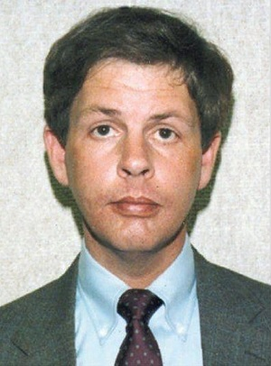
William Erness Thoresen III was born on October 9, 1937, into a wealthy Chicago-area family. His father, William Thoresen II, was the president of Great Western Steel Company, and the family lived among the affluent residents of Chicago’s North Shore. Although Thoresen enjoyed financial privilege, his life became defined by instability, violent behavior, weapons and repeated confrontations with relatives, strangers and law enforcement.
Accounts of Thoresen’s youth describe a pattern of disturbing conduct that included trespassing, harassment, theft and an intense fascination with firearms. His family reportedly arranged psychiatric treatment for him on several occasions, but his behavior continued into adulthood. He traveled frequently, accumulated weapons and ammunition, and became increasingly suspicious of nearly everyone around him.
Thoresen married Louise Banich in January 1954. Their relationship was turbulent and abusive. Louise later described years of intimidation, assaults, threats and criminal activity. According to her account, Thoresen regarded violence as a practical way to settle disputes and frequently discussed killing people who angered him or interfered with his plans.
Disputed Status as a Serial Killer
William Thoresen was never convicted of murder, and no homicide was conclusively attributed to him while he was alive. He is nevertheless described in some crime histories as a suspected serial killer because investigators, relatives and later researchers connected him to several suspicious or unsolved deaths.
The strongest allegations concern the death of his younger brother, Richard Thoresen, the disappearance or death of an alleged accomplice named Dale Stoddard, and the unsolved murder of Valerie Percy. Additional writers have attempted to connect Thoresen to other nationally known murders, including crimes attributed to the Zodiac Killer. Those broader claims remain theories and have not been established through a criminal conviction, definitive forensic evidence or an official identification by law enforcement.
The Death of Richard Thoresen
On September 21, 1965, Thoresen’s 24-year-old brother, Richard Ehrman Thoresen, was found dead inside a rented automobile in Lake Forest, Illinois. Richard had suffered a gunshot wound behind his right ear. A handgun was found inside the vehicle, and the death was initially treated as a possible suicide.
Several circumstances caused continuing suspicion. Richard was reportedly left-handed, while the wound was located behind the right ear. No suicide note was found, and investigators questioned whether the weapon’s position was consistent with a self-inflicted shooting. Richard’s death also had financial implications because he was an heir to a substantial family fortune.
Louise Thoresen later alleged that William had arranged his brother’s killing. According to accounts based on her statements, William recruited Dale Stoddard to commit the murder and later eliminated Stoddard to prevent him from revealing the arrangement. These allegations led Illinois authorities to reopen or reexamine Richard’s death after William was killed in 1970. No one was ultimately prosecuted for Richard’s death, and the case remained officially unresolved.
Dale Stoddard and the Alleged Cover-Up
Dale Stoddard has been described as an associate whom Thoresen allegedly hired to kill Richard. Louise reportedly claimed that Thoresen later murdered Stoddard because he feared that Stoddard could expose the plot. Some retellings state that Thoresen disposed of the body or arranged for it to disappear, leaving investigators with little physical evidence.
Reliable public records establishing the precise date, location and circumstances of Stoddard’s alleged death are limited. The accusation rests primarily on later accounts of Thoresen’s conduct rather than a completed murder prosecution. Stoddard is consequently identified as a possible victim, not a conclusively proven victim.
The Murder of Valerie Percy
During the early morning hours of September 18, 1966, 21-year-old Valerie Jeanne Percy was attacked in her bedroom at her family’s home in Kenilworth, Illinois. Valerie was the daughter of businessman and United States Senate candidate Charles Percy. Her stepmother awakened after hearing noises, went toward Valerie’s room and briefly encountered a male intruder before he escaped.
Valerie had been struck violently in the head and stabbed repeatedly. Nothing of obvious value was taken from the residence, leading investigators to question whether robbery had been the intruder’s motive. The brutality of the attack, the apparent targeting of Valerie and the intruder’s willingness to enter an occupied home made the case one of the most closely examined murders in Illinois history.
Thoresen lived near the Percy residence and was already known to authorities for violent and erratic behavior. Later reviews of investigative records showed that he had attracted the attention of law enforcement as a potential suspect. Reports describing him as armed, dangerous and mentally unstable strengthened later arguments that he should have received greater scrutiny.
Decades after the murder, authors and investigators publicly advanced the theory that Thoresen killed Valerie. Kenilworth police stated that his possible involvement had never been conclusively eliminated and remained undetermined. However, the Percy homicide remains officially unsolved, and Thoresen was never charged with the crime.
Known and Suspected Victims
- Richard Ehrman Thoresen, 24: Found shot to death on September 21, 1965, inside a rented automobile in Lake Forest, Illinois. The death was initially considered a possible suicide, but suspicious physical circumstances and later allegations caused authorities to reconsider whether he had been murdered. William Thoresen was suspected of arranging the killing, but the allegation was never proven in court.
- Valerie Jeanne Percy, 21: Murdered on September 18, 1966, in her bedroom at the Percy family residence in Kenilworth, Illinois. She was beaten and stabbed by an intruder. Thoresen was later identified as a significant possible suspect, but no charge was filed and the case remains unsolved.
- Dale Stoddard: Alleged associate of Thoresen who was reportedly recruited to murder Richard Thoresen and then killed to prevent him from talking. A reliable exact date and confirmed location of Stoddard’s alleged death have not been publicly established, and the accusation was never adjudicated.
- Unidentified alleged male victim: Louise Thoresen reportedly described another man whom William claimed to have killed. Available accounts do not provide enough independently verified information to establish the man’s identity, date of death or location.
Other Murders Attributed to Thoresen by Later Researchers
Some researchers have proposed that Thoresen was responsible for a much larger number of killings. Suggested victims have included musician Bobby Fuller, Chicago-area teenager Judith Anderson and members of the Bricca family in Cincinnati. Other theories identify Thoresen as the Zodiac Killer or connect him to crimes committed in several states.
These theories generally rely on circumstantial similarities, Thoresen’s travel, his access to weapons, his violent personality and alleged statements reported by Louise. They have not produced a murder conviction or a definitive forensic identification. For that reason, such cases should not be presented as established Thoresen victims. The documented record supports describing him as a violent criminal and suspected multiple murderer, while claims of a large nationwide victim count remain speculative.
Weapons Stockpiles and Federal Investigation
Thoresen’s criminal notoriety extended far beyond the murder allegations. He amassed an enormous private arsenal that included rifles, handguns, machine guns, explosives and vast quantities of ammunition. Authorities discovered weapons stored in homes, vehicles and other locations associated with him.
Federal investigators became concerned not only about the size of the collection but also about Thoresen’s legal ability to possess and transport firearms. He and Louise were prosecuted under federal firearms laws for transporting weapons while legally prohibited from doing so. The case produced extensive litigation and exposed the scale of his weapons operation.
Thoresen’s fixation on arms was accompanied by paranoia. He reportedly believed that relatives, government agents and business associates were conspiring against him. He prepared for violent confrontations, moved weapons between states and surrounded himself with ammunition. His wealth allowed him to continue this behavior despite arrests, legal expenses and repeated warnings.
Violence Against Louise Thoresen
Louise described her husband as controlling and sadistic. She stated that he beat her, threatened her with weapons and forced her to participate in transporting or concealing firearms. The abuse reportedly intensified as Thoresen’s paranoia increased.
According to Louise, Thoresen also discussed killing members of his own family, including his parents, to obtain money or prevent them from interfering with him. Whether every alleged plot was genuine or part of his intimidation is uncertain, but the statements contributed to the image of a man who treated murder as an acceptable solution to personal and financial problems.
Death of William Thoresen
On June 10, 1970, William Thoresen was shot to death inside the family home in Fresno, California. He was 32 years old. An autopsy determined that he had been struck by multiple bullets fired into his back, causing fatal internal bleeding.
Louise admitted firing the shots and was arrested on suspicion of murder. She maintained that she acted in self-defense after years of abuse and during a confrontation in which she believed her husband intended to kill her. At her trial, the defense presented evidence of Thoresen’s violence, threats and weapons obsession. A jury acquitted Louise after accepting that she had acted to protect herself.
Thoresen’s death prevented investigators from questioning him further about Richard, Valerie Percy, Dale Stoddard and other suspected victims. Shortly afterward, Illinois authorities renewed their examination of Richard Thoresen’s death, but the available evidence was insufficient to bring charges against anyone.
Legacy
William Thoresen remains an unusual figure in American criminal history. His wealth provided access to weapons, travel, attorneys and private resources that allowed him to avoid many of the consequences that might otherwise have interrupted his behavior. His life combined domestic abuse, firearms offenses, mental instability, family conflict and allegations of calculated murder.
Calling Thoresen a confirmed serial killer overstates what was proven. No court convicted him of homicide, and the best-known killings associated with him remain unresolved. Nevertheless, the suspicious death of his brother, the allegations involving Dale Stoddard, his proximity to the Valerie Percy murder and his documented capacity for extreme violence have kept him under scrutiny for decades.
His case illustrates the difficulty of separating documented crime from later accusation. Thoresen was unquestionably dangerous, heavily armed and repeatedly violent. Whether he secretly committed two murders, several murders or none of the unsolved homicides attributed to him remains an unanswered question.