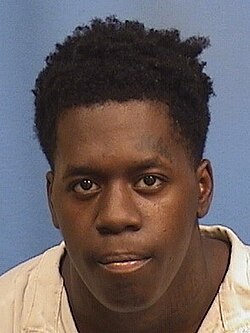
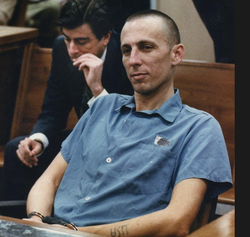
Desmond Domnique Jennings
Background
Desmond Domnique Jennings was an American serial killer whose brief but deadly crime spree unfolded in Fort Worth, Texas, during the final months of 1993. Born on October 4, 1971, Jennings reportedly grew up in a middle-class household and worked as a nursing aide before becoming involved in drugs, armed robbery and violent crime. He was 22 years old when he participated in a series of attacks that left at least five people dead.
Jennings generally targeted residences associated with the sale or use of illegal drugs. Accompanied by other men, including John H. Freeman, he entered the homes intending to steal money, narcotics or other valuables. The victims were shot quickly, often before they had an opportunity to resist. Prosecutors portrayed the killings as calculated robberies in which witnesses were eliminated to reduce the chances of identification.
Authorities conclusively connected Jennings to five murders committed between October and December 1993. Investigators reportedly considered him a possible suspect in additional Fort Worth homicides, with some accounts stating that police examined as many as 20 killings for possible connections. However, he was formally convicted and sentenced to death for the murders of Sylvester Walton and Wonda Matthews.
The Murder of Larry Eugene Wilson
On October 25, 1993, Jennings joined John H. Freeman and Robert Anderson in an armed invasion of a suspected drug house at 3345 Eastland Street in Fort Worth. The men concealed their identities with ski masks before entering the residence.
Larry Eugene Wilson, a 43-year-old fleet service employee for American Airlines, had reportedly gone to the house to purchase marijuana. Witnesses said Wilson had been inside for only a few minutes when the masked gunmen entered. Jennings opened fire, striking Wilson in the abdomen. The attackers then stole money and fled.
Wilson was transported to John Peter Smith Hospital in Fort Worth. Despite emergency treatment, he died from his injuries on October 26, 1993. The killing became one of the cases that later led police to identify Jennings and Freeman as suspects in a larger pattern of drug-related robberies and murders.
The Sunshine Drive Double Shooting
On December 24, 1993, Jennings and Freeman entered another residence associated with drug activity, located in the 5000 block of Sunshine Drive in Fort Worth. Inside the kitchen were 28-year-old Dino Andre Beasley and Beasley’s 31-year-old girlfriend, Charlotte Dickerson.
Jennings and Freeman opened fire on the couple. Both victims were critically wounded, but the attackers fled without confirming that they were dead. Dickerson remained conscious long enough to telephone police and report that she had been shot. Emergency personnel transported both victims to John Peter Smith Hospital.
Beasley died from his gunshot wounds on December 24, 1993. Dickerson underwent emergency surgery but died two days later, on December 26, 1993. She was unable to provide investigators with information sufficient to identify the gunmen before her death.
The Murders of Sylvester Walton and Wonda Matthews
On December 27, 1993, only one day after Charlotte Dickerson died, Jennings and Freeman carried out another armed robbery at a house on Langston Street in Fort Worth. A third man, Eric Gardner, testified that he had been riding in a vehicle with Jennings and Freeman when Freeman said he wanted heroin and knew of a house where they might obtain it.
According to Gardner, Jennings proposed robbing the residence. Gardner objected and remained in the vehicle while Jennings and Freeman entered the house. He later testified that he heard gunshots and saw the two men emerge calmly after spending only a few minutes inside.
Sylvester Walton, 44, confronted the intruders and asked what they wanted. Jennings responded by shooting Walton in the face. The bullet entered through Walton’s left nostril, traveled through his brain and lodged near the back of his scalp. The catastrophic brain injury killed him.
Jennings and Freeman then moved farther into the residence and encountered 27-year-old Wonda Matthews as she was rising from a bed. Jennings shot her in the head. He returned to Walton’s body, searched him for valuables and took a pouch. As the men prepared to leave, Jennings heard Matthews making sounds, indicating that she was still alive. He returned and fired additional shots at her. Her autopsy established that she had been shot three times.
The murders of Walton and Matthews became the foundation of the capital case against Jennings. Ballistics testing showed that bullets recovered from the victims and the crime scene had been fired from the same .32-caliber semiautomatic handgun later recovered by police.
Victims
- Larry Eugene Wilson, 43 — Shot during a robbery at 3345 Eastland Street in Fort Worth on October 25, 1993. He died at John Peter Smith Hospital on October 26, 1993.
- Dino Andre Beasley, 28 — Shot inside a residence in the 5000 block of Sunshine Drive in Fort Worth on December 24, 1993. He died that same day.
- Charlotte Dickerson, 31 — Shot with Beasley at the Sunshine Drive residence on December 24, 1993. She died during medical treatment on December 26, 1993.
- Sylvester Walton, 44 — Shot in the face during a robbery at a Langston Street residence in Fort Worth on December 27, 1993.
- Wonda Matthews, 27 — Shot three times inside the same Langston Street residence on December 27, 1993.
Ballistics Evidence and Investigation
The investigation advanced after Freeman was arrested for drug possession on January 3, 1994. During a search of his vehicle, officers discovered a loaded .32-caliber semiautomatic handgun in the trunk. Firearms examiners compared the weapon with bullets recovered in the murders and connected it to the shootings of Beasley, Walton and Matthews.
Police publicly identified Jennings and Freeman as suspects in five homicides and sought assistance from CrimeStoppers and local residents. On January 20, 1994, Jennings surrendered to authorities in Forest Hill after learning that he was wanted in connection with Larry Wilson’s murder. Freeman remained at large until January 28, when information from an informant led officers to a house on Stephenson Street in Fort Worth.
Freeman initially refused to answer the door and reportedly provided a false identity, but officers eventually arrested him. Investigators then assembled testimony from witnesses who placed Jennings near the crime scenes or heard him discussing the killings.
Trial and Conviction
Jennings was charged in connection with all five deaths and pleaded not guilty. Prosecutors offered him an agreement involving three life sentences and the possibility of parole after 30 years, but he rejected the proposal and proceeded to trial. His capital murder trial began in Tarrant County in July 1995.
The prosecution relied on ballistics evidence and testimony from people associated with Jennings and Freeman. Witnesses described seeing Jennings after some of the attacks, including testimony that he had blood on his shoes. Others said he had spoken or bragged about his involvement in the killings. Eric Gardner described remaining outside the Langston Street residence while Jennings and Freeman entered, hearing shots and watching them return shortly afterward.
The defense emphasized that much of the case was circumstantial and attacked the credibility of witnesses who had criminal histories or connections to the drug trade. Jennings’s attorneys also argued that there was no reliable physical evidence directly placing him inside every crime scene. One defense witness claimed that another man had threatened Matthews on the day she was murdered, although the testimony did not establish that the unidentified man had committed the killings.
On July 20, 1995, Jennings was convicted of capital murder for killing Sylvester Walton and Wonda Matthews during the same criminal transaction. During the punishment phase, prosecutors presented the additional murders and other evidence to demonstrate that Jennings posed a continuing danger. After approximately two hours of deliberation, the jury sentenced him to death on July 27, 1995.
Death Row and Execution
Jennings was transferred to Texas death row following his conviction. While incarcerated, he reportedly maintained a relatively clean disciplinary record and became an enthusiastic reader of philosophy. His attorneys pursued appeals challenging his conviction and death sentence, but the courts declined to overturn the judgment.
Jennings was scheduled for execution on November 16, 1999. He submitted a clemency petition shortly before the execution, but it was filed too late to receive the customary review. He also warned prison officials that he would not cooperate with the execution process.
When officers arrived to move him from his cell, Jennings refused to leave and had to be subdued with pepper spray. Later, a five-member team forcibly carried him into the death chamber after he again resisted. The confrontation marked the first time since Texas resumed executions in the modern era that prison personnel had been required to use force to place a condemned prisoner in the execution chamber.
Jennings declined a last meal and made no final statement. He was executed by lethal injection at the Huntsville Unit in Huntsville, Texas, on November 16, 1999. He was pronounced dead at 6:22 p.m. He was 28 years old.
Assessment of the Case
Desmond Domnique Jennings’s known murders occurred during a concentrated period of approximately two months. Although the crimes were connected to robbery and the illegal drug trade, the victims were not killed during prolonged confrontations. Instead, Jennings used immediate and overwhelming violence, shooting people at close range and, in the case of Wonda Matthews, returning to fire again after realizing that she remained alive.
His conviction rested most directly on the murders of Walton and Matthews, but the broader evidence connected him and his associates to five deaths. The discovery of the .32-caliber handgun, the ballistics matches and testimony from people who accompanied or encountered the offenders enabled investigators to link crimes that had initially appeared to be separate acts of violence within Fort Worth’s drug trade.