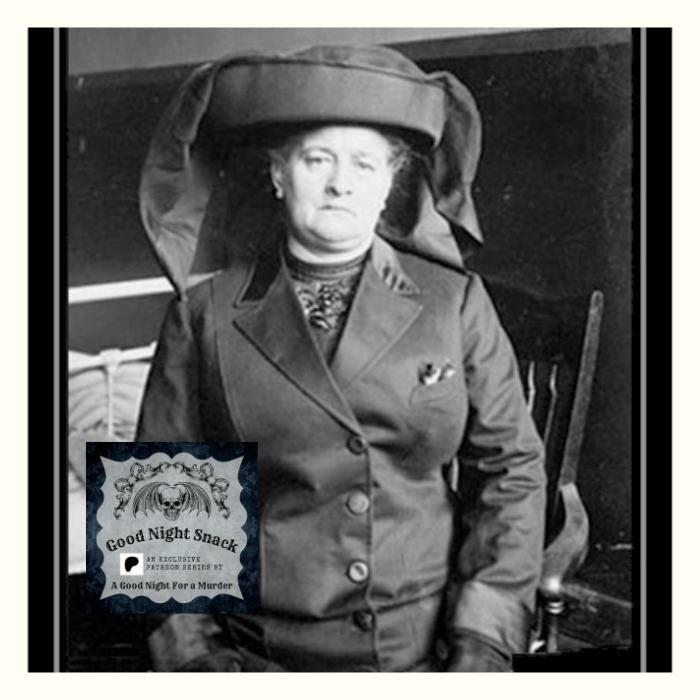
The Somersworth Baby Bones Murderer
Overview of the Unsolved Case
The name “Somersworth Baby Bones Murderer” refers to the unidentified person, or possibly multiple people, connected to the deaths and concealment of five infants whose remains were discovered in Somersworth, New Hampshire. Although the case is sometimes classified as an unidentified serial-murder investigation, authorities were never able to establish conclusively how every infant died, identify the children, or prove that one person deliberately killed all five. The disturbing circumstances surrounding the remains, however, led investigators to suspect that the infants may have been connected to an illegal abortion operation, an infant-killing arrangement, or a concealed series of unwanted births during the late 1940s and early 1950s.
The mystery began publicly on April 6, 1983, when Earl and Ruth Davis were cleaning the basement of their home at 219 Route 16B in Somersworth. Among the belongings stored there was an old leather steamer trunk that had remained unopened for approximately 22 years. The trunk had been entrusted to the couple by a former neighbor named Shirley Thomas, whom they had known while living in Dover, New Hampshire. Thomas reportedly claimed that she lacked room for the trunk and asked the Davises to keep it for her.
The Discovery in the Basement
When Earl Davis forced open the trunk’s corroded lock, he found several smaller suitcases, briefcases, boxes and a hatbox packed tightly inside. After opening one of the cases and lifting away newspaper and cloth, he saw what appeared to be the decomposed remains of a newborn child. The Davises immediately contacted the Somersworth Police Department.
Police officers, forensic specialists, the county medical examiner and Strafford County officials gathered at the house that evening. As the containers were carefully opened, investigators discovered the remains of five infants. Each child had been placed separately inside one of the smaller cases or boxes. The bodies had been wrapped in combinations of cloth, newspapers, towels, plastic material and other household items before being packed into the larger trunk.
The remains were severely decomposed, partially skeletal and, in some cases, partially mummified. Their condition showed that they had been concealed for decades. Newspapers found with the bodies included editions dating from 1949, while forensic and historical evidence indicated that the infants had died at different times between 1949 and 1952. No exact date of death could be established for any of the five children.
Known Victims
- Unidentified Infant One: Name, gender and exact age unknown. The child was believed to have died sometime between 1949 and 1952. The remains were discovered on April 6, 1983, inside a container packed within a steamer trunk at 219 Route 16B in Somersworth, New Hampshire.
- Unidentified Infant Two: Name, gender and exact age unknown. The infant was one of four children believed to have reached full-term development. The precise date and cause of death could not be determined. The remains were found in Somersworth on April 6, 1983.
- Unidentified Infant Three: Name, gender and exact age unknown. The child was believed to have died during the 1949-1952 period. The body had been wrapped and concealed separately inside the trunk discovered at the Davis residence.
- Unidentified Infant Four: Name, gender and exact age unknown. This infant was also believed to have been full term. No verified individual death date was established. The remains were recovered in Somersworth, New Hampshire, on April 6, 1983.
- Unidentified Infant Five: Name and gender unknown. Forensic examination indicated that this child had developed for approximately 28 weeks and was premature. The infant’s exact date and cause of death were never determined, although investigators placed the death between 1949 and 1952.
Forensic Examination
The five sets of remains were taken for X-rays and later examined by specialists, including Maine medical examiner Dr. Henry Ryan. Investigators hoped that the examinations would determine the children’s identities, causes of death and whether they had been born alive. The age and condition of the remains made those questions extremely difficult to answer.
Examiners concluded that four of the infants appeared to have been full term, while the fifth had developed for approximately 28 weeks. The findings suggested that the trunk did not simply contain tissue from early miscarriages. At least several of the children had reached a stage of development at which they may have been born alive, but investigators could not prove whether they lived after delivery.
The causes of death remained undetermined. Decomposition had erased much of the evidence that might have revealed suffocation, poisoning, blunt-force trauma, neglect or complications during birth. Investigators therefore could not officially classify every death as a homicide, despite the deliberate concealment of the bodies and the troubling statements later made about their origin.
Suspicious Instruments in the Trunk
Among the items associated with the trunk were objects that investigators described as potentially abortive instruments. These reportedly included rusted crochet needles, an old douche apparatus and a metal antenna that had been flattened and sharpened at one end. The presence of these objects raised the possibility that the trunk was connected to illegal abortions performed during a period when abortion was prohibited in most circumstances.
Investigators considered several scenarios. The infants may have died during attempted abortions conducted late in pregnancy. Some may have been stillborn and secretly disposed of to avoid public exposure or criminal charges. Another possibility was that the children were born alive and intentionally killed shortly afterward. Because the medical examinations were inconclusive, none of these theories could be proven.
Shirley Thomas and the Trunk
The investigation quickly focused on Shirley Thomas, the woman who had given the trunk to Earl and Ruth Davis. Thomas had lived near the couple in Dover during the late 1950s. When the Davises moved, she asked them to store the trunk, telling them that she did not have sufficient room for it. The couple reportedly had no idea what the trunk contained and left it unopened through several moves.
Police located Thomas on April 7, 1983, the day after the remains were discovered. During questioning, she reportedly became pale and appeared visibly distressed. When an investigator told her that a medical examiner believed the remains might have resulted from a baby-killing or “baby-snuffing” operation, Thomas allegedly replied that this was exactly what had happened. She then claimed that the person responsible was no longer alive.
Thomas also reportedly said that she believed the trunk had been disposed of many years earlier. After she was advised of her constitutional rights, she obtained an attorney and refused to provide further information. Her statements became one of the most important and frustrating elements of the investigation. She appeared to know what the trunk contained and why the bodies were inside it, yet she never publicly identified the supposed dead perpetrator or explained her own involvement.
Reports of Multiple Pregnancies
Detectives examined Thomas’s personal history and employment at the General Electric plant in Somersworth. She began working there in 1948, shortly before the earliest estimated infant death, and left in 1953, shortly after the latest estimated death. That overlap caused investigators to question whether the children might have been biologically connected to her.
Former coworkers told police that Thomas appeared to have been pregnant on several occasions. Estimates varied, with witnesses recalling between two and four apparent pregnancies. One supervisor said that when he asked Thomas about her condition, she claimed that she had a “water tumor.” Witnesses described occasions when she left work appearing pregnant and returned after a brief absence without a child and no longer appearing pregnant.
Company records reportedly documented several absences lasting approximately a week during the period in question. The absences were described in employee publications as illnesses, holidays or other short periods away from work. Thomas was not known to have children living with her. Investigators considered whether some or all of the infants might have been hers, but the available forensic science of the early 1980s could not establish a biological relationship.
The Baby-Snuffing Operation Theory
Thomas’s reference to an operation involving unwanted babies introduced the possibility that the deaths extended beyond her personal pregnancies. During the era in which the infants died, unmarried pregnancy carried significant social stigma, and legal abortion was generally unavailable. Desperate women sometimes turned to unlicensed practitioners who performed dangerous procedures in private homes or makeshift facilities.
One theory suggested that a person had promised pregnant women that their babies would be placed for adoption. Instead, the infants may have been killed and secretly stored. Another theory held that Thomas served only as a temporary custodian for the cases containing the remains. A former investigator later recalled that she allegedly said someone had given her the containers to hold without fully explaining where the bodies came from.
Her statements were never tested in court, and no independent evidence proved the existence of an organized infant-killing ring in Somersworth. It remains possible that the “operation” explanation was intended to shift responsibility to an unnamed person who could no longer be questioned. It is also possible that Thomas knew the identity of an illegal abortion provider or another person involved in concealing the infants.
A Large Investigation Without an Arrest
Investigators conducted approximately 200 interviews and reviewed the lives of Thomas, her relatives, former coworkers, acquaintances and alleged romantic partners. More than 100 interview transcripts and numerous police reports were created. Detectives attempted to determine whether any local women had concealed pregnancies or lost newborn children between 1949 and 1952.
The trunk and its contents were examined at several laboratories and forensic facilities. Investigators sent evidence to the Federal Bureau of Investigation in the hope that laser-scanning technology might reveal fingerprints. No usable prints or other conclusive physical evidence were recovered. The newspapers and packaging helped establish a general timeline, but they did not identify whoever placed the infants inside the containers.
No woman came forward to claim one of the children, and no surviving relative was definitively connected to the remains. The children’s names, sexes and family histories were never established. Investigators could not determine whether the five infants shared the same mother, came from several families, or were associated with one person performing illegal procedures.
No Charges Against Shirley Thomas
Although Shirley Thomas was widely viewed as the central person of interest, she was never arrested or charged. Possessing the trunk years earlier and making suspicious statements did not prove that she had killed the children. The authorities lacked confirmed causes of death, identifiable victims, witnesses to the deaths or forensic evidence placing Thomas at the scene of a specific homicide.
Thomas later moved to North Adams, Massachusetts, and died without publicly revealing what she knew. Her death eliminated the investigators’ best opportunity to obtain a complete explanation. The unnamed person she claimed was responsible was never identified, and detectives could not verify whether that person had actually existed or had died before the trunk was opened.
Burial of the Five Infants
After years of forensic examination, the remains of the five infants were buried in 1988. They were placed in a pauper’s plot at Forest Glade Cemetery in Somersworth. Because their identities remained unknown, there were no individual family names to place on their graves.
The burial gave the children a permanent resting place after decades spent hidden in luggage inside a basement trunk. The original trunk was retained as evidence and later became associated with a local historical display. A memorial message accompanying the case emphasized that the five unidentified children would not be forgotten.
Unresolved Questions
The Somersworth baby-bones investigation remains filled with unanswered questions. Authorities never determined who the infants were, who their parents were, where they were born or precisely when they died. It is unknown whether they were stillborn, died during illegal medical procedures, succumbed to neglect or were intentionally killed after birth.
It also remains unclear whether one offender was responsible for all five deaths. If a single person deliberately killed the children between 1949 and 1952, the case would represent a series of murders committed over several years. If the infants came from different women involved with an illegal abortion provider, the deaths might have resulted from a combination of criminal procedures, accidental complications and intentional acts.
Shirley Thomas’s exact role is equally uncertain. She may have been a mother, an assistant, a witness, a custodian of evidence or the principal offender. Her statements indicated knowledge that an innocent owner of the trunk would not normally possess, but knowledge alone was insufficient to establish murder beyond a reasonable doubt.
Legacy of the Somersworth Mystery
The discovery on April 6, 1983, exposed a secret that had remained undisturbed for more than three decades. Five children had been carefully wrapped, placed into separate containers and sealed inside a larger trunk. The deliberate nature of the concealment suggested that someone feared the consequences of the bodies being found.
Despite an extensive investigation, no arrest was ever made and no offender was officially identified. The children remain known only as five unidentified infants believed to have died between 1949 and 1952. Their exact death dates cannot be verified more precisely and should not be reported as specific calendar dates.
The case endures as one of New Hampshire’s most disturbing unsolved mysteries. It is remembered not because the killer’s identity was established, but because the evidence pointed toward a hidden history of pregnancies, secret procedures and infant deaths that could no longer be fully reconstructed. Until the children are identified or new evidence reveals what happened, the person described as the Somersworth Baby Bones Murderer will remain unknown.