Nathaniel Lipscomb: The Dawn Strangler
Overview
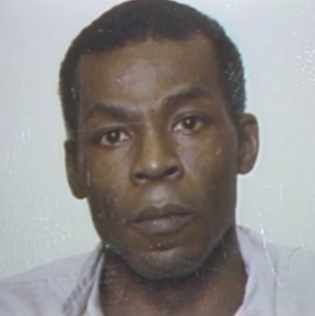
Nathaniel Lipscomb was an American serial killer who murdered three women in Baltimore, Maryland, between December 1958 and April 1959. The victims were sexually assaulted, beaten and strangled during attacks committed in or near the neighborhoods where they lived. Because the crimes occurred during the early morning hours, newspapers and investigators referred to the unidentified offender as the “Dawn Strangler” or the “Early Morning Bandit.”
Lipscomb was born in 1929 in Gaffney, South Carolina. Few reliable details are available about his childhood, but his criminal history reportedly began with voyeurism and theft. He was once jailed for spying on a woman as she undressed and later served time in North Carolina for stealing a bicycle. His behavior became increasingly disturbing, and years before the Baltimore murders, he was investigated in connection with the brutal killing of a woman in Charlotte, North Carolina.
The Possible Murder of Mrs. Howard Maxwell
On May 14, 1951, Mrs. Howard Maxwell was attacked inside her home in Charlotte, North Carolina. Her four-year-old daughter, Diane Maxwell, was also injured. Police found Mrs. Maxwell suffering from fatal knife wounds, including injuries to her head, chest and throat. Investigators believed she had been attacked while in bed and had attempted to reach or protect her daughter before collapsing.
Lipscomb came under suspicion on May 27, 1951, after police stopped a vehicle he was driving. Officers reportedly saw him attempt to discard a dagger, and he was arrested for carrying a concealed weapon and driving without a license. The following day, Lipscomb confessed to killing Mrs. Maxwell. He claimed that he had entered her home after receiving no response when he knocked and that she attacked him after awakening. According to his account, her death occurred during the resulting struggle.
Lipscomb led investigators to a pearl-handled knife that he claimed was connected to the crime. He later withdrew his confession and repeatedly changed his account. Conflicting lie-detector results and insufficient physical evidence prevented prosecutors from establishing a strong enough case against him. He was evaluated by mental-health professionals and described as dangerously impulsive, but he was eventually released from Cherry Hospital in Goldsboro, North Carolina. Mrs. Maxwell’s murder was never formally proven to have been committed by Lipscomb, and he was not convicted in that case.
The Baltimore Murders
By the late 1950s, Lipscomb was living in Baltimore and working at various jobs, including labor and restaurant work. During a four-month period beginning in December 1958, three women were attacked within a relatively small area of the city. Each victim was found close to her home, and the similarities among the crimes led police to believe that one offender was responsible.
- Mae Hall — discovered December 9, 1958, Baltimore, Maryland: Mae Hall, 38, was found in a neighbor’s yard in the 1300 block of East Eager Street. Investigators determined that she had been sexually assaulted and strangled. Her body had reportedly remained undiscovered for several days. Hall’s death became the first confirmed murder attributed to the offender later identified as Nathaniel Lipscomb.
- Lottie Kight — December 14, 1958, Baltimore, Maryland: Lottie Kight, 57, was a practical nurse who left her home during the early morning to sweep the sidewalk. Approximately two hours later, she was found in a narrow alley only two doors from her residence. A handkerchief had been tightened around her neck. Her bloodied fingers and clenched hands suggested that she had fought fiercely against her attacker. She had also been sexually assaulted.
- Pearl Weiss — April 9, 1959, Baltimore, Maryland: Pearl Weiss, 38, was found in an alley approximately five blocks from the location where Lottie Kight had been killed. She had been sexually assaulted and strangled. Bruising was visible around her neck, and her bloodied fingers indicated an attempt to resist the attack. Her shoes were missing when her body was discovered.
- Mrs. Howard Maxwell — May 14, 1951, Charlotte, North Carolina: Mrs. Maxwell was fatally stabbed inside her home while her young daughter was present. Lipscomb confessed and later recanted. Although investigators considered him a serious suspect, he was never convicted, and the killing remains only a possible additional murder associated with him.
Fear in the Neighborhood
The murders of Hall, Kight and Weiss created intense fear in the Baltimore neighborhoods where the women lived. The victims were attacked near their homes during hours when the streets were mostly quiet. The killer appeared to approach women who were alone, overpower them and leave their bodies in yards or alleys. The close geographic distance between the crime scenes strengthened the belief that the same man was responsible.
Police questioned numerous suspects after the first two murders, but the investigation initially produced no arrest. Several men reportedly underwent lie-detector examinations before being released. When no additional murder occurred for several months, investigators had little evidence showing when or where the killer might strike again. The discovery of Pearl Weiss on April 9, 1959, confirmed that the danger had not ended.
Arrest and Confessions
According to the official appellate record, Baltimore police arrested Lipscomb on April 18, 1959. Officers had been alerted by the sound of a woman screaming and encountered Lipscomb in an alley. When he was searched, police found several pairs of women’s underwear in his possession. Lipscomb claimed that he had stolen the garments from clotheslines, a practice he admitted engaging in regularly.
Investigators examined his background and learned of the earlier Charlotte murder investigation. They also discovered that he had previously attracted attention in connection with other violent crimes in Baltimore. One of those cases was the August 1958 rape and murder of 57-year-old Ethel Francis, whose battered body had been found near a golf course in Clifton Park. Lipscomb was investigated in that case, but he was not convicted of Francis’s murder.
During questioning, Lipscomb gave investigators a written confession concerning Lottie Kight. Statements he made reportedly contained details that convinced authorities he was also responsible for the murders of Mae Hall and Pearl Weiss. As he had done following the Maxwell killing in 1951, Lipscomb later withdrew his confession and claimed that he was innocent.
Trial and Conviction
Lipscomb was indicted on separate charges for the rape and murder of Mae Hall, Lottie Kight and Pearl Weiss. Prosecutors presented the similarities among the three crimes, Lipscomb’s statements and the circumstances of his arrest as evidence that he was the Dawn Strangler. His defense challenged the reliability of his confessions and raised questions about his mental capacity.
The court found Lipscomb guilty of three counts of first-degree murder and three counts of rape. He was sentenced to death. Reports from the trial described him as showing little visible emotion when the verdict was announced. His attorneys appealed, arguing in part that he had been mentally incapable of legal responsibility for the crimes.
Mental-Health Questions and Appeal
Questions about Lipscomb’s mental condition had followed him since the investigation of Mrs. Maxwell’s death. Earlier examinations reportedly measured his intelligence quotient at approximately 51. Medical evaluators nevertheless concluded that he was capable of distinguishing right from wrong, an important legal standard in determining criminal responsibility at the time.
The Maryland Court of Appeals reviewed the case and rejected the effort to overturn his convictions. On December 13, 1960, the court upheld the judgment against him. The ruling left the death sentences in place for the three Baltimore murders.
Execution
Nathaniel Lipscomb was executed in the gas chamber at the Maryland Penitentiary in Baltimore on June 9, 1961. He was approximately 31 or 32 years old. His execution brought an end to the criminal proceedings connected to the Dawn Strangler murders.
Lipscomb was the last person executed in Maryland before executions were halted nationally during the legal changes that culminated in the United States Supreme Court’s 1972 decision in Furman v. Georgia. Maryland did not conduct another execution until 1994.
Legacy of the Case
Nathaniel Lipscomb is recognized as the confirmed killer of Mae Hall, Lottie Kight and Pearl Weiss. Each woman was attacked near her home, and each crime reflected a pattern of sexual violence, strangulation and predatory behavior during the early morning hours. Their murders occurred within months of one another and within several blocks of the same Baltimore neighborhood.
The 1951 murder of Mrs. Howard Maxwell remains an uncertain part of Lipscomb’s history. His confession, possession of a dagger and knowledge of the case made him a strong suspect, but his recantations and the lack of conclusive evidence prevented a conviction. Although some accounts include Maxwell as a possible fourth victim, only the three Baltimore women were legally established as Lipscomb’s murder victims.
The case remains notable not only for the fear caused by the Dawn Strangler but also for the investigative difficulties surrounding confessions, mental competency and crimes committed before modern forensic testing. The confirmed victims were Mae Hall, Lottie Kight and Pearl Weiss, three women whose lives were taken during a short but terrifying period in Baltimore’s history.