Rory Enrique Conde: The Tamiami Trail Strangler
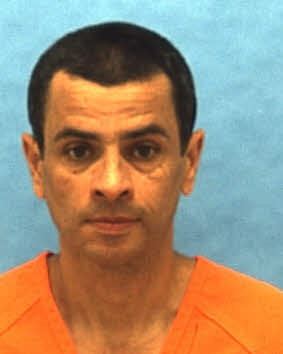
Rory Enrique Conde was a Colombian-American serial killer responsible for six murders in Miami-Dade County, Florida, during a terrifying series of attacks between September 1994 and January 1995. Known as the
Tamiami Trail Strangler, Conde targeted people involved in sex work along and around Southwest 8th Street, the heavily traveled Miami roadway better known as the Tamiami Trail. His victims were strangled, their bodies transported away from his residence, and then abandoned at locations in residential areas near the corridor.
The killings caused growing fear throughout southwest Miami as investigators realized they were dealing with one offender. The murderer appeared increasingly confident as the crimes continued. After the third killing, he deliberately left a written message on the victim's body that identified her as his third victim and challenged investigators to catch him. Despite an intensive investigation involving Miami-Dade detectives, forensic specialists and assistance from the FBI, Conde remained unidentified for months. His eventual exposure came not from one of the murder scenes, but after another woman survived an attack inside his apartment and attracted the attention of people nearby.
Background
Rory Enrique Conde was born on June 14, 1965, in Barranquilla, Colombia. He later lived in South Florida, where he married and had children. By 1994, Conde's marriage had deteriorated severely. Court records concerning the murders describe the breakup of his marriage as occurring after his wife discovered that he was using the services of sex workers.
The marital collapse became an important part of Conde's later confession. He told investigators that after killing his victims, he would blame them for the problems in his life and marriage. His personal grievances, however, bore no responsibility on the victims themselves. The pattern documented by investigators showed that Conde deliberately sought out vulnerable people, brought them to a location he controlled and killed them.
The Beginning of the Tamiami Trail Murders
The series began in September 1994. Conde's method developed into a recognizable pattern. He generally encountered his victims in the Tamiami Trail area, took them to his apartment, engaged in sexual activity with them and then strangled them. Court records state that all six victims died from asphyxiation. Conde subsequently transported their bodies and abandoned them along roads or in residential areas within a relatively small distance of his home.
Investigators eventually identified numerous similarities among the crime scenes. The victims were associated with sex work in the same general area, the killings occurred late at night, and the bodies had been moved after death. Several were found fully or partially redressed and positioned face down. Forensic investigators recovered biological evidence as well as fibers and other physical evidence that increasingly suggested the murders were connected.
Verified Victims
Contemporary newspaper accounts sometimes reported the date a body was discovered rather than the date later identified in court proceedings. The dates below follow the dates of death listed by the Florida Supreme Court in Conde's case.
- Lazaro Comesana, 27 — September 16, 1994 — Miami-Dade County, Florida: Comesana, who was involved in sex work and was known to present in women's clothing, was Conde's first known murder victim. Comesana's body was discovered in a grassy residential area near the Tamiami Trail in southwest Miami-Dade. The death was caused by strangulation and asphyxiation. Conde later admitted responsibility for the killing and claimed that his discovery during their encounter that Comesana was biologically male triggered the attack. Regardless of Conde's later explanation, the killing became the first crime in what developed into a repeated pattern of deliberate strangulation murders.
- Elisa "Daphne" Martinez, 44 — October 8, 1994 — Southwest Miami-Dade County, Florida: Martinez was found dead in a grassy area of a residential neighborhood near Florida International University. She had also been strangled. The similarities between Martinez's death and the earlier Comesana homicide caused investigators to consider whether the same offender could be responsible. Both victims were connected to sex work around the Tamiami Trail, both had been killed by asphyxiation, and both bodies had been left in residential areas of southwest Miami-Dade.
- Charity Fay Nava, 23 — November 20, 1994 — West Dade, Florida: Nava's body was discovered beside a road in a residential area near the Tamiami Trail, with contemporary reports describing the location as near a culvert. She had been strangled. This murder provided investigators with particularly significant evidence that the deaths were part of an intentional series. Conde had written messages on Nava's body in black marker, including the word "THIRD!" and a challenge telling authorities, in effect, to see whether they could catch him. The message demonstrated that the killer was counting the victims and intentionally communicating with investigators.
- Wanda Cook Crawford, 38 — November 25, 1994 — Miami-Dade County, Florida: Crawford became the fourth person murdered in the series. Her body was found in the parking area of an apartment complex in the Tamiami Trail region. Like the other victims, she died from asphyxiation. Her death occurred only five days after Nava's murder, demonstrating a dramatic acceleration in the frequency of the attacks. By this stage, fear among sex workers in the area had become intense as information about the linked killings spread.
- Necole Schneider, 28 — December 17, 1994 — Miami-Dade County, Florida: Schneider was the fifth confirmed victim. Her body was discovered in a residential or trailer-park area near the Tamiami Trail. She had again been killed by asphyxiation. Her body was found close enough to the area being investigated that the continuing murders emphasized how comfortable the offender had become operating within the same section of southwest Miami. After Schneider's death, the existence of a serial killer targeting people in the Tamiami Trail sex trade was no longer in serious doubt.
- Rhonda Dunn, 21 — January 13, 1995 — Miami-Dade County, Florida: Dunn was the sixth and final confirmed murder victim. According to the Florida Supreme Court's account of the crime, Conde picked Dunn up and brought her to his apartment. After sexual activity, Dunn got up and Conde followed her before attacking her from behind and manually strangling her. Dunn fought back and suffered defensive injuries during the struggle, but Conde continued the assault until she died from asphyxiation. He then transported her body away from the apartment and abandoned it along a roadway. Dunn's murder eventually became the case in which Conde was tried and convicted by a jury.
A Killer Taunting Investigators
The writing left on Charity Nava represented a disturbing change in the series. The killer was no longer merely attempting to conceal his connection to the deaths. By labeling Nava as the third victim, he effectively confirmed what detectives had already begun to suspect: the murders of Comesana and Martinez belonged to the same sequence.
The message also contained a reference to local television personality Dwight Lauderdale and challenged police to catch the murderer. The writing became one of the most distinctive features of the investigation and helped generate the name and public image of the "Tamiami Trail Strangler."
Investigators were faced with the difficult task of finding one offender operating among a large and transient population. Detectives interviewed large numbers of people, followed tips and compared evidence from separate homicide scenes. Police also warned people working the Trail that a killer was targeting them. The continuing deaths showed that the warnings and increased police presence had not yet forced the murderer to reveal himself.
Physical Evidence Connecting the Murders
The strongest case against Conde ultimately came from the combination of forensic evidence, his confession and the similarities among the murders. Court proceedings described DNA, semen, fiber, tire and other physical evidence connecting Conde, his automobile and his residence with the victims.
The crime scenes also contained behavioral similarities. Each victim had been strangled. The bodies had been transported from the actual murder location and deposited elsewhere. Several were positioned face down, while postmortem evidence showed they had previously been lying in another position. The bodies were found within a relatively confined geographical area surrounding the Tamiami Trail and Conde's home.
Conde would eventually admit that the victims were killed inside his apartment rather than at the locations where their bodies were discovered. His vehicle therefore became an important part of the investigation because it provided the means by which he moved the victims after their deaths.
Postmortem Abuse
Evidence presented in connection with the cases also established that Conde committed sexual acts involving the victims after their deaths. His treatment of the bodies became another element investigators considered when comparing the murders. The acts demonstrated that the deaths were not isolated arguments or spontaneous confrontations but part of a repeated pattern of sexualized violence and postmortem abuse.
Conde also told investigators that after the murders he spoke to the victims' bodies and blamed them for the breakup of his marriage. That statement became important evidence regarding the psychological ritual he had developed around the killings.
The Attack That Exposed Conde
The Tamiami Trail murders stopped after Dunn's death in January 1995, but Conde's violence did not. The critical break in the case came in June 1995 after another woman, identified in accounts of the case as Gloria Maestre, was attacked inside Conde's apartment.
Conde had restrained the woman with duct tape and subjected her to sexual and physical violence. He subsequently left the apartment. While he was gone, she remained alive and was able to make enough noise to attract the attention of neighbors. Emergency personnel and police were summoned, and the bound woman was discovered inside the residence.
The discovery immediately made Conde the subject of an intense investigation. Inside the apartment, detectives encountered evidence that appeared capable of connecting its occupant not only with the surviving victim but with the unsolved Tamiami Trail killings.
Flight and Arrest
Conde was not immediately taken into custody at his apartment. After realizing police were looking for him, he fled. Authorities searched for him for several days before locating him at his grandmother's residence in Hialeah.
Conde was arrested on June 24, 1995. Police publicly announced shortly afterward that they believed they had captured the Tamiami Trail Strangler. Investigators searched his apartment and automobile and obtained biological samples from him for comparison with evidence collected from the homicide victims.
The results transformed the case. Physical evidence connected Conde with the murder series, and investigators began questioning him about each of the six deaths.
Conde's Confession
Conde initially denied involvement while being questioned after his arrest. According to court records, detectives interrogated him for hours on the first day without obtaining a murder confession. The following day, he was again advised of his rights and questioned.
After being allowed to speak with members of his family by telephone, Conde changed his position. He admitted responsibility for all six murders and provided investigators with accounts of what had happened to the victims. His statements were especially damaging because they could be compared with facts that detectives had gathered independently from the crime scenes and autopsies.
Conde acknowledged repeatedly picking up people involved in sex work, taking them to his apartment, strangling them and transporting their bodies to dumping locations. He also admitted his ritual of blaming the dead victims for the collapse of his marriage.
Six Murder Charges
On July 12, 1995, Conde was indicted on six counts of first-degree murder. Prosecutors ultimately proceeded with the cases separately rather than trying all six murders simultaneously. Rhonda Dunn's killing became the first murder placed before a jury.
The prosecution's case was formidable. Jurors heard about Conde's confession and extensive forensic evidence. The state was also permitted to introduce evidence concerning the other five killings to demonstrate the distinctive similarities among the crimes. DNA evidence, fibers, tire evidence and other forensic findings supported the prosecution's argument that Dunn had been killed as part of the same serial murder pattern.
Conviction for the Murder of Rhonda Dunn
In October 1999, a Miami-Dade jury found Conde guilty of the first-degree murder of Rhonda Dunn. During the penalty proceedings, the prosecution emphasized the circumstances of Dunn's death and Conde's previous violent crimes.
The jury recommended a death sentence by a vote of 9-3. On March 7, 2000, Circuit Judge Jerald Bagley formally sentenced Conde to death for Dunn's murder.
Rather than face five additional murder trials, Conde reached an agreement concerning the remaining victims. In April 2001, he pleaded guilty to murdering Lazaro Comesana, Elisa Martinez, Charity Nava, Wanda Crawford and Necole Schneider. He received five consecutive sentences of life imprisonment without the possibility of parole.
Appeals and Later Status
Conde challenged his conviction and death sentence through Florida's appellate courts. In September 2003, the Florida Supreme Court affirmed his conviction and death sentence in the Dunn case. Additional post-conviction litigation continued for years.
Florida's death-penalty system later underwent major constitutional changes following the United States Supreme Court's decision in Hurst v. Florida. Conde's death sentence was ultimately vacated, requiring a new sentencing proceeding in the Dunn murder. His underlying first-degree murder conviction was not erased, nor were the five consecutive life-without-parole sentences he received for the other murders.
As of April 2026, Conde was still awaiting resentencing in connection with Rhonda Dunn's murder. Regardless of the ultimate punishment imposed in that proceeding, his five consecutive life sentences for the other killings mean that he remains imprisoned for the remainder of his life.
The Tamiami Trail Case
The Rory Conde investigation became one of South Florida's most notorious serial murder cases of the 1990s. For months, the killer operated in a relatively small geographical area while choosing victims whose circumstances made them particularly vulnerable. He exploited the fact that people involved in street-level sex work routinely entered vehicles with strangers and could disappear without immediately drawing the same attention as other missing people.
The victims nevertheless left behind a substantial forensic trail. As investigators compared one homicide with another, the pattern became unmistakable. Strangulation, geographical proximity, the positioning of the bodies and eventually DNA and other forensic evidence tied the murders together. Conde's decision to write on Charity Nava further established that a single killer was deliberately keeping count of his victims.
In the end, the investigation was broken open by a survivor. The woman found alive in Conde's apartment in June 1995 gave authorities a direct route to a suspect they had been unable to identify from the murder scenes alone. Evidence discovered as a result of that attack connected Conde with the unresolved homicides, and his later confession provided the final narrative explaining how six people had disappeared from the Tamiami Trail and been found dead throughout southwest Miami-Dade.
Remembering the Victims
The name "Tamiami Trail Strangler" became widely known, but the lasting record of the case belongs equally to the six people who were killed: Lazaro Comesana, Elisa Martinez, Charity Fay Nava, Wanda Cook Crawford, Necole Schneider and Rhonda Dunn. Their circumstances made them vulnerable to a predator, but those circumstances did not make their deaths inevitable or diminish the seriousness of the crimes committed against them.
Conde's eventual identification, prosecution and convictions established responsibility for all six killings. The surviving victim from the June 1995 attack also played a crucial role in ending the threat. Her ability to attract help led police directly to Conde's apartment and ultimately exposed the man responsible for a murder series that had frightened Miami-Dade County for months.