Ray Dempsey Gardner: The Tri-State Drifter Killer
Overview
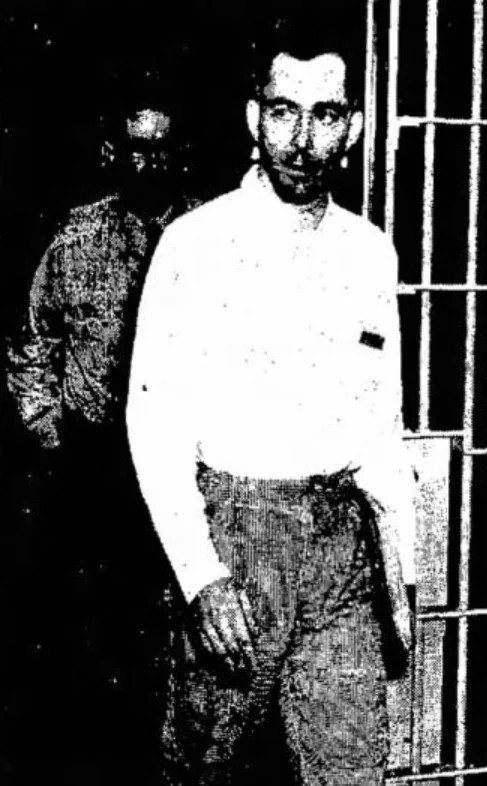
Ray Dempsey Gardner was a transient criminal whose violent spree across three states in the 1940s culminated in a death sentence. With a life marked by a turbulent childhood and an extensive criminal record, Gardner escalated from theft and other lesser crimes to murder. He confessed to killing three people: a cellmate in North Dakota in 1941, and two women in Utah and Montana in 1949. His capture came about not from a dedicated manhunt, but from a seemingly unrelated traffic incident that unraveled his string of violence. Though he confessed to all three murders, he was tried and convicted for only one. His case provides a chilling glimpse into the mind of a predator who drifted through the American West, leaving a trail of tragedy before his life ended before a firing squad.
Early Life and Criminal Beginnings
Born on October 4, 1921, in Columbus, Ohio, Ray Dempsey Gardner's childhood was fraught with instability and tragedy. His father was killed in a shootout with police, and his mother was subsequently sent to prison. This left young Gardner an orphan, and he was raised in an orphanage in his hometown. His upbringing in institutions seemed to set a pattern for his life, as he would spend a significant portion of his years in correctional facilities.
Gardner's criminal record was extensive, reportedly encompassing over 500 crimes. Before he began his killing spree, he had already served time in the Indiana Boys School, the Montana State Prison, and the Wyoming State Penitentiary. This long history of incarceration did little to rehabilitate him, and instead, it was within the walls of a jail that he would commit his first known murder.
The Murders
The first murder attributed to Gardner occurred in 1941. While incarcerated in a jail in Jamestown, North Dakota, he strangled his cellmate, Frank Shelley. At the time, authorities believed Shelley had died of natural causes, and Gardner was never charged with the crime. It was only after his later confessions that this death was re-examined as a homicide. The motive for Shelley's murder remains unclear.
For eight years, Gardner continued his criminal activities without being linked to any further killings. Then, in the summer of 1949, he embarked on a new wave of violence. On July 20, 1949, in Ogden, Utah, 17-year-old Shirley Jean Gretzinger was at her mother's home when a call came for a babysitting job. The call was intended for a friend of Shirley's who was ill and had referred the caller to her. Despite her mother's apprehension about the unknown employer, Shirley accepted the job. The caller was Ray Dempsey Gardner.
Instead of taking her to the babysitting location, Gardner drove the teenager to a remote gulch outside the city. There, he made sexual advances, and when she rejected him, he brutally attacked her. He stuffed wadded toilet paper down her throat, causing her to asphyxiate, and raped her as she was dying. Gardner then stole her purse and magazines, mutilated her body, and left her in a thicket.
Following the murder of Shirley Gretzinger, Gardner fled to Montana. In early August, he responded to a newspaper advertisement placed by 38-year-old Sue Ella Horne, who was seeking a job as a ranch cook. On August 9, 1949, Gardner picked her up in Butte, Montana, under the pretense of driving her to a job. Once they were outside the city, his true intentions became clear. When he attempted to rob her, Horne fought back, slapping him and jumping out of the car in an apparent attempt to flee. In response, Gardner shot her, took her belongings, and buried her body in a shallow grave.
The Victims
- Frank Shelley — 1941, Jamestown, North Dakota. Little is known about Frank Shelley, who was strangled to death by his cellmate, Ray Dempsey Gardner. His death was initially considered to be from natural causes.
- Shirley Jean Gretzinger, 17 — July 20, 1949, Ogden, Utah. A young woman who was tragically murdered after being lured by Gardner under the false pretense of a babysitting job. She was a trusting individual who fell victim to a calculated and brutal attack.
- Sue Ella Horne, 38 — August 9, 1949, near Butte, Montana. A woman seeking employment who was robbed and murdered by Gardner. She showed immense bravery in fighting back against her attacker.
Investigation and Capture
Ray Dempsey Gardner was not a suspect in any of the murders until a series of seemingly minor infractions brought him to the attention of law enforcement. On August 14, 1949, Gardner was driving a new car back to the farm where he was employed. Upon seeing one of his employer's sons, he inexplicably fled. In his haste, he ran a stop sign and crashed into a trailer on the main highway, but he did not stop.
He was later apprehended and charged with grand larceny for stealing clothing and a pistol from the farm, as well as hit-and-run driving and running a stop sign. During the investigation of these charges, police made a crucial discovery in Gardner's vehicle: Sue Ella Horne's luggage and clothing. Realizing she was a missing person, their suspicions about Gardner grew. He also faced a federal charge for the interstate transportation of a stolen vehicle.
Faced with mounting evidence, Gardner was subjected to a polygraph test. The results indicated that he had knowledge of Horne's disappearance. Under pressure, he confessed to her murder and led the police to the shallow grave where he had buried her. In a stunning admission, he also confessed to the murders of Shirley Jean Gretzinger and his former cellmate, Frank Shelley. He even gave investigators a tour of the crime scene where he had killed Gretzinger. However, Gardner would later retract his confessions and attempt to blame an unknown friend for the crimes.
Trial and Sentence
Despite his confession to three murders across three states, Ray Dempsey Gardner was only brought to trial for the murder of Shirley Jean Gretzinger in Utah. Although he was initially charged with the murder of Sue Ella Horne in Montana, the Utah authorities proceeded with their case, likely because they had a strong combination of physical evidence and Gardner's detailed confession, including his tour of the crime scene.
The trial was swift. On December 13, 1949, a jury of twelve men found Gardner guilty of first-degree murder. They deliberated for only 58 minutes and did not recommend mercy, which made a death sentence mandatory under Utah law at the time.
Gardner made several appeals, all of which were unsuccessful. In a final, unusual bid to save his own life, he requested that the Utah Board of Pardons and Parole grant him leniency so that he could be used as a "guinea pig" for science. This request was denied. The prosecution had characterized him as a "dangerous sadist."
Given the choice between being hanged or shot, Gardner chose to be executed by a firing squad. On September 29, 1951, at the Utah State Prison, the sentence was carried out. His last words were, "I'm ready to go. No one will miss me. My life has been worthless."
Aftermath and Legacy
Following Ray Dempsey Gardner's execution, the prison warden contacted his nearest living relative, his grandmother, regarding his remains. Her response was a stark reflection of the family's estrangement from him. She stated that she was unable to have his body sent to Ohio, that his mother was dead, and that the family had known nothing of him for eight years until they read about his crimes in the news. She concluded, "I have no further responsibility of care. Use the body as the law directs for medical science."
Ray Dempsey Gardner's case is a grim reminder of the transient nature of some serial killers, who can move from state to state, leaving devastation in their wake, and often going undetected for some time. In an era before advanced forensic science and national criminal databases, it was a combination of a routine traffic stop and astute police work that finally brought his murderous journey to an end. His crimes, though not as widely known as some, inflicted deep and lasting pain on the families of his victims and the communities he passed through.